

Choosing the Right Gas Fryer: A Guide for UK Commercial Kitchens


Choosing the right gas fryer for your UK commercial kitchen can feel like a big task, especially with so many models and features out there. Whether you run a food truck, a small café, or a busy restaurant, the right fryer can boost your kitchen’s speed and help you serve up consistently good food. It’s not just about picking the biggest or most expensive one – you need to think about what you cook, how much space you have, and what kind of gas is available to you. This guide will break down the most important points, so you can make a choice that fits your business and keeps things running smoothly.
Key Takeaways
-
Think about your menu and how much food you need to fry each day before choosing a gas fryer.
-
Check the available space in your kitchen or food truck to make sure your new fryer will fit without getting in the way.
-
Decide between natural gas and propane based on what’s available and what suits your setup best.
-
Look for features like precise temperature control and easy-to-use filtration systems to save time and money.
-
Choose a reliable brand that offers good support and clear warranties, especially for busy mobile catering businesses.
Understanding Your Gas Fryer Needs
Assessing Your Kitchen’s Output
Think about how much food you actually fry. Are you a busy chip shop serving hundreds daily, or a cafe doing a few baskets at lunch? Knowing your peak times and average daily volume is key. This helps you pick a fryer that won’t let you down when it’s busy.
-
Low Volume: A smaller, single-basket fryer might be fine.
-
Medium Volume: Consider a larger single tank or a twin-basket model.
-
High Volume: You’ll need a robust, high-capacity fryer, possibly with multiple tanks.
Considering Your Menu’s Demands
What are you frying? Different foods need different temperatures and cooking times. If you’re doing delicate fish and hearty chicken wings, you might need separate tanks to avoid flavour transfer. This is where a twin-tank fryer really shines. It lets you cook different items at different temperatures without them mixing. This means better quality food for your customers.
Choosing a fryer that matches your menu prevents flavour contamination and ensures food is cooked perfectly every time. It’s about quality and customer satisfaction.
Evaluating Your Available Space
Measure up! It sounds obvious, but a fryer that’s too big will block walkways and make your kitchen feel cramped. Too small, and you’ll be struggling to keep up. Think about:
-
Footprint: How much floor space does it take up?
-
Height: Will it fit under existing extraction hoods?
-
Access: Can staff move around it easily?
Don’t forget space for cleaning and maintenance. A fryer that’s hard to get to will likely get neglected. For mobile caterers, portability is a big factor, so consider propane models that don’t need fixed gas connections.
Key Features For Your Gas Fryer
Capacity and Size Considerations
Choosing the right size fryer is about matching your kitchen’s output. Think about how much food you’ll be frying during your busiest periods. A fryer that’s too small will slow you down, while one that’s too big wastes energy and space. For mobile caterers, consider the footprint and how easily it fits into your setup.
-
Light Duty: Good for cafes or occasional use. Usually around 10-15 litres.
-
Medium Duty: Suitable for pubs and restaurants with steady demand. Typically 15-25 litres.
-
Heavy Duty: For high-volume operations like fast food or large events. Often 25 litres and above.
Tip: Measure your available space carefully, including access routes, before you buy.
Burner Options and Performance
Gas fryers use burners to heat the oil. The number and type of burners affect how quickly the oil heats up and recovers its temperature after you add food. More powerful burners mean faster recovery, which is vital when you’re serving a queue.
-
Single Burner: Simpler, often found in smaller or portable units. Good for lower volumes.
-
Multiple Burners: Offer more even heat distribution and faster recovery. Better for higher output.
-
High-Performance Burners: Designed for rapid heating and consistent temperature, even under heavy load.
Look for models with good burner design that ensures even heat across the oil tank. This means your food cooks consistently.
Temperature Control Precision
Accurate temperature control is non-negotiable. Too low, and your food will be greasy; too high, and it will burn. Precise control means better food quality, less oil breakdown, and improved safety.
-
Thermostatic Control: The standard, allowing you to set a target temperature.
-
Digital Controls: Offer more precise settings and often have programmable options.
-
Auto Shut-off: A safety feature that turns off the fryer if it overheats.
Remember: Always use a separate thermometer to double-check the fryer’s temperature, especially when you first get it. This helps you understand its real-world performance.
Fuel and Power for Your Gas Fryer
Natural Gas vs. Propane
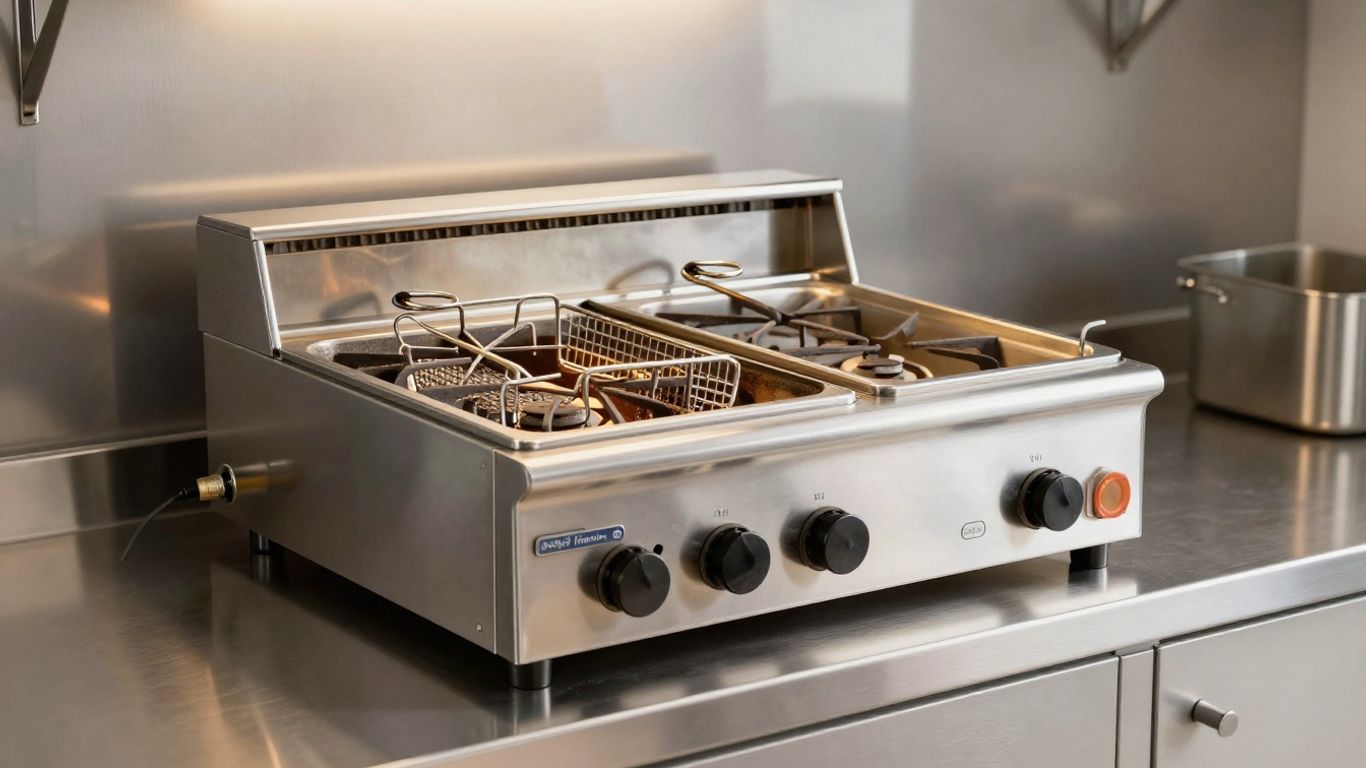
Choosing between natural gas and propane is a big decision for your kitchen. Natural gas is usually piped directly to your premises. It’s often cheaper per unit of energy, making it a good choice for fixed locations with high usage. Propane, on the other hand, comes in tanks and offers great flexibility, especially for mobile catering. You can take propane fryers anywhere, no need for a fixed gas line. This is a real plus for food trucks or event caterers. However, propane tanks need regular refilling, which is an ongoing task.
Installation Requirements
Getting your gas fryer set up correctly is vital for safety and performance. Natural gas fryers typically need a dedicated gas line installed by a qualified professional. This can be an upfront cost, but it means a constant, reliable supply. Propane fryers are simpler; you just need space for the tanks and a way to connect them. Always make sure any installation meets UK safety standards. Check with your gas supplier or a qualified engineer.
Energy Efficiency and Running Costs
Gas fryers heat up fast, which is a big win during busy service times. This speed can mean you cook more food quicker, potentially saving on labour. While gas itself can be cheaper than electricity, the overall running cost depends on usage and local prices. Consider how much you’ll be frying. For high-volume kitchens, natural gas is often the most economical. For mobile units or places where a gas line isn’t feasible, propane is your go-to, but factor in tank swaps and potential price fluctuations. Look for models with good insulation to keep heat in and running costs down. You can find out more about commercial gas options to help make an informed choice.
Enhancing Your Gas Fryer Experience
The Benefits of Oil Filtration Systems
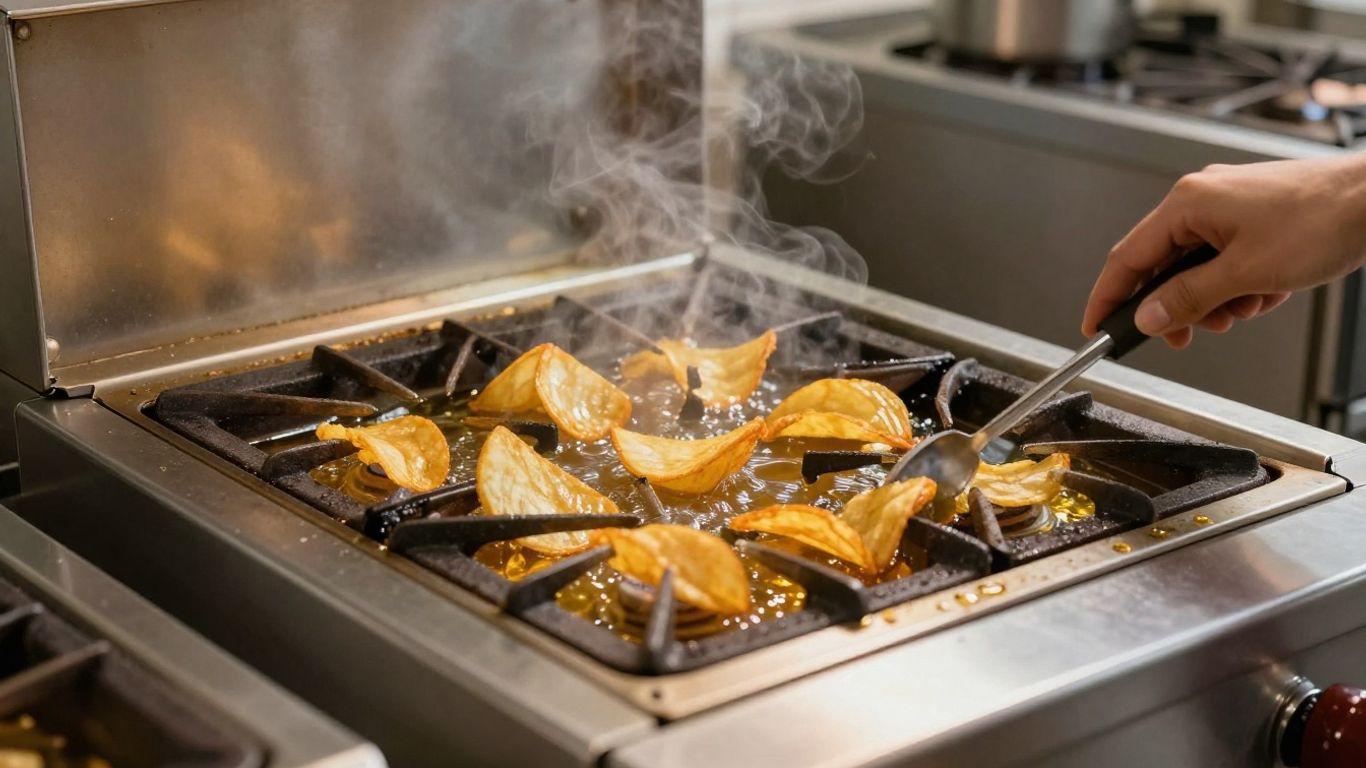
Keeping your oil clean is a big deal. It makes your food taste better and stops you from changing the oil so often. This saves you money and time. Good filtration systems get rid of burnt bits and other gunk that makes oil go bad quickly. This means your fryer works better for longer.
Manual vs. Automatic Filtration
When it comes to filtering, you have two main choices:
-
Manual Filtration: You start the process yourself. It gives you control over when and how often you filter. This might mean a bit more work, but you know exactly what’s happening.
-
Automatic Filtration: These systems do the job on their own. Some run on a timer, others after a set number of uses. They make life easier and keep your fryer in top shape with less fuss.
Automatic filtration is a real time-saver for busy mobile caterers.
Basket Configurations for Efficiency
How you use your fryer baskets can make a difference. Think about what you cook most often.
-
Multiple Small Baskets: Good for frying different items at the same time, like chips and onion rings, without flavours mixing. You can cook smaller batches this way.
-
Large Single Basket: Ideal for bulk frying, like a big batch of chips during a rush. You can also use smaller baskets inside a large tank if needed.
Choosing the right commercial fryer baskets means you can cook faster and more efficiently, especially when you’re out at an event and time is tight.
Safety and Maintenance for Gas Fryers
Keeping your gas fryer in good nick is not just about making it last longer; it’s about keeping your staff and customers safe. A well-maintained fryer works better and avoids nasty surprises.
Essential Safety Features
Look for fryers with built-in safety measures. These aren’t just extras; they’re vital for preventing accidents.
-
Thermostat safety cut-off: This stops the fryer from overheating.
-
Splash guards: Help stop hot oil from splashing out.
-
Stable, non-slip feet: Stops the unit from moving around.
-
Easy-access drain valve: For safe and controlled oil draining.
Always have a Class K fire extinguisher nearby. Know how to use it and where it is. Regular checks on smoke detectors are also a must.
Routine Cleaning and Upkeep
Regular cleaning stops grease build-up and keeps your food tasting fresh. It’s a bit of a chore, but worth it.
Daily tasks:
-
Filter oil: If you have a filter system, use it daily. If not, strain the oil.
-
Wipe down: Clean the exterior and the area around the fryer.
-
Clean baskets: Remove food debris.
**Weekly tasks (or more often if you’re busy):
-
Boil-out: Use a fryer cleaner and water to boil out the tank. This gets rid of stubborn grease.
-
Scrub interior: Use a non-abrasive brush to clean the tank walls and bottom.
-
Clean burners: Make sure they’re free from debris for efficient heating.
Extending Your Gas Fryer’s Lifespan
Proper care means your fryer will serve you well for years. Think of it as an investment.
-
Use the right oil: Stick to oils with a high smoke point. This prevents burning and keeps oil cleaner for longer.
-
Don’t overfill: Too much food lowers the oil temperature too quickly and can cause spills.
-
Regular servicing: Get a qualified engineer to check your fryer annually. They can spot small issues before they become big problems.
-
Oil filtration: If you don’t have a built-in system, consider a portable one. Filtering oil daily can make it last twice as long, saving you money and reducing waste.
Choosing the Right Gas Fryer Brands
When you’re kitting out a commercial kitchen, picking the right brand for your gas fryer is a big decision. It’s not just about the shiny metal; it’s about reliability, performance, and how well it’ll stand up to the daily grind. For mobile caterers, this means a fryer that’s tough, heats up fast, and is easy to manage on the move.
Reputable Manufacturers in the UK
Several brands have earned a solid reputation in the UK for making gas fryers that commercial kitchens can depend on. These are the names you’ll see in busy restaurants and at popular food stalls for a reason. They’ve proven their worth over time.
-
Frymaster: Known for advanced features and consistent results. Great for high-volume operations.
-
Vulcan: Offers robust build quality and good energy efficiency. A solid choice for busy kitchens.
-
Pitco: Renowned for durability and even cooking. Their fryers are built to last.
Choosing a fryer from brands like these means you’re investing in equipment that’s designed for professional use. They generally offer a good range of models, so you can find one that fits your specific needs, whether that’s a compact unit for a food truck or a larger floor model for a busy restaurant.
Understanding Warranties and Support
Don’t overlook the warranty and after-sales support when you’re looking at different brands. A good warranty can save you a lot of hassle and money down the line. For mobile caterers, quick support is key if something goes wrong when you’re out on a job.
-
Check the Warranty Period: How long does it cover parts and labour? Some brands offer longer periods than others.
-
What’s Covered?: Make sure you know exactly what the warranty includes and excludes. Accidental damage or misuse is usually not covered.
-
Local Support: Does the manufacturer have service engineers in your area? This can make a huge difference for quick repairs.
Investing in a well-known brand often means better access to spare parts and qualified technicians. This is vital for keeping your kitchen running smoothly, especially when you’re on the road and time is money.
When you’re comparing models, look at what other caterers are saying. Real-world feedback can be more telling than any spec sheet. For example, many mobile caterers find that a fryer with quick temperature recovery, like some models from Infernus , is a game-changer during peak service times. It means less waiting and more food going out the door.
Wrapping Up Your Fryer Choice
So, picking the right gas fryer for your UK kitchen might seem like a lot, but it really comes down to knowing what you need. Think about how busy you get, the space you have, and whether you’re cooking for a busy street food stall or a sit-down restaurant. Gas fryers offer that quick heat and recovery that’s brilliant for keeping up with orders, and propane models give you that handy flexibility for events. Don’t forget to look at the size, how much oil it holds, and any clever features like filtration that can save you money and hassle down the line. By taking a bit of time to weigh up these points, you’ll find a fryer that works hard for you, cooks up delicious food, and helps your business run smoothly. Happy frying!
Frequently Asked Questions
What is the main difference between a gas and an electric fryer for a commercial kitchen?
Gas fryers heat up really fast and can keep a high temperature, which is great for busy kitchens that cook a lot of food. They often use natural gas or propane. Electric fryers are also good, but they might take a bit longer to heat up and recover their temperature between batches compared to gas ones. They are often a bit safer as they don’t use an open flame.
How do I choose the right size of gas fryer for my food truck?
For a food truck, space is usually tight. You’ll want to measure the area where the fryer will go. Think about how much food you expect to cook during busy times. A smaller, compact fryer might be best, but make sure it can still handle your busiest periods without slowing you down too much.
What does ‘oil recovery time’ mean for a gas fryer?
Oil recovery time is how quickly the fryer’s oil gets back to the right cooking temperature after you’ve added food. When you put cold food into hot oil, the oil temperature drops. A good gas fryer will bring the oil back up to temperature quickly, so your food cooks evenly and stays crispy.
Are gas fryers more expensive to run than electric ones?
It really depends on the price of gas and electricity in your area. In many parts of the UK, natural gas is often cheaper than electricity, making gas fryers less expensive to run. However, electric fryers can be more energy-efficient in some cases. It’s worth checking local energy prices to see what makes the most sense for your business.
Why are oil filtration systems important for commercial fryers?
Oil filtration systems help keep your cooking oil clean by removing tiny bits of food and other bits that fall into the oil. Clean oil means your food tastes better and stays crispier. It also means you don’t have to change the oil as often, which saves you money and reduces waste.
What safety features should I look for in a commercial gas fryer?
Safety is super important! Look for fryers with features like automatic shut-off if the temperature gets too high, a thermostat that keeps the oil at a steady heat, and cool-touch handles so you don’t burn yourself. Make sure it’s installed correctly by a professional to prevent gas leaks.