
Choosing the Right Electric Commercial Griddle for Your UK Kitchen


Choosing the right electric commercial griddle for your UK kitchen is a big decision. It’s not just about buying any old bit of kit; it’s about finding a reliable workhorse that will help you cook up a storm, day in and day out. With so many options out there, from different plate types to control systems, it can feel a bit overwhelming. This guide aims to break down what you really need to consider, helping you make a smart choice that fits your menu, your space, and your budget.
Key Takeaways
-
Consider the plate surface: flat for eggs and pancakes, ribbed for meats, or a combination for versatility. The material, like steel or chrome, also affects performance and cleaning.
-
Think about size and structure: countertop models fit on existing surfaces, while full-height units are standalone. Match the size to your kitchen space and cooking volume.
-
Electric griddles offer simple installation and often have good temperature stability, making them a safe choice, especially in enclosed spaces.
-
Control systems matter: thermostatic controls offer precise temperature settings, while manual controls are simpler. Multiple heat zones are useful for cooking different items simultaneously.
-
Regular cleaning and maintenance are vital for the longevity and performance of your electric commercial griddle, preventing issues and ensuring food safety.
Understanding Electric Commercial Griddle Plate Types
Choosing the right griddle plate is key for your mobile catering business. It affects what you can cook and how well you can cook it. Let’s break down the main types you’ll find.
Exploring Flat Griddle Surfaces
These are your classic, smooth plates. Think of them as a blank canvas for your cooking. They’re brilliant for items that need to cook evenly without any marks.
-
Best for: Pancakes, eggs, burgers, bacon, and anything that needs a full, even sear.
-
Benefit: Food cooks in its own juices, giving a richer flavour. Great for breakfast menus.
-
Tip: Keep the surface clean and seasoned. A little oil helps prevent sticking and keeps food from burning.
The Benefits of Ribbed Griddle Plates
Ribbed plates have those familiar lines. These aren’t just for show; they serve a real purpose, especially when you’re cooking fattier items.
-
Best for: Steaks, sausages, fish, and chicken. Anything where you want to channel away excess fat.
-
Benefit: Fat and grease drain into the grooves, leading to a healthier cook and less smoke. You get those appealing char marks too.
-
Caution: Not ideal for small items like eggs or pancakes, as they can fall through the gaps or cook unevenly.
Considering Combination Griddle Surfaces
Can’t decide between flat and ribbed? Some larger griddles offer a mix. This gives you the best of both worlds on a single unit.
-
Best for: Versatile menus. Cook steaks on the ribbed section and eggs on the flat section simultaneously.
-
Benefit: Maximum flexibility for busy services. Adapt to different orders without needing multiple appliances.
-
Practicality: Check the size of the flat and ribbed sections. Make sure they suit your most common dishes.
The plate material itself also matters. Steel is common and durable, while chrome-plated steel offers better heat transfer and is easier to clean. Think about how often you’ll be cleaning and what kind of food you’ll be cooking most.
Key Considerations for Your Electric Commercial Griddle
Choosing the Right Griddle Size for Your Kitchen
Think about your available space. Mobile caterers often need compact units. Countertop models are great for saving floor space. Full-height units offer more cooking area but need dedicated space. Measure your prep area carefully before buying.
Understanding Griddle Plate Materials
Griddle plates are usually made of steel or cast iron. Steel heats up fast and is good for quick cooking. Cast iron holds heat well, giving a more even cook. For mobile catering, a robust material that can handle frequent use and transport is best.
Evaluating Griddle Structure: Countertop vs. Full Height
-
Countertop Griddles: Ideal for food trucks or small kitchens. They sit on existing work surfaces, saving space.
-
Full-Height Griddles: Freestanding units with their own legs. Offer more cooking surface and storage underneath, but require more room.
For mobile catering, the decision often comes down to how much cooking you need to do and how much space you can realistically dedicate. A well-chosen countertop model can be surprisingly powerful.
Powering Your Electric Commercial Griddle
The Advantages of Electric Heating Elements
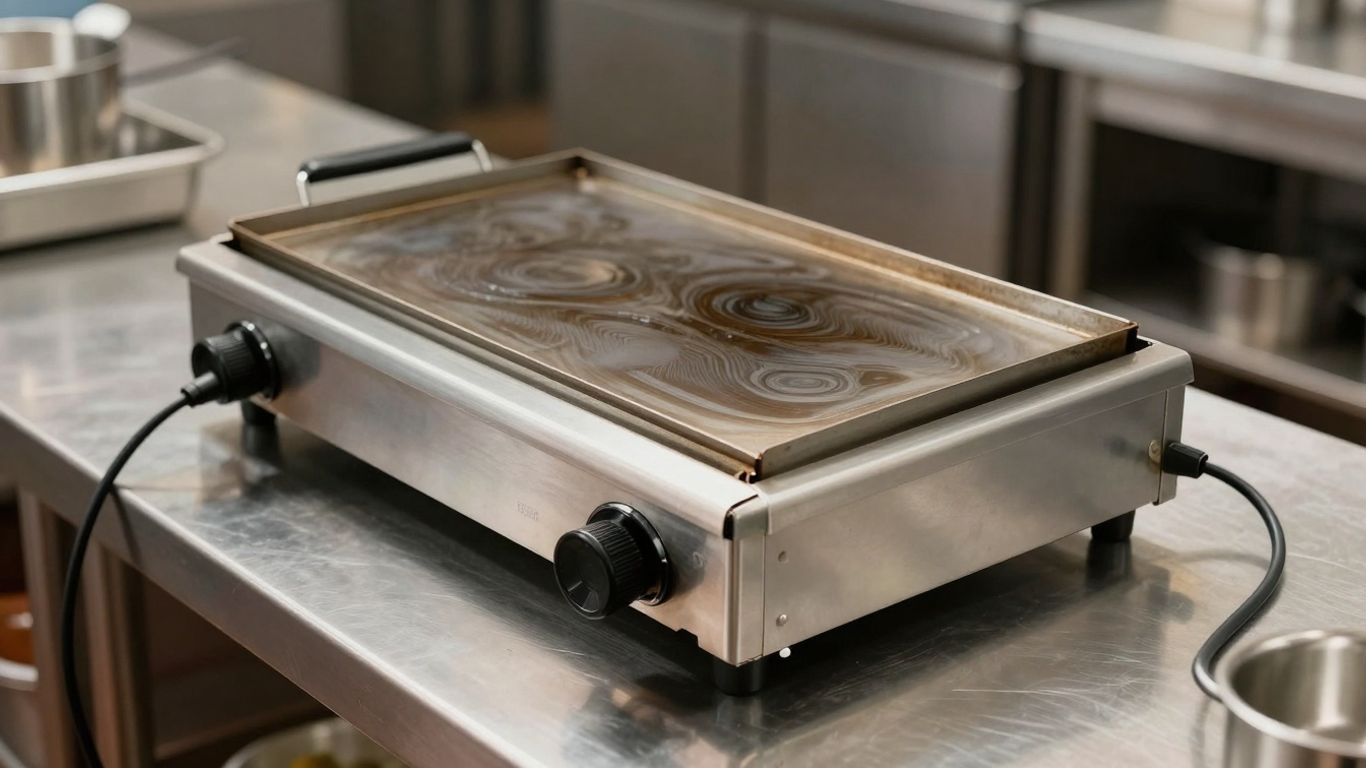
Electric griddles use heating elements to get the cooking surface hot. This means you get a consistent temperature across the plate, which is great for things like pancakes or fried eggs where you need it just right. They’re also really simple to get going – just plug them in. No need for gas lines or special fittings, making them ideal for mobile catering units or kitchens where gas isn’t an option. Plus, with no open flames, they’re a safer bet in busy, enclosed spaces.
Installation Simplicity for Electric Models
Getting an electric griddle up and running is straightforward. You don’t need a gas engineer or complex pipework. Find a suitable power socket, plug it in, and you’re ready to cook. This speed of setup is a big win for mobile caterers who need to get their operation going quickly at different venues. It means less downtime and more time serving customers.
Safety Features of Electric Griddles
Safety is a top priority, especially in a busy catering environment. Electric griddles don’t have open flames, which significantly reduces the risk of fires. They also don’t produce combustion by-products, meaning better air quality in your kitchen. Many models come with features like cool-touch handles and automatic shut-off functions, giving you extra peace of mind. For mobile caterers, this built-in safety is a major advantage, simplifying risk assessments and ensuring a safer working environment wherever you set up. You can find a wide range of commercial griddles, including electric models, from brands like Vulcan Vulcan offers a wide range of commercial griddles, including electric models.
-
No open flames mean reduced fire risk.
-
No gas leaks to worry about.
-
Often feature automatic safety cut-offs.
-
Better for indoor or enclosed spaces.
Controlling Your Electric Commercial Griddle
Getting the heat just right is key for any mobile caterer. Electric griddles offer different ways to manage temperature, making sure your food is cooked perfectly, every time.
Manual vs. Thermostatic Heat Controls
Think about how you like to cook. Do you need exact temperatures, or are a few set levels enough?
-
Manual Controls: Simple dials, usually marked Low, Medium, and High. Good for quick, basic cooking where precise temps aren’t vital. Easy to use, even when things get hectic.
-
Thermostatic Controls: Let you dial in a specific temperature (e.g., 180°C). This offers much better consistency for delicate items like pancakes or fried eggs. It costs a bit more, but the control can save you from burnt batches.
The Importance of Multiple Heat Zones
If you’re cooking different things at once – say, bacon on one side and eggs on the other – separate heat zones are a lifesaver. This means one part of the griddle can be hotter than another.
-
Benefit: Cook multiple items at their ideal temperatures simultaneously.
-
Example: Keep sausages sizzling on a hot zone while gently warming buns on a cooler one.
-
Tip: Look for griddles with independent controls for each zone. This gives you the most flexibility.
Ease of Use and Cleaning Features
Controls shouldn’t be complicated. Simple, clear dials are best when you’re busy. Also, think about how easy it is to wipe down after a rush.
Simple controls and easy-to-clean surfaces mean less stress and more time serving customers. Don’t overlook these practical features when making your choice.
-
Clear Markings: Dials that are easy to read at a glance.
-
Accessible Surfaces: Smooth plates with easy-to-reach edges for wiping.
-
Removable Drip Trays: Catch grease and make cleaning much quicker.
Maintaining Your Electric Commercial Griddle
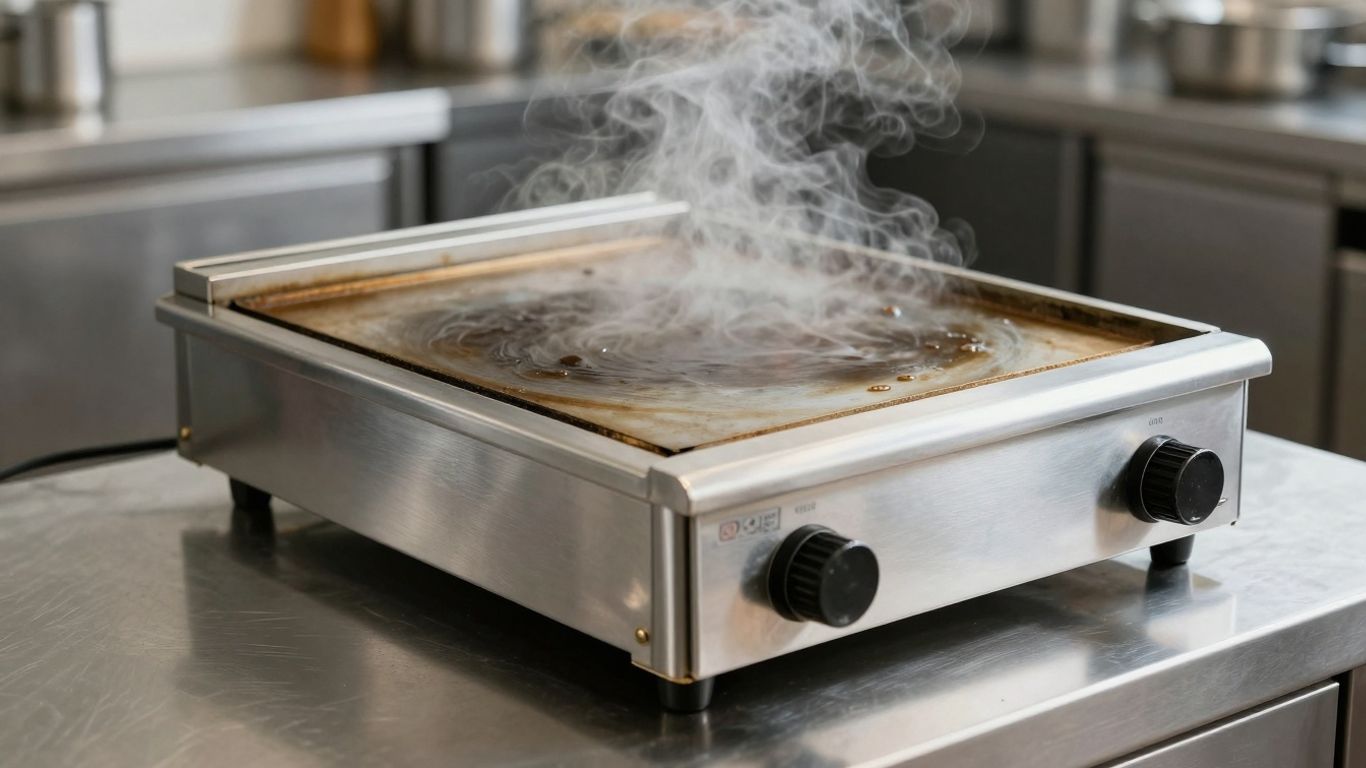
Keeping your electric griddle in top shape is key for consistent cooking and a longer lifespan. For mobile caterers, this means reliability on the go.
Daily Cleaning Routines for Griddle Surfaces
-
Wipe down after every use. Remove food bits and grease while the griddle is still warm (but not hot!).
-
Use a soft cloth or griddle scraper. Avoid abrasive pads that can scratch the plate.
-
For non-stick surfaces, be extra gentle. A quick wipe is usually all that’s needed.
A clean griddle cooks better and lasts longer.
Deep Cleaning and Component Maintenance
-
Empty and clean the grease trap regularly. This prevents build-up and potential fire hazards.
-
Check vents and surrounding areas. Dust and debris can affect performance.
-
Clean removable parts. If your griddle has detachable components, give them a thorough wash.
Regular Checks for Optimal Performance
-
Inspect heating elements. Ensure they’re working evenly.
-
Test temperature controls. Make sure they’re accurate.
-
Check the power cord. Look for any signs of wear or damage.
Regular maintenance isn’t just about keeping things clean; it’s about preventing costly breakdowns. For mobile units, a well-maintained griddle means fewer surprises when you’re out serving customers.
Making the Best Electric Commercial Griddle Choice
Choosing the right electric griddle is a big decision for any UK kitchen, especially for mobile caterers. It’s about matching the kit to your menu, your space, and your budget. Let’s break down how to make that smart choice.
Matching Griddle Features to Your Menu
Think about what you cook most. This is the starting point.
-
Breakfast items: Eggs, bacon, pancakes. A flat plate is best here. It keeps eggs from slipping and gives pancakes a nice, even cook. Electric griddles offer good temperature stability for these.
-
Burgers and steaks: Ribbed plates are good for searing and letting fat drain away. For mobile catering, a combination plate can offer flexibility if you do both.
-
Speciality dishes: Some menus might need specific heat zones or surfaces. Consider what your signature dishes require.
The plate surface is key to the food you can cook. For example, if you’re serving a lot of fried eggs, a flat surface is a must. If you’re doing burgers, you might want a ribbed section or a griddle designed for searing meat.
Assessing Your Kitchen Space and Workflow
Space is often tight, especially in mobile catering units. Size and type matter.
-
Countertop models: These are great for smaller kitchens or food trucks. They sit on existing work surfaces, saving floor space. They are often lighter and easier to move.
-
Full-height models: These are standalone units. They offer more cooking area but need dedicated space. For mobile units, a compact countertop model is usually the way to go.
Consider where the griddle will go. It needs to be under an extraction hood for safety and comfort. Think about how you’ll move food to and from the griddle. A good workflow prevents bottlenecks during busy service times. Easy installation is a big plus for electric models; just plug them in and go, which is ideal for temporary setups or food trucks.
Balancing Initial Cost with Long-Term Value
It’s easy to get caught up in the price tag, but look at the bigger picture.
-
Build quality: A well-built griddle will last longer, saving you money on repairs and replacements.
-
Energy efficiency: Electric griddles can be energy efficient, especially models with good insulation and precise controls. This cuts down running costs.
-
Maintenance: Simple cleaning and maintenance routines mean less downtime. Electric griddles are generally easier to clean than gas models.
When buying, think about the total cost of ownership. A slightly more expensive griddle that’s built to last and uses less energy could be much cheaper in the long run than a budget option that breaks down quickly or costs a fortune to run. Check the warranty too.
Look for features that make your life easier. Simple controls, easy-to-clean surfaces, and reliable performance all add up to better value for your business. Don’t forget to factor in the cost of any necessary electrical upgrades or ventilation if you’re setting up a new pitch.
Making the Final Choice
So, picking the right electric commercial griddle for your UK kitchen might seem a bit much at first, but it really comes down to knowing what you’ll be cooking, how much of it, and the space you’ve got. Think about the plate type – flat for eggs and pancakes, ribbed for meats, or a mix. Then there’s the size; a countertop model might be perfect for a smaller setup, while a full-height unit could be better for a busy place. Don’t forget controls; thermostatic ones give you more precise heat, which can be a real game-changer for consistency. By looking at these points, you’ll be well on your way to finding a griddle that works hard for you, day in and day out. Happy cooking!
Frequently Asked Questions
What are the main types of electric griddle surfaces available in the UK?
In the UK, electric griddles typically come with three main types of surfaces: flat, ribbed, or a combination of both. Flat surfaces are great for cooking things like eggs and pancakes, as they cook in their own juices. Ribbed surfaces have grooves that let grease drain away, making them ideal for meats and fish. Combination surfaces offer the best of both worlds, usually found on larger griddles.
How do I choose the right size electric griddle for my mobile catering business?
When selecting an electric griddle, consider how much food you’ll be cooking during busy periods. Larger griddles can handle more food at once, but they also need more power. Think about the space you have available in your food truck or at your event pitch. For smaller spaces or less busy operations, a countertop model might be sufficient. It’s a balance between cooking capacity and available room.
What’s the difference between manual and thermostatic heat controls on an electric griddle?
Manual controls usually offer simple settings like low, medium, and high heat. Thermostatic controls, on the other hand, let you set a precise temperature, offering more accuracy for cooking different types of food. While thermostatic controls might cost a bit more, they can give you better cooking results and consistency.
Are electric griddles easy to clean and maintain?
Yes, electric griddles are generally quite straightforward to clean and maintain. Daily cleaning involves wiping down the surface after use to remove food bits and grease. For deeper cleaning, you might need to remove parts like the grease tray. Regular checks of the heating elements and controls will help keep your griddle working well for a long time.
What are the benefits of using an electric griddle compared to a gas one for mobile catering?
Electric griddles are often simpler to install, as they just need a power source, making them very convenient for mobile setups. They also tend to be safer as there are no open flames or gas leaks. While gas griddles might heat up faster, electric models offer good temperature stability and are often more energy-efficient for consistent cooking.
How important are multiple heat zones on an electric griddle?
Multiple heat zones are very useful, especially on larger griddles. They allow you to cook different foods at different temperatures on the same unit. This means you can prepare a variety of dishes simultaneously. Also, during quieter times, you can turn off unused zones to save energy, making your operation more efficient.