
Choosing the Right Doner Kebab Machine for Your Kitchen in 2026


If you’re looking to bring the delicious taste of doner kebabs into your kitchen, whether for home use or a professional setting, selecting the right doner kebab machine is a big step. With so many options out there, it can feel a bit overwhelming. This guide will help you figure out what to look for, from the basic features to the more technical bits, so you can make a choice you’ll be happy with. We’ll break down the important things to consider, making the process much simpler. Let’s get started on finding that perfect doner kebab machine.
Key Takeaways
-
Think about how much space you have and how many kebabs you plan to make before buying a doner kebab machine.
-
Decide if an electric or gas heat source is best for your needs and if you need adjustable heat settings for better control.
-
Look for machines made from sturdy materials like stainless steel that are also easy to take apart and clean.
-
Consider the different types of doner kebab machine available, from small home units to larger commercial models, to match your cooking volume.
-
Always check customer reviews and warranty options when buying to make sure you’re getting a reliable doner kebab machine from a good supplier.
Understanding Your Doner Kebab Machine Needs
Right then, before you go splashing out on a doner kebab machine, let’s have a good think about what you actually need. It’s not a one-size-fits-all situation, is it? Getting this bit right means you’ll end up with a machine that works for you, not against you.
Assessing Your Kitchen Space
First off, where’s this beast going to live? Measure up. Seriously. Don’t just guess. A massive commercial unit crammed into a tiny home kitchen is a recipe for disaster. Think about:
-
Footprint: How much floor or counter space will it take up? Remember you need room to load the meat and serve.
-
Ventilation: Most doner machines need good airflow. Is there a window nearby, or can you fit an extractor fan?
-
Power/Gas Access: Where are your sockets or gas points? Make sure they’re within easy reach.
For mobile caterers, this is even more critical. You’re often working with tight spaces in vans or trailers. A compact, well-designed unit that fits snugly without blocking access is key. Think about how you’ll load and unload the meat safely and efficiently.
Considering Your Cooking Volume
How much meat are you planning to cook? Be honest. Are you doing a few kebabs for family on a Saturday night, or are you expecting to serve hundreds at a busy festival?
-
Home Use: A smaller, perhaps electric, machine might be fine. Think 5-10kg capacity.
-
Small Events/Pop-ups: You’ll want something a bit bigger, maybe 15-20kg capacity. Gas might be quicker for higher volumes.
-
Full-Time Catering: You’re looking at serious commercial kit, 20kg+ capacity, probably gas-powered for speed and consistent heat.
For mobile catering, always err on the side of slightly bigger than you think you need. Running out of food because your machine can’t keep up is a missed opportunity and unhappy customers.
Identifying Your Menu Requirements
What else are you planning to serve? Just doner meat, or will this machine pull double duty?
-
Pure Doner: A standard vertical rotisserie is your go-to.
-
Mixed Grilling: Some machines have additional grill elements or can be used for other meats. This adds versatility but might complicate cleaning.
Think about the type of meat too. Lamb, beef, chicken – they all cook slightly differently. Adjustable heat settings (more on that later) become important here.
Your doner machine should match your ambition, not the other way around.
Key Features For Your Doner Kebab Machine
Choosing the right doner kebab machine means looking at what makes it tick. It’s not just about the spit; it’s about how it cooks, how easy it is to manage, and how it fits into your busy kitchen.
Heat Source: Electric Versus Gas
This is a big one. Electric machines are generally simpler to install – just plug them in. They offer consistent heat, which is great for predictable results. Gas machines, on the other hand, can heat up faster and often provide a more intense heat, which some chefs prefer for that authentic char. Think about your kitchen setup and what fuel source you have readily available and are comfortable using.
-
Electric: Easy setup, consistent temperature, often more precise control.
-
Gas: Faster heat-up, potentially higher temperatures, requires gas line and ventilation.
Safety Note: Always ensure your chosen machine has proper safety features, especially if using gas. Check for flame failure devices and good ventilation.
Adjustable Heat Settings For Precision
Being able to fine-tune the heat is a game-changer. Different meats and different cuts need different temperatures. Being able to adjust the heat means you can get that perfect cook every time, from a tender interior to a crispy exterior. This stops your meat from drying out or burning too quickly, especially during busy periods.
-
Benefit: Prevents overcooking and undercooking.
-
Benefit: Allows for different meat types (chicken, lamb, beef).
-
Benefit: Consistent results, even during peak hours.
Ease Of Cleaning And Maintenance
Let’s be honest, cleaning is not the fun part, but it’s vital. A machine that’s easy to take apart and wipe down will save you loads of time and effort. Look for removable parts, smooth surfaces, and a good grease collection system. A clean machine is a safe machine and produces better-tasting food.
Regular cleaning isn’t just about hygiene; it keeps your machine running efficiently and can prevent costly breakdowns. Think about how quickly you can get it clean and ready for the next service.
-
Removable parts: Spits, drip trays, and guards should be easy to detach.
-
Material: Stainless steel is your friend here – it’s durable and wipes clean easily.
-
Grease trap: A well-designed trap stops mess and fire hazards.
Exploring Different Doner Kebab Machine Types
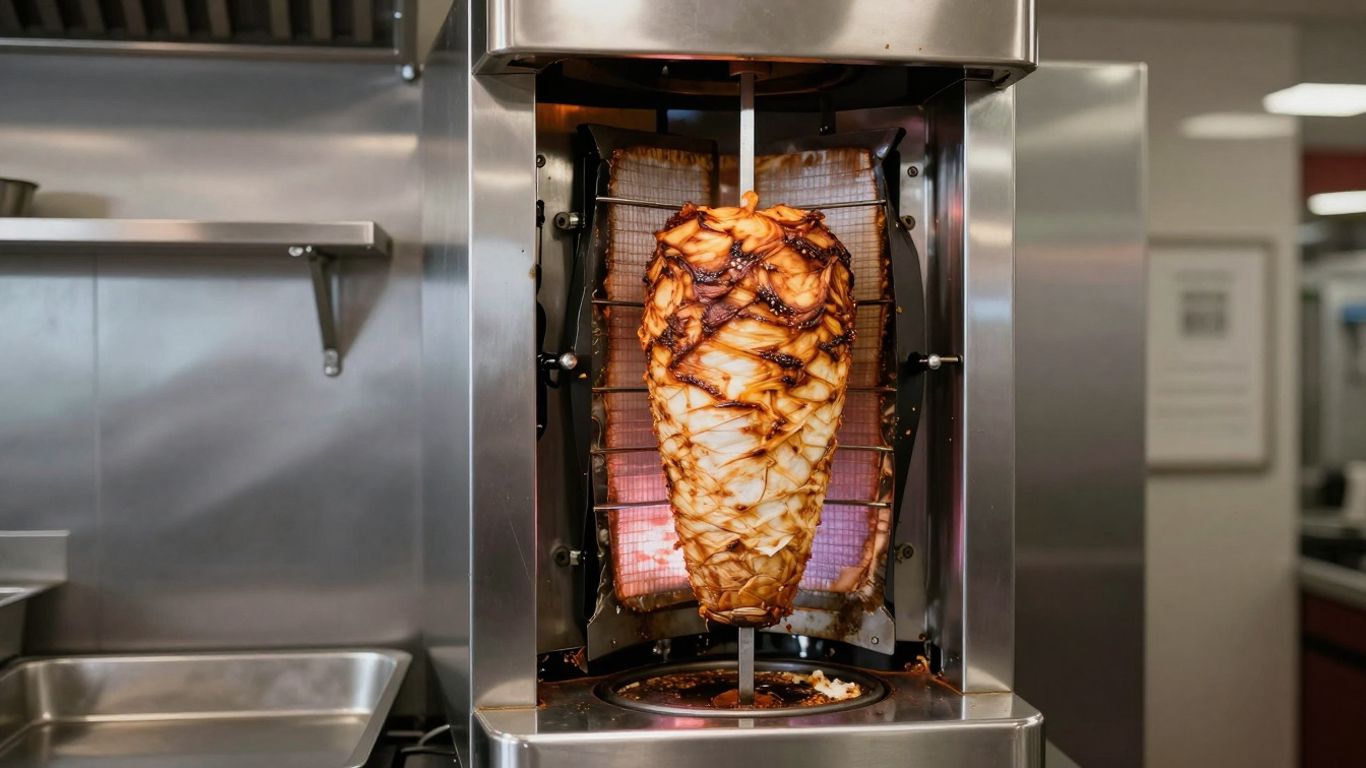
Choosing the right doner kebab machine depends on where you’ll use it and how much you plan to cook. Let’s break down the main types available.
Compact Machines For Home Use
These are your go-to for smaller kitchens or occasional use. Think personal kebabs for family nights or small get-togethers. They’re usually electric, easy to operate, and don’t take up much counter space. Perfect for getting that authentic taste without a commercial setup.
-
Ideal for: Home cooks, small apartments, hobbyists.
-
Benefits: Space-saving, simple to use, lower cost.
-
Example: A small electric rotisserie that fits on a countertop, great for a couple of skewers.
Commercial Doner Kebab Machines For High Volume
If you’re running a busy takeaway or catering events, you need something robust. Commercial machines are built for speed and capacity. They can handle larger cuts of meat and cook continuously. Look for sturdy construction and powerful heating elements.
-
Ideal for: Restaurants, takeaways, mobile caterers, event caterers.
-
Benefits: High output, durable, consistent cooking.
-
Safety Note: Ensure good ventilation and proper electrical connections for these powerful units.
Automatic Doner Machines For Efficiency
These machines take the guesswork out of cooking. With automated rotation and temperature control, they deliver consistent results every time. This frees you up to focus on other tasks, making them a smart choice for busy kitchens where efficiency is key.
-
Ideal for: Businesses needing consistent quality and speed.
-
Benefits: Reduced labour, consistent doner quality, efficient cooking.
-
Consider: Programmable settings can offer even more control over cooking profiles.
Materials And Durability Matters
The Benefits Of Stainless Steel Construction
Stainless steel is your best friend for a doner machine. It’s tough, resists rust, and wipes clean easily. This means less hassle and more time serving. Think about it: a machine that looks good and works well, day in, day out. For mobile catering, this is gold. You need kit that can take a beating and still perform. Stainless steel fits the bill. It handles the heat and the constant use without a fuss. Plus, it keeps your food prep hygienic – a big win for any food business.
Ensuring Longevity Through Sturdy Build
Don’t just look at the shiny bits. Check how it’s put together. A well-built machine lasts longer. Look for solid welds and thick gauge metal. This stops it from warping or breaking under pressure. A flimsy machine will cost you more in the long run with repairs or replacements. For busy kitchens, especially those on the move, a robust build is non-negotiable. It means fewer breakdowns and more reliable service for your customers.
-
Check the thickness of the metal: Thicker is generally better for durability.
-
Inspect the joins and welds: They should be neat and strong.
-
Look for quality components: Motors and heating elements should feel solid.
A machine that’s built to last saves you money and stress. It’s an investment in your business’s reliability and reputation. Choose wisely, and it will serve you well for years.
Sourcing Your Doner Kebab Machine With Confidence
Researching Reputable Manufacturers
When you’re looking for a doner kebab machine, stick to brands that have a good name. Think about companies known for making reliable kitchen kit. A solid manufacturer often means a better machine. Check their history and see if they specialise in this type of equipment. This helps avoid early breakdowns and keeps your customers happy.
Leveraging Customer Reviews And Forums
Don’t just take the manufacturer’s word for it. See what other people are saying. Online reviews and catering forums are goldmines for real-world feedback. Look for comments on how easy the machine is to use during busy periods and how it holds up over time. This is where you’ll find out about any quirks or hidden gems.
-
Read reviews on multiple platforms.
-
Join online groups for mobile caterers.
-
Ask specific questions about performance and cleaning.
Understanding Warranty And Support Options
What happens if something goes wrong? A good warranty is a sign of confidence from the maker. It protects your investment. Also, check what kind of after-sales support they offer. Can you get spare parts easily? Is there a helpline if you get stuck? This is vital for keeping your business running smoothly.
Always check the warranty details before you buy. Understand what’s covered and for how long. This can save you a lot of hassle and money down the line, especially if you’re relying on the machine for your livelihood.
Essential Doner Kebab Machine Maintenance
Daily Cleaning Routines
A quick clean after every shift keeps things running smoothly.
-
Wipe down the spit and any removable parts. Use a damp cloth and mild detergent.
-
Empty the grease collection tray. This stops smells and fire risks.
-
Clean the exterior surfaces. A simple wipe prevents build-up.
Regular cleaning isn’t just about looks; it stops grease from hardening, which makes deep cleaning much harder later on. It also stops old food bits from affecting the taste of your next batch.
Weekly and Monthly Deep Cleans
Give your machine a proper going over once a week, or monthly for lighter use.
-
Weekly: Disassemble parts like the drip tray, spit, and any guards. Wash these thoroughly in hot, soapy water. Check heating elements for any debris and gently clean if needed.
-
Monthly: Inspect the motor and any electrical components (ensure the machine is unplugged!). Check for wear and tear on seals or gaskets. For gas models, check gas lines for leaks (use a soapy water test).
Safety First: Always unplug the machine before any deep cleaning. For gas models, turn off the gas supply at the source.
The Importance Of Professional Servicing
Don’t forget a yearly check-up from a pro.
-
Safety Checks: They’ll ensure all safety features are working correctly.
-
Performance Tuning: Gas machines might need burner adjustments. Electric elements can be tested for efficiency.
-
Wear and Tear: A technician can spot parts that are close to failing, like worn bearings or heating elements, and replace them before they cause a breakdown.
Example: A mobile caterer found their machine was taking longer to heat up. A yearly service revealed a partially blocked gas jet, which was a simple fix that prevented longer downtime during a busy festival.
Making Your Final Choice
So, after looking at all the different bits and pieces, picking the right doner kebab machine for your kitchen in 2026 really comes down to knowing what you need. Think about how much space you’ve got, how busy you’ll be, and what kind of kebabs you’re aiming for. Whether you’re after a small unit for home or a bigger one for a busy food truck, there’s something out there. Don’t forget to check out the build quality – stainless steel is usually a good bet for keeping things clean and lasting a long time. And always, always look for warranties and buy from places you trust. Getting this bit right means you’ll be serving up tasty kebabs without any fuss for years to come.
Frequently Asked Questions
What is the most important thing to consider when buying a doner kebab machine?
The most crucial factor is understanding your specific needs. Think about how much space you have, how many kebabs you plan to cook, and what types of dishes you want to make. Getting these right will help you choose a machine that fits perfectly into your kitchen and cooking style.
Should I choose an electric or gas-powered doner kebab machine?
Electric machines are generally easier to use and safer for indoor kitchens, often featuring simple plug-and-play operation. Gas machines, on the other hand, can provide more intense and consistent heat, which is great for searing meat quickly, but they require proper ventilation and gas line connections.
How can I make sure my doner kebab machine will last a long time?
Look for machines made from strong materials like stainless steel. This metal is tough, doesn’t rust easily, and is simple to clean, all of which help your machine stay in good condition for years. A well-built machine with sturdy parts will also handle regular use much better.
What makes a doner kebab machine easy to clean?
Machines with removable parts, such as the drip tray or the main spit, are much easier to clean. Surfaces that are smooth and non-stick also help prevent food from sticking, making the cleaning process quicker and less of a chore after cooking.
Where is the best place to buy a doner kebab machine?
It’s wise to buy from well-known manufacturers or trusted suppliers who offer good warranties. Reading reviews from other customers online can provide honest feedback about a machine’s performance and reliability. Online stores often have a wider selection, making it easier to compare different models.
How often should I clean and maintain my doner kebab machine?
You should perform a quick clean after each use to remove food debris. A more thorough cleaning of all parts should be done weekly. It’s also a good idea to have your machine checked by a professional service technician at least once a year to ensure it’s working safely and efficiently.