

Choosing the Right 7000 Watt Generator for Your Needs

So, you’re looking at getting a 7000 watt generator.. It’s a powerful choice, but understanding its capabilities is key to making it work for you. That’s a pretty decent bit of kit and can power a good chunk of your home or even a small business. But just picking one off the shelf might not be the best idea. There’s a bit to think about, like what exactly you need it for and how much power your appliances actually gobble up. We’ll break down what you need to know so you can get the right 7000 watt generator without any fuss.
Key Takeaways
-
A 7000 watt generator is a solid choice for powering essential home appliances, RVs, or job sites, offering a good mix of power and portability.
-
Understand the difference between running watts (continuous power) and starting watts (surge power needed to kickstart appliances with motors).
-
Calculate your total power needs by adding up the running watts of all appliances you want to run simultaneously, and then factor in the highest starting watts needed for any single appliance.
-
Consider the types of 7000 watt generators available – portable, inverter, or solar – to match your specific needs and preferences.
-
Always prioritise safety: operate your generator in a well-ventilated area, keep it away from water, and follow all manufacturer guidelines.
Understanding Running Watts Versus Starting Watts
Right then, let’s get this sorted. When you’re looking at a 7000 watt generator, you’ll see two numbers: running watts and starting watts. They’re both dead important, especially if you’re running a food truck or a busy stall.
Running watts are the steady power your generator can give out all the time. Think of it as the engine’s normal working pace. This is what keeps your fridges humming, your lights on, and your till working away.
Starting watts, on the other hand, are a bit different. This is the extra kick of power needed for just a second or two when something with a motor fires up. We’re talking about things like blenders, freezers, or even a water pump. These bits need a big surge to get going, often double or even triple their normal running power.
For example, your fancy coffee machine might only need 500 running watts, but when you switch it on, it could suddenly demand 1500 watts for that initial burst. If your generator can’t handle that surge, it’ll just trip out, leaving you in the dark (and probably with a very unhappy customer).
Here’s a quick look at how it works:
|
Appliance |
Running Watts |
Starting Watts |
|---|---|---|
|
Commercial Blender |
1000 |
2000 |
|
Chest Freezer |
800 |
1800 |
|
Hot Plate |
1500 |
1500 |
|
Lights & Fans |
400 |
400 |
So, if you add up the running watts (1000 + 800 + 1500 + 400 = 3700 watts), that’s your baseline. But you also need to account for the highest starting watt appliance, which in this case is the blender at 2000 watts. So, your total power need at that moment is 3700 + 2000 = 5700 watts. A 7000 watt generator can handle this easily, but if you added another big motor, you’d be in trouble.
Always check the ‘starting watts’ or ‘surge watts’ for any appliance with a motor. It’s the most common reason generators get overloaded, even if the running watts seem fine. For mobile catering, this is key to keeping your service smooth and avoiding costly breakdowns mid-event.
So, when you’re choosing your 7000 watt generator, make sure its starting wattage capacity is high enough to handle all your motor-driven kit kicking off together. It’s the difference between a smooth service and a power outage disaster.
Key Specifications For Your 7000 Watt Generator
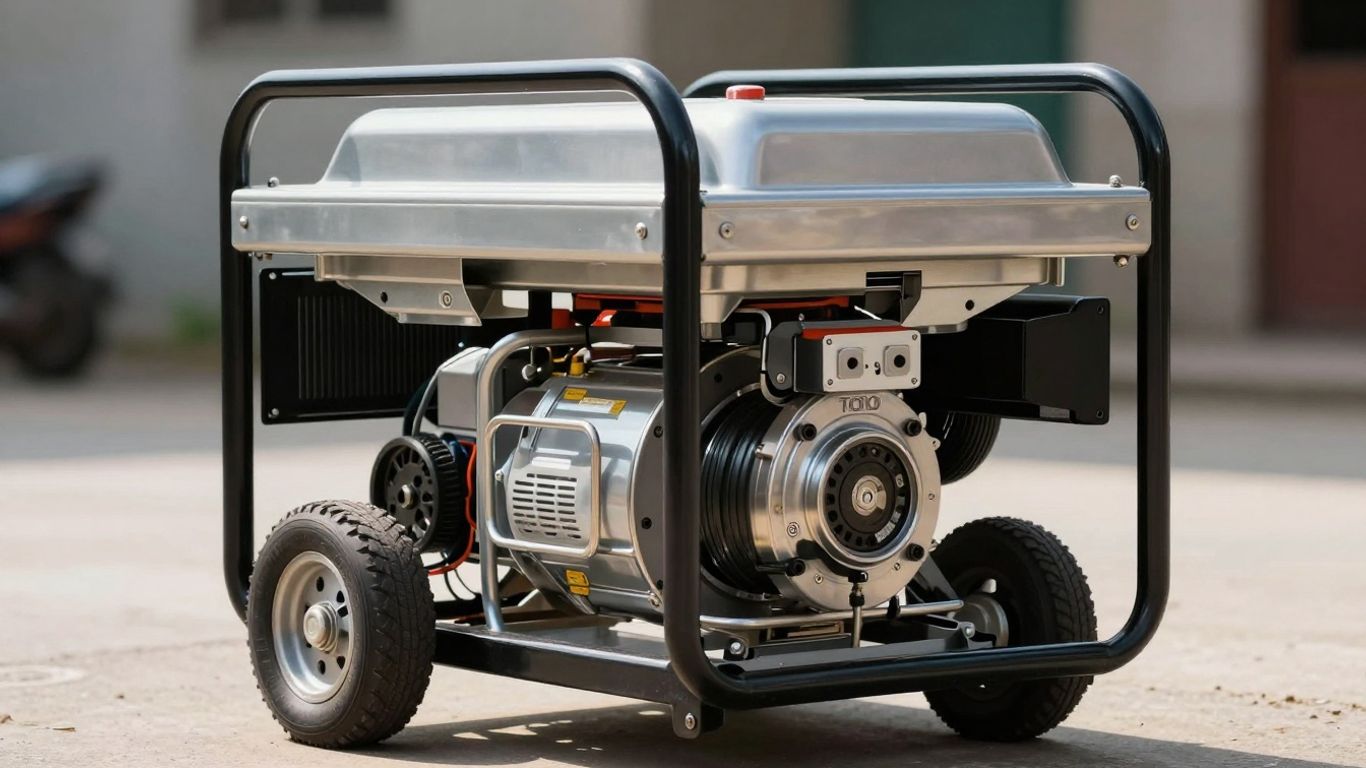
Right then, let’s talk about what really matters when you’re looking at a 7000 watt generator. It’s not just about the big number, is it? For us mobile caterers, getting this bit right means your fryers stay hot and your fridges stay cold, no fuss.
The most important thing is knowing your generator’s ‘running watts’ versus its ‘starting watts’. Running watts are what it can keep pumping out steadily. Starting watts, though, that’s the extra kick needed for things with motors, like your ice cream machine or a water pump, when they first fire up. This surge can be double or even triple the running power.
Here’s a quick rundown of what to check:
-
Running Watts: This is your everyday power. Can it keep your coffee machine, lights, and till running all day? For a 7000 watt unit, you’re looking at around 7000 running watts.
-
Starting Watts (Surge Watts): This is the peak power. Does it have enough grunt to start your big chiller unit without tripping? Expect this to be higher, maybe 8000-9000 watts on a good 7000 watt model.
-
Fuel Type: Petrol, diesel, or maybe even gas? Think about what’s easiest and cheapest for you to get hold of on the road.
-
Fuel Tank Size & Run Time: How long can it go before you need to refuel? Crucial for long events.
-
Outlets: Does it have enough sockets, and the right types, for all your gear? You’ll want a mix of standard UK sockets and maybe a higher amperage one for bigger kit.
-
Noise Level: Some sites have noise restrictions. Check the decibel rating – quieter is usually better.
-
Weight & Portability: If you’re moving it around a lot, a few extra wheels or a good handle can make a world of difference.
Always do a quick check of your appliances’ power needs before you buy. A quick look at the label or the manual will tell you the running and starting watts. It’s better to know for sure than to guess and end up with a generator that can’t cope.
Think about your biggest power users. Your main oven might need 3000 running watts and 4500 starting watts. Your fridge might need 500 running watts but 1500 starting watts. Add them up, but remember, you probably won’t start everything at the exact same second. Plan your start-ups to avoid overloading that surge capacity.
What Appliances Can A 7000 Watt Generator Power
Right then, let’s talk about what this 7000-watt beast can actually run. For mobile caterers, this is your lifeline. Think of it as your portable power station, keeping everything humming.
This generator is brilliant for powering multiple kitchen appliances at once. No more juggling, no more power cuts mid-service.
Here’s a rough idea of what you can expect:
-
Refrigeration: Keep your perishables chilled. Fridges and freezers are usually fine, but always check their starting watts – they can be a bit greedy when they first kick in.
-
Cooking Gear: Microwaves, coffee machines, and even smaller electric griddles or hot plates are well within its capabilities. You might struggle with a full-sized electric oven or hob, though – those are power-hungry!
-
Lighting & Sound: Keep your pitch bright and the atmosphere lively. Plenty of power for LED lights and any sound systems you might use.
-
Essential Utilities: Think water pumps, small fryers, or even a portable air conditioning unit to keep you cool on hot days.
Important Note: Always remember the difference between running watts and starting watts. Appliances with motors, like fridges or blenders, need a big surge of power to get going. You can usually run several things at once, but try to start high-demand items one by one to avoid tripping the breaker. It’s a good idea to list out all your kit and its wattage needs before you buy.
Running your catering van or food stall becomes a doddle. You can power your coffee machine, your fridge, your lights, and even a small fan, all without breaking a sweat. It means a smoother service and happier customers.
For example, you could easily run:
-
A commercial microwave (around 1200W running)
-
A large fridge/freezer combo (around 800W running, 2000W starting)
-
Multiple LED light strings (around 100W total)
-
A coffee machine (around 1000W running)
That’s roughly 3100 running watts, leaving you a good chunk of power spare for other bits and bobs. Just don’t try to run a massive electric grill and a deep fat fryer at the exact same time – that’s asking for trouble!
Powering Your RV Or Job Site With A 7000 Watt Generator
Right then, let’s talk about getting your 7000 watt generator working hard for you, whether you’re off on an adventure in your caravan or grafting on a building site. This size of generator is a real workhorse, giving you plenty of juice.
For the Road Warriors (RV Life)
Heading off in your motorhome? A 7000 watt generator is your best mate. It’s got enough grunt to keep all your comforts running.
-
Air con: Keep your cool on hot days. Most RV air conditioners need a good chunk of power, especially when they kick in.
-
Kitchen gadgets: Run your microwave, coffee maker, and fridge without a hitch. No more lukewarm drinks or soggy sandwiches!
-
Entertainment: Power up your telly, charge your laptops, and keep the mood lighting going.
-
Other bits: Fans, phone chargers, maybe even a small electric grill for that al fresco vibe.
The key is that it can handle those big power surges when things start up. So, your air con won’t trip the breaker the moment it fires up.
RV Power Checklist:
|
Appliance |
Approx. Running Watts |
Approx. Starting Watts |
Notes |
|---|---|---|---|
|
Air Conditioner |
1500-2000 |
3000-4000+ |
Big power draw on startup |
|
Microwave |
1000-1500 |
1000-1500 |
Use one at a time |
|
Refrigerator |
150-200 |
700-1000 |
Constant low draw, surge on start |
|
Coffee Maker |
800-1200 |
800-1200 |
Can be a bit thirsty |
|
Electric Grill |
1500 |
1500 |
Great for outdoor cooking |
|
Lighting (LED) |
10-50 per bulb |
10-50 per bulb |
Very efficient |
Remember, don’t try to run everything at once. Plan your power usage. This generator is brilliant for keeping your home-from-home comfortable.
For the Builders and Tradespeople (Job Site Power)
On a building site, power isn’t always on tap. A 7000 watt generator is a game-changer.
-
Power tools: Saws, drills, nail guns, grinders – it can handle them. Keep your workflow smooth.
-
Site lighting: Work safely, even when it’s dark or the weather’s grim.
-
Heavy gear: Need to run an air compressor or even a small welder? Check the specs, but this generator often has the muscle.
Running multiple power tools at once is where this generator really shines. Just be mindful of the total wattage. Start your biggest tools first, then add smaller ones. Avoid starting two big motor tools at the exact same second.
Job Site Power Tips:
-
Know your tools: Check the wattage for each tool. Some tools have a big ‘starting’ wattage that’s much higher than their ‘running’ wattage.
-
Plan your sequence: Don’t switch everything on at once. Start the most power-hungry tool, then add others.
-
Keep it fuelled: Make sure you’ve got enough fuel for the day. Runtime is usually around 6-9 hours at half load, but this varies.
-
Safety first: Always place the generator on a level surface, away from windows and doors. Never run it indoors.
Using a 7000 watt generator means less downtime, happier workers, and projects finished on time. It’s a solid investment for any mobile operation.
Safety Tips For Stable 7000 Watt Generator Operation
Right then, let’s talk about keeping your 7000 watt generator running smoothly and safely. Especially if you’re out there catering, you don’t want any power hiccups.
First off, always run your generator outside. Seriously, never indoors, not even in the garage. Those fumes are nasty and can be deadly. Find a spot with plenty of fresh air, well away from any doors or windows. Think of it like giving your generator its own little outdoor office.
Make sure it’s sitting on a flat, solid surface. No wobbling allowed! This stops vibrations from doing any damage and stops fuel from sloshing about. If it’s raining, a simple cover designed for generators will keep it dry without blocking the air it needs to breathe.
Extension cords are your best mate, but use the right ones. Get heavy-duty, outdoor-rated cables. Give them a quick once-over before you plug in – no nicks or tears. And don’t try to plug in too much; keep an eye on what you’re running.
Here’s a quick rundown of what to watch out for:
-
Placement: Outdoors, level ground, good airflow.
-
Cords: Heavy-duty, outdoor-rated, check for damage.
-
Load: Don’t push it too hard. Know your limits.
-
Weather: Protect from rain, but don’t suffocate it.
If you’re connecting it to your catering setup or home, a transfer switch is the way to go. It’s the safest method, stopping power from going back where it shouldn’t and protecting your gear and anyone working on the mains.
Keep an eye on your fuel too. Use the right type and don’t let it sit around for ages. Fresh fuel means a happy generator. And if you’re not using it for a while, a fuel stabiliser is a good shout.
Basically, treat it with a bit of respect, give it space, and use the right bits and bobs, and it’ll keep your fryers hot and your lights on, no problem.
Types Of 7000 Watt Generators
Right then, let’s talk about the different kinds of 7000-watt generators you can get. It’s not a one-size-fits-all situation, especially when you’re running a mobile catering business.
Conventional Portable Generators
These are your workhorses. They’re usually fuelled by petrol or diesel and are built tough. They’re great for powering multiple pieces of equipment at once. Think fryers, ovens, and fridges all humming along. They can be a bit noisy, mind, so consider where you’re setting up.
Inverter Generators
These are the newer kids on the block. They produce cleaner power, which is brilliant for sensitive electronics like laptops, card machines, or even your fancy coffee maker. They’re generally quieter and more fuel-efficient too. Some models, like the DuroMax XP7000iHT, offer tri-fuel options, giving you flexibility on fuel choice. This is a big plus for mobile caterers who might have different fuel availability depending on their location.
Dual-Fuel Generators
These are a bit of a hybrid. They can run on either petrol or propane. Why is this good for you? Well, propane often burns cleaner and can be easier to store for longer periods. Plus, if you run low on one fuel, you can switch to the other. This flexibility is a lifesaver when you’re out and about.
Key Differences:
|
Type |
Fuel |
Noise Level |
Power Quality |
Best For |
|---|---|---|---|---|
|
Conventional |
Petrol/Diesel |
Higher |
Standard |
Heavy-duty appliances, multiple tools |
|
Inverter |
Petrol |
Lower |
Clean |
Sensitive electronics, quiet operation |
|
Dual-Fuel |
Petrol/Propane |
Medium |
Standard |
Fuel flexibility, extended runtime |
When you’re choosing, think about what you’ll be powering most. If it’s just your basic cooking gear, a conventional might do. But if you’ve got a lot of electronics, an inverter or a dual-fuel model that can handle them cleanly is probably a better bet. Always check the [generator power supply made easy with Lipower](Generator Power Supply Made Easy With Lipower) for more on how different models perform.
Calculating Your Power Needs
Right then, let’s get down to brass tacks. Figuring out what you actually need a 7000-watt generator for is key. Don’t just guess, or you might end up with a fancy paperweight that can’t even power your kettle. For mobile caterers, this is even more important – one dodgy fryer or a flat fridge can ruin your whole service.
The golden rule: List everything you want to power. Think about your main kit first. What’s essential for your food? Fryers, ovens, fridges, freezers, lights, tills, maybe even a small water heater for washing up. Don’t forget the little things like phone chargers or a small fan if it gets hot.
Next, you need to know the watts for each item. Look on the back of the appliance, or in its manual. You’ll see two numbers: ‘running watts’ (what it uses all the time) and ‘starting watts’ (a big surge when it first kicks in, especially for motors like in fridges or blenders).
Here’s a quick look at some common catering gear:
|
Appliance |
Running Watts |
Starting Watts |
|---|---|---|
|
Commercial Fryer |
1500 |
2000 |
|
Fridge/Freezer |
800 |
1800 |
|
Oven (Electric) |
2000 |
2000 |
|
Coffee Machine |
1200 |
1200 |
|
Lights (LED) |
100 |
100 |
|
Till/POS System |
150 |
150 |
To get your total, add up all the ‘running watts’ for everything you plan to have on at the same time. Then, find the single highest ‘starting watts’ figure from your list and add that to your running total. This gives you your peak demand.
For example, if your total running watts come to 5500W, and your highest starting watt appliance needs 2000W, you’re looking at a total need of 7500W for that brief moment. This is why a 7000W generator might be cutting it fine if you’re not careful. You need a bit of headroom.
Always aim for a generator that can handle at least 10-20% more than your calculated peak demand. This stops it from being overworked, makes it last longer, and means fewer headaches when you’re busy.
So, if your calculation shows you need 7500W, a 7000W generator might struggle. You might need to stagger your appliance use – don’t switch on the oven and the fryer at the exact same second if you can help it. Or, consider a slightly bigger generator if your budget allows. Better safe than sorry when you’ve got hungry customers waiting!
Alternatives To Overloading Your Generator
Right, so you’ve got your 7000 watt generator, and it’s a beast. But even a beast can get overwhelmed. Pushing it too hard means trips to the repair shop and unhappy customers, especially if you’re catering.
Don’t try to run everything at once. It’s tempting, but it’s a recipe for disaster. Think about what you really need powered at any given moment.
Here’s how to keep things running smoothly:
-
Prioritise your kit: What’s absolutely essential for service right now? Lights? The main fryer? Your coffee machine?
-
Stagger your power use: Can the water heater wait a bit? Can you switch off the ice cream machine while you’re prepping salads?
-
Know your starting watts: Big appliances like fridges or freezers need a massive surge of power to kick in. Make sure your generator can handle that initial jump, even if the running watts are fine.
For mobile caterers, this is key. Imagine your generator cutting out mid-rush because you plugged in the microwave and the hot plate at the exact same second. Not good for business.
Consider a dual-fuel model. These give you flexibility. If you’re running low on one fuel, you can switch to another, giving you more time to manage your load or refuel.
If you find yourself constantly juggling power needs or wishing for just a little more juice, it might be time to look at your setup. Maybe you need a second, smaller generator for less demanding tasks, or perhaps it’s time to upgrade to a slightly larger unit if your menu or equipment has grown.
-
Check appliance labels: Always look for the wattage. If it’s not listed, a quick online search usually helps.
-
Use heavy-duty extension cords: Flimsy cords can’t handle the power and can be a fire hazard.
-
Keep it cool: Generators work better when they’re not overheating. Make sure there’s plenty of airflow around it.
By being smart about what you plug in and when, you’ll keep your generator happy and your customers fed.
Why Choose Lipower For Your 7000 Watt Needs
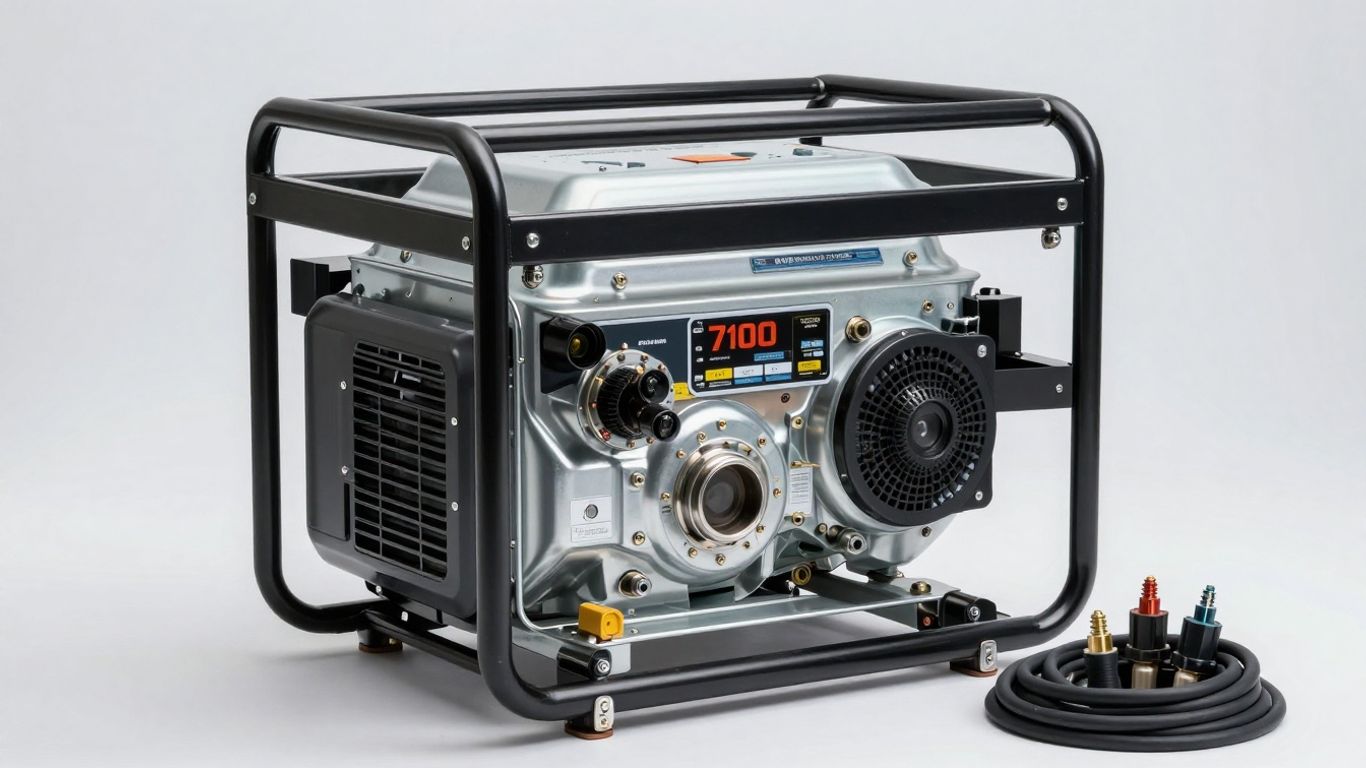
When you’re looking for a solid 7000 watt generator, you want something that just works, right? That’s where Lipower comes in. They build their generators with you in mind, aiming for steady, dependable power whether you’re out on a job, parked up in your caravan, or just need backup at home.
Lipower generators are designed for consistent power output, meaning no nasty dips or spikes that could fry your sensitive gear. Think laptops, phones, or even medical equipment – they’re all protected.
Here’s what makes them a good shout:
-
Steady Power: Keeps things running smoothly, no surprises.
-
Handles Surges: Manages those tricky starting watts for appliances like fridges without a fuss.
-
Fuel Smart: Gets more out of every drop, so you can run for longer.
-
Tough Build: Made to handle a bit of rough and tumble.
-
Easy to Use: Simple start-up, clear controls, and not too noisy.
They also pay attention to the little things. Some models even offer dual fuel options, letting you switch between petrol and propane. This is a real lifesaver if one fuel type is hard to get hold of, giving you more flexibility for longer runtimes. It’s all about making sure you’ve got power when you need it most.
Lipower focuses on making sure your generator is reliable and easy to use. You’re not just buying power; you’re getting peace of mind. Their smart load management means you can power your essentials without worrying about overloading the unit.
For mobile caterers, this means your coffee machine, fridge, lights, and till system can all run without interruption. You can keep your customers happy and your business running smoothly, even miles from a plug socket. It’s about dependable power for your livelihood. If you’re looking at different power setups, you might find their insights on 24V systems useful for understanding power efficiency.
Frequently Asked Questions About 7000 Watt Generators
Got questions about your 7000 watt generator? We’ve got answers.
What’s the difference between running and starting watts?
Running watts are the steady power your generator gives out. Starting watts are the extra burst needed to get things like fridges or freezers going. A 7000 watt generator usually offers around 7000 running watts and a higher surge capacity, maybe 8750 watts, to handle that initial kick.
-
Running Watts: Continuous power for appliances.
-
Starting Watts: Short burst for motors.
-
Example: A freezer might need 700 running watts but 2000 starting watts.
Can a 7000 watt generator power my whole house?
It’s great for essentials, but probably not everything. Think lights, fridge, maybe a small heater or fan. It’s best for keeping key items running during a power cut, not running the whole show.
What can I power with a 7000 watt generator?
For mobile caterers, this is a game-changer. You can run:
-
Your main cooking equipment (grills, fryers).
-
Refrigeration units to keep food fresh.
-
Lighting for evening service.
-
Point-of-sale systems and card readers.
-
Small appliances like coffee makers or microwaves.
It’s powerful enough for most food trucks or outdoor catering setups. Just remember to add up the watts of everything you want to run at the same time.
How long can I run it for?
Most 7000 watt generators can run for about 8-12 hours on a full tank, depending on the load. For longer events, you might need a refill or a spare fuel can. Always check the fuel level when it’s off and cool.
Always place your generator on a level surface, away from windows and doors, and never indoors. Carbon monoxide is a silent killer. Use an extension cord rated for outdoor use and the generator’s output.
So, What’s the Takeaway?
Right then, choosing a 7000-watt generator isn’t rocket science, but it does need a bit of thought. We’ve gone through what these things can actually power, from keeping your fridge humming during a blackout to running those essential tools on a job site. Remember to keep an eye on those starting watts versus running watts – that’s the bit that catches most people out. Have a good look at what you really need to power, do a quick calculation, and then pick a generator that fits the bill without costing you an arm and a leg. It’s all about getting the right bit of kit for your specific situation, so you’re not left in the dark, literally or figuratively. Happy powering!
Frequently Asked Questions
How much power does a 7000-watt generator actually give me?
A 7000-watt generator is pretty beefy! It usually means it can give you about 7000 watts of steady power for things that are already running. But, when something with a motor starts up, like a fridge or an air conditioner, it needs a big burst of extra power for a moment. This is called ‘starting watts’, and a 7000-watt generator can typically handle a surge of around 8750 watts. So, it’s got enough oomph for most of your essential stuff.
Can I run my whole house with a 7000-watt generator?
While a 7000-watt generator is a great backup, it’s usually not enough to power *everything* in your house all at once, especially if you have big appliances like a central heating system or an electric oven. Think of it as powering the most important things – your fridge, some lights, your telly, maybe a fan or a small heater. You’ll need to be a bit selective about what you switch on.
What’s the difference between ‘running watts’ and ‘starting watts’?
Right, imagine you’re pushing a swing. ‘Running watts’ is like the steady push you give it to keep it going. ‘Starting watts’ is that massive shove you need to give it at the very beginning to get it moving in the first place. Appliances with motors, like fridges or washing machines, need that big initial shove (starting watts) to get going, but then they settle down to a steady power need (running watts).
How long can I keep my 7000-watt generator running?
Most generators can keep chugging along for about 8 to 12 hours on a full tank of fuel, but this really depends on how much you’re asking it to do and how big its fuel tank is. To make sure your generator lasts a good long time, it’s a smart idea to give it regular check-ups, keep an eye on the oil, and let it have a little break now and then.
What sort of things can a 7000-watt generator power in my food truck?
For a food truck, a 7000-watt generator is a solid choice! It can handle things like your coffee machine, fryers, griddles, water boilers, and lights. It’s also good for keeping your fridges and freezers running, plus any music systems or charging points for your customers. Just remember to spread out the use of high-power items, especially those with motors, so you don’t overload it when they first kick in.
Is it safe to use a generator in the UK?
Absolutely, but safety is super important! Always set up your generator outside, well away from windows and doors to avoid fumes getting inside. Make sure it’s on a level surface and protected from rain. And never, ever plug it directly into your house’s main electrical system – always use a proper transfer switch. Following the instructions and keeping it maintained is key to safe operation.