

Selecting the Perfect Commercial Gas Fryer for Your UK Kitchen

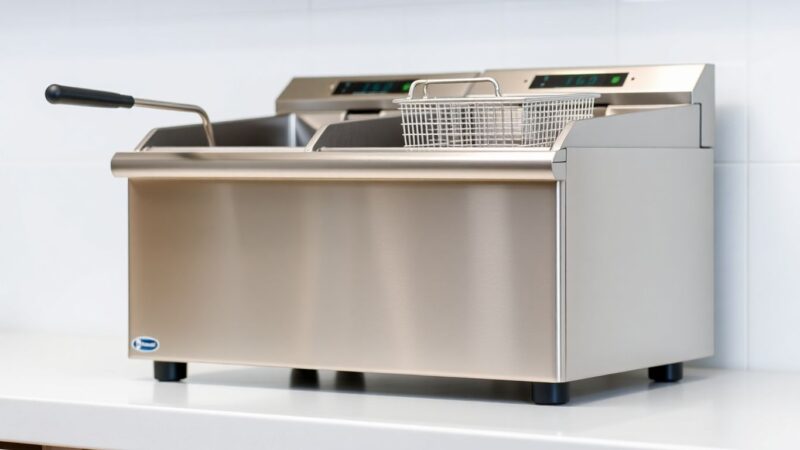
A commercial gas fryer is the workhorse behind every mobile catering operation that serves chips, battered fish, chicken, or doughnuts. Propane-powered fryers deliver faster heat recovery, higher BTU output, and complete independence from mains electricity — critical advantages when you’re working from a van, trailer, or outdoor pitch where power supply is unreliable or expensive.
Choosing the right commercial gas fryer for mobile catering means balancing tank capacity against your service volume, matching BTU output to your recovery time needs, and ensuring the unit fits within your van’s available space and propane supply. The wrong fryer either can’t keep up during a lunch rush (oil temperature crashes and food comes out greasy) or takes up space and gas you can’t afford to waste.
Tank Sizes and Output for Mobile Catering
Commercial gas fryers for mobile catering typically come in single-tank configurations ranging from 5 to 20 litres of oil capacity. The most popular sizes for van-based operations are the 8-10 litre single tank (ideal for burger vans adding chips as a side) and the 13-15 litre single tank (the standard for fish and chip operations or any caterer where fried food is a main menu item). Twin-tank models exist but take up significantly more counter space — only consider these if fried food is your primary output and you regularly serve 200+ covers per session.
A 10-litre fryer can produce approximately 6-8 portions of chips every 4-5 minutes once the oil is at temperature. A 15-litre model handles 10-12 portions in the same cycle. For a busy event serving 150 people over 3 hours, a single 15-litre fryer is usually sufficient if you’re managing your batch timing well. If you regularly experience queue buildup during peak service, stepping up to a twin-tank setup or a larger 20-litre single tank eliminates the bottleneck.
BTU Rating and Heat Recovery
BTU (British Thermal Unit) rating is the single most important specification for a commercial gas fryer used in mobile catering. It determines how quickly the oil reaches frying temperature (typically 170-190°C) from cold, and crucially, how fast the oil recovers after you drop a basket of cold food into it. Every time you load food, the oil temperature drops by 15-30°C. A fryer with inadequate BTU output takes too long to recover, meaning food sits in lukewarm oil absorbing grease instead of frying crisply.
For mobile catering, look for a minimum of 17,000 BTU for a 10-litre fryer and 25,000-35,000 BTU for a 15-litre model. Premium commercial fryers push 40,000+ BTU, delivering recovery times under 2 minutes even with a full basket load. The trade-off with higher BTU is increased propane consumption, but for most mobile caterers the improved food quality and faster service speed justify the extra gas cost. A fryer running at 30,000 BTU uses approximately 400-500g of propane per hour at full burn.
Safety Features for Mobile Use
A commercial gas fryer in a mobile catering environment needs specific safety features beyond what a static kitchen installation requires. The flame failure device (FFD) is mandatory — this thermocouple-based system automatically cuts the gas supply if the flame goes out, preventing unburned propane from accumulating in your enclosed van. No FFD means no CP44 gas safety certificate, which means you can’t legally trade.
A high-temperature limit switch (also called a high-limit thermostat) is the second essential safety feature. This independent safety cutoff triggers if the oil temperature exceeds a safe maximum (typically 230°C), shutting off the gas before the oil reaches its flash point. Oil fires in enclosed mobile catering units are extremely dangerous, and this device is your primary protection against runaway temperatures if the main thermostat fails. Beyond these two essentials, look for cool-zone technology (a cooler area at the bottom of the tank where food debris sinks away from the heating element, extending oil life and reducing fire risk), a sturdy pan support that prevents the fryer tipping during transport, and a secure-fitting lid for travel.
Propane Consumption and Running Costs
A commercial gas fryer is one of the highest propane consumers in a mobile catering setup. A typical 15-litre fryer at 30,000 BTU uses approximately 400-600g of propane per hour during active frying. Heat-up from cold (bringing 15 litres of oil from ambient to 180°C) takes 15-20 minutes at full burn, consuming roughly 150-200g of propane. Over a typical 5-hour service with intermittent frying, expect to use 1.5-2.5kg of propane per session.
At current UK propane prices (approximately £2.50-3.00 per kg for refillable cylinders), that’s roughly £4-8 in gas per service session for the fryer alone. A standard 13kg propane cylinder provides approximately 5-8 full service sessions depending on your frying intensity. Factor this into your food costing — propane for frying typically adds 10-15p per portion of chips to your cost of goods. Always carry a full spare cylinder specifically allocated to your fryer, separate from your griddle and bain marie supply.
Oil Management and Quality
Oil quality directly affects food taste, appearance, and your running costs. Fresh oil fries food lighter and crisper; degraded oil produces darker, greasier results and off-flavours that customers notice immediately. For mobile catering, high-oleic rapeseed oil or palm olein are the most common choices — both have high smoke points (above 220°C) and good frying stability. Avoid standard vegetable oil blends as they break down faster under commercial frying temperatures.
Filter your oil after every service session using a fine mesh filter or dedicated oil filtration system. This removes food particles that accelerate oil breakdown and cause off-flavours. A well-maintained fryer with filtered oil gets 4-6 service sessions from a single fill before the oil needs replacing. Without filtering, you’ll be changing oil every 2-3 sessions, roughly doubling your oil costs. Test oil quality with a simple oil test kit or digital oil tester — when total polar materials exceed 25%, the oil must be replaced. Used cooking oil must be collected by a licensed waste carrier; never pour it down drains or dispose of it with general waste.
Installation and CP44 Requirements
Your commercial gas fryer must be professionally installed as part of your van or trailer’s propane system and certified under CP44 gas safety standards. The fryer needs its own dedicated gas connection with an individual isolation valve — it should never share a feed with another appliance without proper manifold distribution. Rigid copper or stainless steel pipework is required from the main supply, with flexible hose only permitted for the final appliance connection (maximum 1 metre length).
Position the fryer with adequate clearance from walls and other equipment — manufacturers typically specify 150-200mm minimum clearance at the rear and sides for ventilation. Adequate extraction ventilation is critical: a propane fryer producing steam and cooking fumes in an enclosed van needs either a canopy hood with extraction fan or sufficient natural ventilation openings. Your Gas Safe engineer will assess ventilation requirements during CP44 inspection. The fryer must be securely fixed or restrained to prevent movement during transport, and the gas connection must remain accessible for inspection without dismantling other equipment.
Cleaning and Maintenance
Daily cleaning after each service keeps your fryer operating efficiently and extends both oil and equipment life. Once the oil has cooled to a safe handling temperature (below 50°C but still warm enough to flow), drain it through the drain valve into a clean container for reuse or disposal. Wipe the interior of the tank with a cloth to remove baked-on residue, paying particular attention to the area around the burner tubes where grease buildup creates a fire risk. Clean the exterior and surrounding counter area with hot soapy water and food-safe sanitiser.
Weekly, do a full boil-out: fill the tank with water and a commercial fryer cleaning solution, bring to a gentle boil for 20-30 minutes, then drain, rinse thoroughly, and dry completely before refilling with oil. This dissolves polymerised oil residue that builds up on tank walls and reduces heat transfer efficiency. Monthly, inspect the burner assembly for blocked jets or uneven flame patterns, check the thermostat accuracy with an independent probe thermometer (a thermostat reading 10°C higher than actual means your food is frying at the wrong temperature), and verify the flame failure device activates correctly by briefly extinguishing the pilot flame and confirming gas shuts off within 30 seconds.
Frequently Asked Questions
How long does a commercial gas fryer take to heat up? A 15-litre commercial gas fryer at 30,000 BTU typically takes 15-20 minutes to bring oil from cold to 180°C frying temperature. Higher BTU models (40,000+) can achieve this in 10-12 minutes. Always allow adequate heat-up time before service — dropping food into oil that hasn’t reached temperature produces greasy, undercooked results.
How often should I change the frying oil? With proper filtering after each service, commercial frying oil typically lasts 4-6 service sessions before needing replacement. Without filtering, expect 2-3 sessions. Use an oil test kit to measure total polar materials — replace the oil when readings exceed 25%. Visual indicators include dark colour, excessive foaming when food is added, and persistent off-smell even when hot.
What temperature should I fry chips at? Chips fry best at 170-180°C for the initial blanch (5-6 minutes until soft but not coloured) and 180-190°C for the final fry (2-3 minutes until golden and crisp). For battered fish, 180°C is the standard temperature. Always verify temperature with the fryer’s thermostat and periodically check with an independent probe thermometer to ensure accuracy.
Can I transport my fryer with oil in it? Never transport a fryer with hot oil. If you want to leave oil in the fryer between events, ensure it has cooled completely to ambient temperature and the fryer has a secure, tight-fitting transport lid. Many mobile caterers prefer to drain oil into sealed containers for transport to eliminate spill risk. Whichever method you use, secure the fryer so it cannot move or tip during transit.
What size gas fryer do I need for a fish and chip van? A dedicated fish and chip operation should have a minimum 15-litre single fryer, with most successful operators running twin 15-litre tanks — one dedicated to fish and one to chips. This prevents flavour transfer between fish batter and chips, and lets you fry both simultaneously during peak service. If space or budget is limited, a single 20-litre tank with separate baskets is a workable compromise.
How much propane does a commercial gas fryer use per day? A 15-litre fryer at 30,000 BTU uses approximately 1.5-2.5kg of propane during a typical 5-hour service with intermittent frying. A twin-tank setup uses roughly double. A standard 13kg propane cylinder provides 5-8 service sessions for a single fryer. Factor propane cost (approximately £4-8 per session) into your per-portion food costing.