

Your Guide to Launching a Successful Pop-Up Food Stall in the UK


So, you’re thinking about diving into the exciting world of running your own pop-up food stall in the UK? It’s a fantastic way to get your delicious creations out there without the huge commitment of a permanent shop. But, like anything worthwhile, there’s a bit of planning involved. Don’t worry though, we’ve broken down the main bits you need to sort out to get your pop-up food stall up and running smoothly.
Key Takeaways
- Make sure you’ve got all the legal bits sorted before you start trading. This means checking what permissions you need, registering your business, and getting any certificates required for food safety and gas if you’re using it.
- Choosing the right gear for your pop-up food stall is super important. Think about what you’ll be cooking and get equipment that’s safe, reliable, and fits your space.
- Location, location, location! Finding the right spot can make or break your success. Look into markets, events, or busy areas where people are likely to be hungry.
Getting Your Pop-Up Food Stall Legally Set Up
Right then, let’s get down to the nitty-gritty of making sure your pop-up food stall is all above board. It might not be the most exciting part, but getting this sorted means you can focus on cooking up a storm without any worries.
First things first, you can’t just rock up anywhere and start selling. You’ll need to sort out permissions and licences. The key is to check with the landowner and your local council.
- Landowner Permission: If you’re setting up on private land, like a pub car park or a business’s grounds, you absolutely need their written permission. They’re the boss of that space, after all.
- Street Trading Licence: If you plan to trade on a public street or roadside, you’ll likely need a street trading licence from your local council. This can vary a lot, so it’s best to ask them directly. Some councils have designated areas for food stalls, while others might be stricter.
- Event Organisers: If you’re trading at a market or festival, the event organiser usually handles the main licence for the site. However, you’ll still need to get permission from them to have a pitch and might need to provide your own food hygiene certificates. Always ask them what they require.
- Temporary Event Notices (TENs): For certain types of events, you might need a TEN, especially if you’re selling alcohol. Again, your local council is the place to get the lowdown on this.
It’s worth noting that some locations, like certain retail car parks, might have specific agents who manage pitches, so it’s worth looking into retail concessions if that’s your chosen spot.
Registering Your Food Business and Essential Certifications
Once you’ve got your permissions sorted, you need to make sure your business itself is registered and up to scratch.
- Register Your Business: You must register your food business with your local council’s Environmental Health Department at least 28 days before you start trading. This is free and lets them know you’re operating. They’ll usually come and inspect you within the first few months to check you’re following food safety rules.
- Food Hygiene Certificate: It’s a good idea for anyone handling food to have a basic food hygiene certificate. While not always a strict legal requirement for every single person in a small pop-up, it’s highly recommended and often asked for by event organisers. It shows you know your stuff about keeping food safe.
- Gas Safety Certificate: If you’re using LPG (like propane) for your cooking equipment, you absolutely need a Gas Safety Certificate. This is usually done by a Gas Safe registered engineer. It’s a legal requirement for safety and often needed for insurance and event pitches. Equipment like a Parry PGF600 LPG Griddle or a Cinders StreetWok LP20 will need this.
- Public Liability Insurance: This is a must-have. It protects you if someone gets injured or their property is damaged because of your stall. It’s not usually a legal requirement to have it, but most venues and event organisers will insist on you having it before they let you trade. Policies can be surprisingly affordable.
- HACCP Plan: You’ll need to have a food safety management system in place, often based on HACCP principles. This sounds complicated, but for a small pop-up, it usually means having a clear plan that identifies potential food safety hazards and how you’ll control them. Your local council’s Environmental Health Officer can guide you on this.
Equipping Your Successful Pop-Up Food Stall
Right then, let’s talk about kitting out your pop-up food stall. This is where the magic happens, and having the right gear makes all the difference between a smooth service and a chaotic mess. You don’t need a massive, industrial kitchen, but you do need smart, reliable equipment that can handle the heat (literally!).
Choosing the Right Mobile Catering Equipment
When you’re starting out, space is usually at a premium, and you’ll want kit that’s built for life on the move. Think compact, think efficient, and definitely think about what you’re actually going to cook. For example, if you’re all about burgers and grilled cheese, a good quality griddle is your best mate. Look for ones with a decent cooking surface, like the 4 Burner Stainless Steel LPG Gas Griddle with Side Tables, which gives you plenty of room to cook for a crowd. It’s also got handy foldable legs and side tables, making it easier to pack up.
If fried goodies are your thing, a countertop fryer is a solid choice. They’re smaller than the big floor-standing ones but can still pack a punch. A unit like the LPG/NG Gas Fryer table top, made from stainless steel, is designed specifically for mobile catering. It comes with baskets and can be secured to a worktop, which is a nice safety touch.
Don’t forget the basics:
- Refrigeration: You’ll need a way to keep your ingredients fresh and safe. Portable fridges or cool boxes are a must. Look for ones with good insulation.
- Prep Space: Even a small fold-out table can make a big difference for plating up or prepping ingredients.
- Power: Depending on your equipment, you might need a generator. Portable power stations are also becoming popular for smaller setups.
It’s worth checking out suppliers who specialise in compact catering equipment – they often have the best range for pop-ups.
Ensuring Safety and Compliance with Your Gear
This is super important, and honestly, you can’t afford to cut corners here. All your cooking equipment, especially anything using LPG, needs to be safe and meet UK standards. You’ll likely need a Gas Safety Certificate for any LPG appliances. It’s a legal requirement and gives you peace of mind. Most suppliers of commercial catering equipment will be able to arrange for a Gas Safe engineer to fit, test, and issue these certificates for you.
Beyond gas safety, think about:
- Fire Safety: Have a fire extinguisher and a fire blanket readily accessible. Know how to use them!
- Hygiene: A portable hand wash station is non-negotiable. The 19L Mobile Hand Wash Basin is a good example – it doesn’t need plumbing, just hot water, and can provide loads of washes per fill, helping you meet UK food hygiene regulations.
- Stability: If you’re using a gazebo, make sure it’s sturdy and properly weighted down, especially if it’s windy. A good quality, branded gazebo not only protects your gear but also makes you look professional.
Always check the equipment’s CE marking, which shows it meets EU safety standards, and keep all your certificates and receipts safe. It’s not just about avoiding fines; it’s about keeping yourself, your staff, and your customers safe.
Finding the Perfect Spots for Your Pop-Up Food Stall
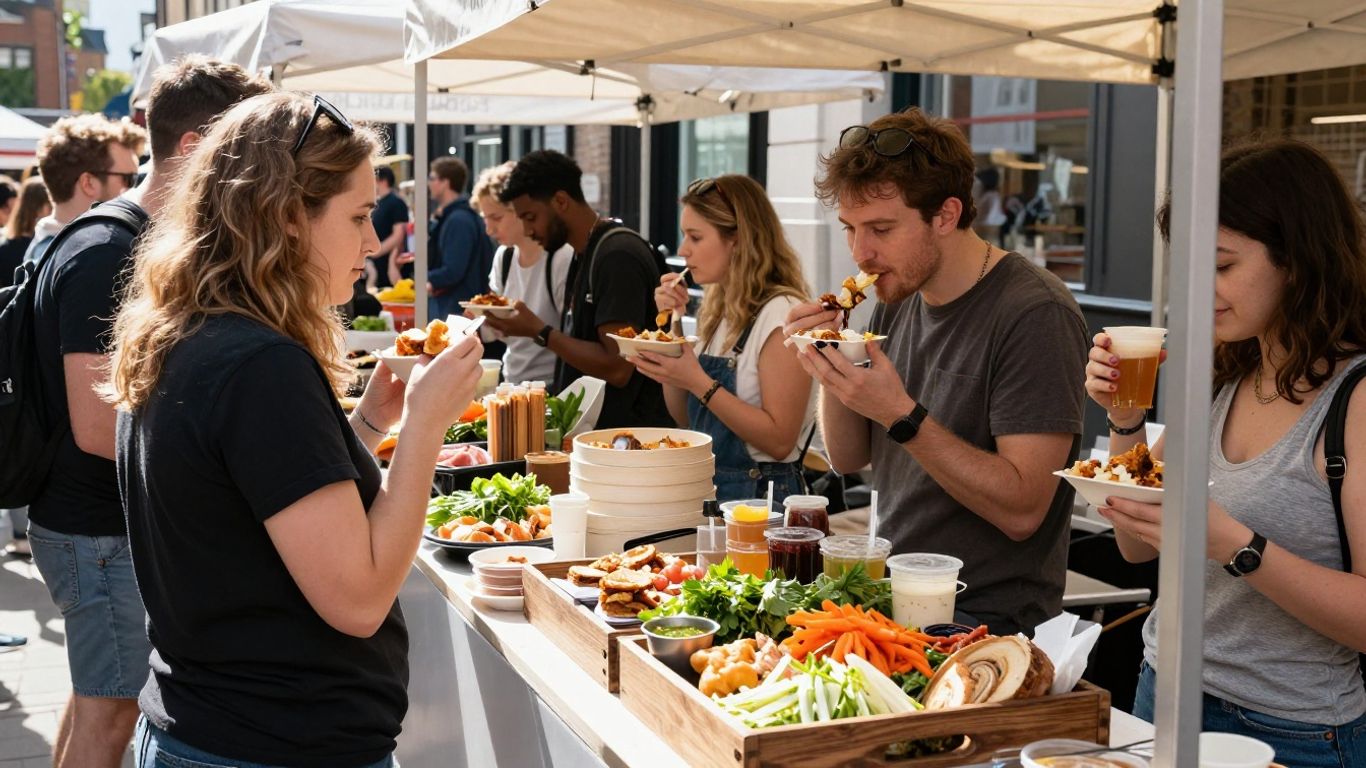
Right then, let’s talk about where you’re actually going to park your delicious creations. Finding the right spot is a massive part of making your pop-up food stall a success. It’s not just about turning up; it’s about being seen by the right people at the right time.
Exploring Markets and Event Opportunities
Markets and events are often the go-to for new food stalls, and for good reason. They usually come with built-in footfall, meaning people are already there, looking for something tasty to eat. Think about:
- Street Food Markets: These are becoming really popular. You’ll find dedicated spaces in most towns and cities now. Often, you can apply to become a trader directly through the market organiser’s website. It’s a good idea to check out the market first, see what’s already there, and figure out if your food fits in.
- Farmers’ Markets: Great for showcasing local produce or if your food has a strong farm-to-table angle. People at these markets are often keen to support local businesses.
- Festivals and Fetes: From village fetes to massive music festivals, these can be goldmines. The bigger the event, the more people, but also usually a higher pitch fee. Do your homework on expected visitor numbers versus the cost of the pitch. For example, a £100 pitch expecting 2,000 people is likely better value than a £100 pitch expecting only 200.
- Private Functions: Think weddings, birthday parties, or corporate events. These can be less risky as you often agree on a fee beforehand. You know your numbers, so you can plan your stock precisely. Websites like bark.com can sometimes list these kinds of jobs.
When you’re looking at markets, always ask about opening and closing times, and what other food vendors will be there. You don’t want to be the fifth burger van if you’re selling burgers!
Strategic Locations for Maximum Footfall
Beyond organised events, there are other places you can set up shop. The key is to be where people are, and where they’re likely to be hungry.
- High Streets and Town Centres: This is classic territory. You might need a street trading licence from your local council, and pitches can be limited. It’s worth contacting your local authority to see what areas are designated for food stalls.
- Business Parks or Office Areas: Lunchtime can be a busy period here. If you can find a spot where people can easily access your stall during their break, you’re onto a winner. You’ll likely need permission from the landowner, which could be the business park management or individual companies.
- Retail Car Parks: Places like B&Q or large supermarkets often have space. You might need to go through a site agent, like Retail Concessions, who manage pitches in these areas. It’s a good idea to check if anyone else is already trading there.
- Breweries and Pubs: Many pubs and breweries are happy to have a food truck or stall on their premises, especially if they don’t have their own kitchen. This can be a great partnership, bringing customers to both businesses. You can often find spaces like this through searching for pop-up restaurant spaces in London or similar terms for your area.
When scouting locations, always take a good look around. Consider:
- Footfall: How many people walk past? Are they the right kind of people for your food?
- Accessibility: Can people easily get to you? Is there parking nearby if needed?
- Facilities: Are there toilets nearby? Is there shelter from the rain (we are in the UK, after all!)?
- Competition: Who else is trading nearby?
Thinking about these spots and doing your research will really help you find that sweet spot for your stall.
Finding the right place for your food stall can make all the difference. Think about busy streets, local markets, or even parks where people gather. The key is to be where your customers are! For more tips on setting up your mobile food business, check out our website.
So, Ready to Get Cooking?
Right then, you’ve got the lowdown on getting your pop-up food stall off the ground here in the UK. It might seem like a lot to take in, with all the paperwork, the equipment, and finding the perfect spot to sell your grub. But honestly, it’s totally doable. Just remember to get your permissions sorted, keep your gear safe and legal, and most importantly, serve up some cracking food that people will love. It’s a bit of hard graft, sure, but seeing those happy customers lining up? That’s what it’s all about. Go on, give it a whirl – your tasty adventure awaits!
Frequently Asked Questions
Do I really need to tell the council I’m starting a food business?
Yep, you absolutely do! You need to register with your local council at least 28 days before you start selling any food. It’s free to do, and it means they know you’re trading and that you’re on top of all the food safety rules. It’s like a heads-up so they can make sure everything’s safe for everyone.
What’s the deal with licences and permissions for my pop-up stall?
It can be a bit of a maze, but basically, you’ll need permission from whoever owns the land you’re trading on – that’s super important. If you’re trading on the street or in a market, you might need a street trading licence from your local council. Some events will sort this out for you, but always double-check. It’s best to get things in writing whenever you can!
How do I make sure my cooking gear is safe and legal?
Safety first, always! If you’re using gas equipment, like LPG fryers or griddles, you’ll need a Gas Safety Certificate. This is usually done by a Gas Safe registered engineer. Also, make sure your equipment meets UK safety standards – look for things like CE markings. Having all your paperwork in order is a lifesaver, especially if you ever need to make an insurance claim or if the council asks for it.