

LPG Generators for Mobile Catering Vans in the UK – Complete Guide


An LPG generator provides reliable off-grid power for mobile catering vans, food trucks and outdoor catering businesses in the UK. These generators are commonly used to run essential equipment such as refrigerators, fryers, griddles and lighting when mains electricity is not available. Choosing the right generator involves understanding power requirements, fuel efficiency, safety regulations and installation considerations to ensure your catering operation runs smoothly and safely.
Key Takeaways
-
Choosing an LPG generator for your mobile catering van offers cost-effective and cleaner operation compared to other fuel types.
-
Always use a qualified Gas Safe registered engineer with the Commercial Mobile Catering (CMC) qualification for any LPG work on your van.
-
Calculate your total power needs by adding up the wattage of all appliances, considering their startup surge, to select the correct generator size (KVA rating).
-
Understand the fuel logistics, noise levels, and maintenance requirements of your chosen LPG generator to ensure smooth operation.
-
Research reputable LPG generator brands in the UK and use available tools or expert advice to find the best fit for your catering business.
Understanding LPG Generators for Mobile Catering
Why Choose an LPG Generator for Your Catering Van?
So, you’re thinking about powering your mobile catering van in the UK, and you’ve heard about LPG generators. That’s a smart move. LPG, or liquefied petroleum gas, offers a really practical and often more budget-friendly way to keep your operations running smoothly. Unlike some other fuel types, LPG burns cleaner, which can be a nice bonus for your van’s engine and for the environment. Plus, it’s readily available across the UK, making refueling less of a headache when you’re out at different events.
LPG vs. Other Fuel Types: A Comparative Look
When you’re looking at generators, fuel is a big decision. Here’s a quick rundown of what’s out there:
-
LPG Generators: Powered by propane or butane. They’re known for being cost-effective and cleaner burning. You’ll find them in portable and standby setups. They’re a solid choice for mobile catering.
-
Diesel Generators: These are often bigger and built for longer run times, making them good for commercial jobs. They tend to be fuel-efficient, which can save you money over time.
-
Petrol Generators: These are common for both home and business use, with power outputs usually between 1 KVA and 10 KVA. Petrol is easy to find, but it doesn’t store well for long periods – it can go bad.
Choosing the right fuel type for your generator isn’t just about initial cost; it’s about long-term running expenses, availability, and how it fits with your specific catering setup and location.
Key Considerations When Selecting Your LPG Generator
Picking the right LPG generator means looking at a few things:
-
Power Needs: What appliances will you be running? Think about your fryers, griddles, fridges, lights, and anything else. You need enough power to run them all, sometimes at the same time.
-
Runtime and Refueling: How long do you need the generator to run between refills? Consider how easy it is to get LPG bottles refilled or swapped out at your usual spots.
-
Noise Levels: Some generators can be quite loud. If you’re operating in a residential area or at a venue with noise restrictions, you’ll want to look for a quieter, perhaps ‘silent’ model.
-
Portability and Installation: How easy is it to move the generator around? Where will it be installed in your van? Make sure there’s good access for maintenance and ventilation.
-
Safety and Compliance: This is huge. You need to make sure your generator and its LPG setup meet all UK safety standards. This often means getting a qualified engineer involved.
Essential Safety and Compliance for LPG Generators
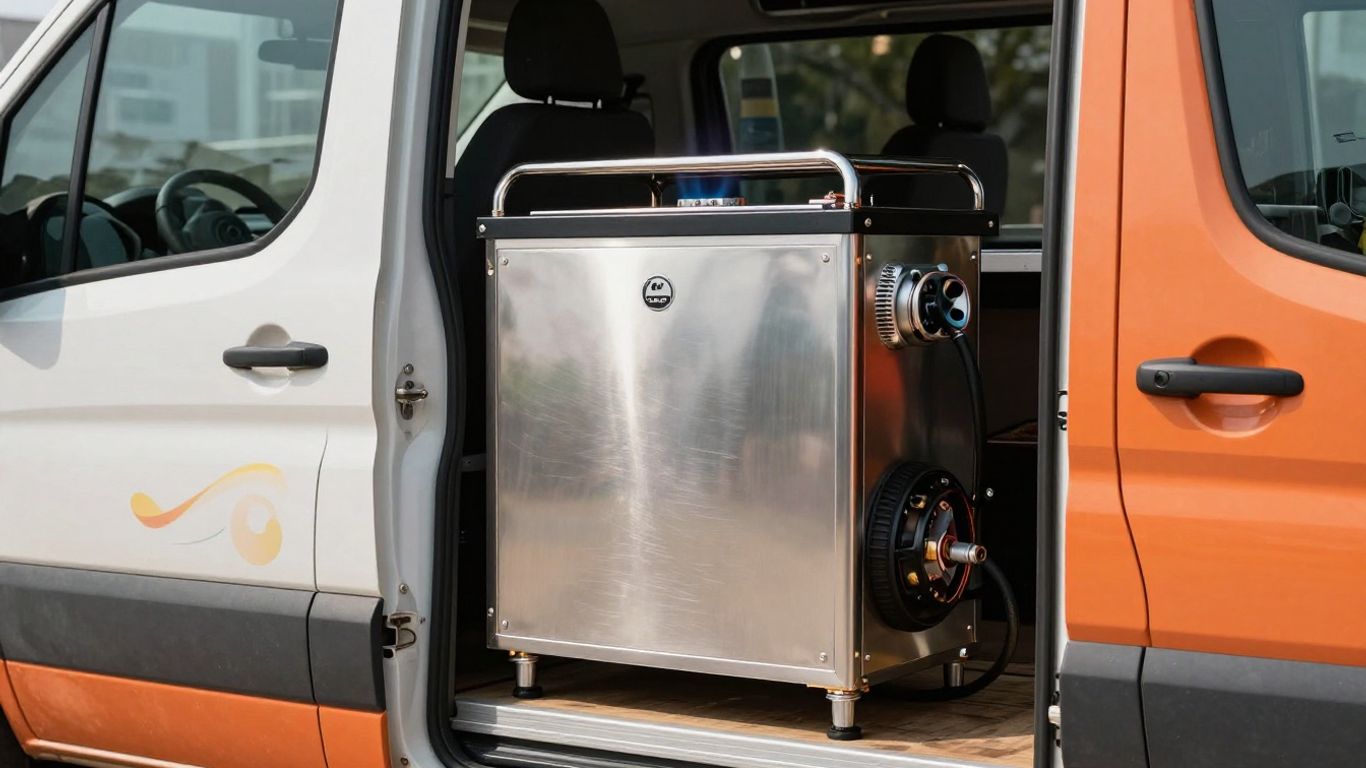
The Importance of Qualified LPG Gas Engineers
When you’re running a mobile catering van in the UK, keeping your LPG generator and gas appliances safe and legal is a big deal. It’s not just about avoiding fines; it’s about protecting yourself, your staff, and your customers from potential dangers like gas leaks or fires. This is where having a qualified LPG gas engineer who specifically knows their way around mobile catering setups becomes absolutely vital.
Understanding Gas Safe Register and CMC Qualifications
In the UK, all gas work has to be done by someone registered with the Gas Safe Register. Think of it as the official list of qualified gas engineers. But for mobile catering, there’s an extra layer: the Commercial Mobile Catering (CMC) qualification. This means the engineer has specific training for the unique challenges of gas systems in vehicles, like ensuring proper ventilation and secure fittings that can handle movement. Standard home gas engineers might not have this specialized knowledge.
Here’s a quick rundown:
-
Gas Safe Registered: This is the baseline. Anyone working on gas needs to be on this register.
-
LPG Qualified: They must be qualified to work with Liquefied Petroleum Gas (LPG), which is what your generator and catering equipment likely use.
-
CMC (Commercial Mobile Catering) Qualified: This is the key for your van. It shows they understand the specific safety needs of catering trailers.
Ensuring Compliance with UK Gas Safety Regulations
UK law is pretty clear: any gas work on your catering trailer needs to be carried out by a Gas Safe registered engineer with the right qualifications, including CMC for mobile catering. After any work is done, you should get a Gas Safety Certificate. This document is proof that your gas system has been checked and is safe to use, and it’s often required by insurance companies and local authorities. Not having this can lead to serious trouble if something goes wrong or if you’re inspected.
Always ask for an engineer’s Gas Safe ID card and check their qualifications before they start any work. It’s better to be safe than sorry when it comes to gas.
When looking for an engineer, don’t be afraid to ask questions:
-
Are you Gas Safe registered? Can I see your ID card?
-
Do you have the CMC qualification for mobile catering?
-
Have you worked on catering trailers like mine before?
-
Will you provide a Gas Safety Certificate upon completion?
Networking with other caterers or checking online forums can also point you towards reliable engineers who have experience with mobile setups.
Determining the Right Size LPG Generator
Figuring out the right size generator for your mobile catering van isn’t just about picking the biggest one you can find. It’s a bit more involved than that, and getting it wrong can cause headaches. Too small, and your fryers might not get hot enough, or your lights could flicker when the fridge kicks in. Too big, and you’re just burning extra fuel and spending more money than you need to. So, let’s break down how to get this right.
Calculating Your Power Requirements
The first step is to make a list of absolutely everything in your van that needs electricity. Think about your griddle, fryers, refrigerators, freezers, lights, POS system, water pump – the whole lot. For each item, you need to find out its power consumption. This is usually listed in watts (W) on the appliance itself or in its manual. Don’t forget to check for both the ‘running’ wattage and the ‘starting’ or ‘surge’ wattage. Appliances with motors, like fridges or blenders, often need a big burst of extra power just to get going.
Understanding KVA Ratings and Appliance Needs
Generators are often rated in kilovolt-amperes (kVA), which is a measure of apparent power, while your appliances use kilowatts (kW), which is the actual power they consume. There’s a relationship between the two, often referred to as the power factor. For most practical purposes in a catering van, you can roughly convert kW to kVA by multiplying by 1.25, or vice versa by dividing by 1.25. So, if your total running wattage is 5000W (or 5kW), you’d be looking for a generator with at least a 5 kVA output, plus that extra bit for starting surges. It’s always better to have a little headroom. You can find more information on calculating power needs for pop-up businesses here.
Generator Sizing for Various Catering Equipment
Here’s a general idea of how different pieces of equipment stack up:
-
Refrigeration/Freezers: These have a significant starting surge. A small under-counter unit might need a generator capable of handling around 1-2 kVA for starting.
-
Griddles/Fryers (Electric): These are power-hungry. A commercial griddle could easily require 3-5 kVA or more when running, and a fryer similar.
-
Lighting: Usually quite low, maybe 50-100W per fixture, but it adds up if you have a lot.
-
POS Systems/Small Appliances: Generally low power draw, often under 500W.
Always aim to add up the maximum running wattage of all appliances that might be on simultaneously, and then add the highest starting wattage of any single appliance that could start while others are running.
When you’re calculating, it’s wise to overestimate slightly. A generator that’s constantly running at its absolute limit will have a shorter lifespan and might not perform as reliably. Having a bit of extra capacity means it can handle unexpected demands without breaking a sweat.
Here’s a simplified table to help visualize:
|
Equipment Type |
Typical Running Watts |
Typical Starting Watts |
Notes |
|---|---|---|---|
|
Small Fridge/Freezer |
150-300W |
600-1200W |
Motor start surge is significant. |
|
Commercial Griddle |
2000-4000W |
2200-4400W |
High continuous power draw. |
|
Commercial Fryer |
2500-5000W |
2750-5500W |
Similar to griddles. |
|
LED Lighting (per unit) |
10-50W |
N/A |
Low power, but cumulative. |
|
Coffee Machine |
1000-1500W |
1200-1800W |
Can have a noticeable start surge. |
Remember, these are just estimates. Always check the specific ratings for your equipment. If you’re unsure, it’s best to consult with a professional who can help you size your generator accurately.
Operational Aspects of LPG Generators
Fuel Type, Runtime, and Refueling Logistics
When you’re out on the road with your catering van, figuring out your power source is a big deal. LPG generators run on liquid propane gas, which is pretty convenient. You’ll want to think about how long a full tank will last you, depending on how much power your equipment is drawing. A good rule of thumb is to always have more fuel on hand than you think you’ll need. Running out of power mid-service is a nightmare scenario for any mobile caterer. Planning your refueling stops or having spare tanks ready is part of the game. It’s not just about the generator itself, but the whole system of keeping it fed and running smoothly. You can find more details on fuel types and generator selection on resources like the Gas Safe Register.
Noise Levels and Acoustic Impact Considerations
Generators can be noisy, and that’s something to really consider, especially if you’re operating in a busy area or near residential spots. Some locations might even have rules about how loud your equipment can be. Look for generators that are advertised as “silent” or “low noise” models. These often have special casings or designs to cut down on sound. It makes a big difference not just for your customers, but for you too – less stress, more focus on the food. It’s worth checking out different brands and seeing what noise level ratings they provide.
Portability, Installation, and Maintenance Access
Your generator needs to be practical for a mobile setup. How easy is it to move around? If you have to take it out of the van for every setup, you’ll want something manageable. Installation should be straightforward, especially if you’re moving between different pitches regularly. And when it comes to maintenance, can you easily get to the parts that need checking or cleaning? Things like oil changes or filter replacements are much simpler if the generator isn’t crammed into a tight spot. Think about how often you’ll need to access it and make sure it’s not a huge hassle.
Keeping your generator in good working order is key to avoiding unexpected breakdowns. Regular checks, even simple ones like ensuring connections are tight and the unit is clean, can save you a lot of trouble down the line. It’s like any piece of equipment; a little care goes a long way.
Here’s a quick look at what to consider:
-
Portability: Weight, size, and built-in handles or wheels.
-
Installation: Ease of connection to your gas supply and electrical systems.
-
Maintenance: Accessibility of fuel caps, oil drains, air filters, and spark plugs.
-
Security: How will you secure it when in use and during transit?
Choosing the Best LPG Generator Brands
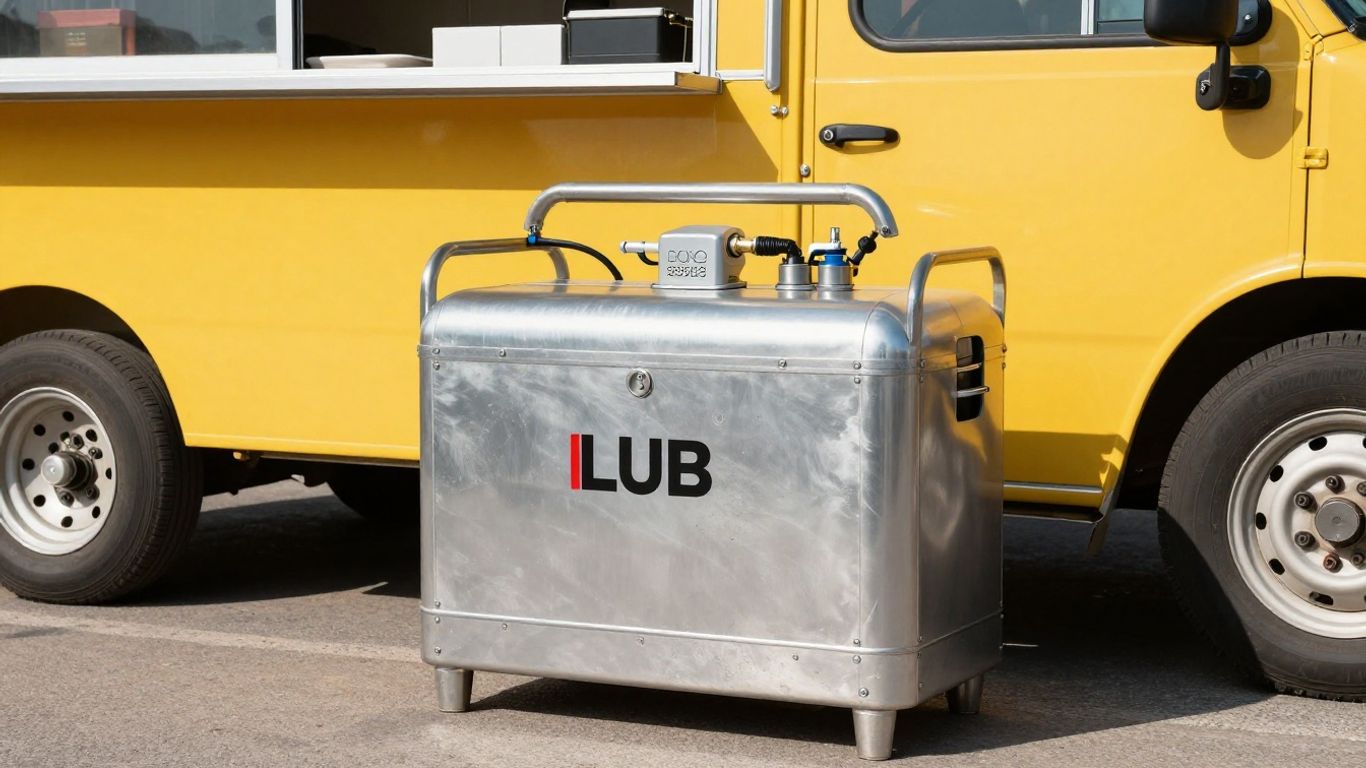
Reputable LPG Generator Manufacturers in the UK
When you’re looking for an LPG generator for your mobile catering van, sticking with well-known brands can save you a lot of headaches down the line. In the UK, a few names consistently pop up when people talk about reliable generators. Think brands like Greengear, Honda, Hyundai, and Pramac. These companies have built a solid reputation for making generators that are not only tough but also pretty dependable, which is exactly what you need when you’re out serving food.
It’s not just about the brand name, though. You want a manufacturer that understands the needs of mobile businesses. They should offer models that are relatively quiet, fuel-efficient, and, importantly, safe to use in a commercial setting. Some brands even focus on making their generators more environmentally friendly, which is a nice bonus.
Utilising Generator Selector Tools
Finding the perfect generator can feel like searching for a needle in a haystack. Luckily, many reputable suppliers have online tools that can really help. These aren’t just simple lists; they’re designed to guide you based on what you tell them you need. You usually input things like the types of appliances you’ll be running, how long you expect to run them, and maybe even the size of your catering van.
These tools often ask about your power requirements, which we talked about earlier. They’ll then suggest a few models that should fit the bill. It’s a smart way to narrow down your options without having to become a generator expert yourself. Using these tools can save you time and prevent you from buying a generator that’s either too small or way bigger than you actually need.
Seeking Expert Advice for Your Purchase
While those online tools are great, sometimes you just need to talk to a real person. Especially with something as important as powering your entire catering business, getting some expert advice is a good idea. Many suppliers have customer service teams or technical advisors who know their stuff.
Don’t be shy about calling them up. You can explain your catering setup, what equipment you use, and where you’ll be operating. They can offer personalised recommendations based on your specific situation. They might point out things you hadn’t even considered, like specific safety features or maintenance requirements for certain models. It’s like having a guide who knows the terrain really well, helping you avoid any potential pitfalls.
Wrapping It Up
So, there you have it. Picking the right LPG generator for your mobile catering van in the UK isn’t just about grabbing the first one you see. It’s about figuring out what you actually need it to do, how much power that takes, and what kind of fuel makes the most sense for your setup and your wallet. Remember to think about safety, how noisy it might be, and if it’s going to be easy to keep running. Getting this right means your food business can keep humming along, no matter where you set up shop. Don’t be afraid to ask for help or do a bit more digging if you’re unsure. A little bit of planning now can save a lot of headaches down the road.
Frequently Asked Questions
Why is LPG a good choice for my food truck generator?
LPG is a great option for your food truck generator because it’s usually cheaper to run than other fuels and is better for the environment. It’s also easy to store and transport in tanks, which is perfect for a mobile business.
What’s the difference between a regular gas engineer and one for LPG in a food truck?
A regular gas engineer usually works with natural gas in houses. An LPG engineer is specially trained for gas in bottles or tanks, like what you’d use in a food truck or caravan. They also need a special qualification called CMC (Commercial Mobile Catering) to make sure everything is safe for a moving kitchen.
How do I figure out what size generator I need?
To find the right size, you need to add up how much power all your cooking gear uses. Look at the labels on your equipment for their wattage. It’s smart to get a generator that’s a bit bigger than your total to handle power spikes when things start up.
How long will an LPG generator run on a full tank?
The run time depends on the size of your LPG tank and how much power your equipment is using. Bigger tanks and less power-hungry gear mean longer run times. You’ll need to plan your refueling stops based on your expected usage during an event.
Are LPG generators noisy, and does it matter for my food truck?
Some generators can be loud, which might bother customers or be against local rules. Many newer LPG generators are designed to be much quieter, similar to a home air conditioner. It’s important to check the noise level (decibels) before buying, especially if you’ll be in a busy area.
What are the main brands for LPG generators in the UK?
In the UK, popular and reliable brands for generators include Honda, Hyundai, and Pramac. These companies offer good quality products, and many have specific models suitable for mobile catering needs. It’s always a good idea to use online tools or ask experts to help you pick the best one for your setup.