

Choosing the Right Home Generator: A Buyer’s Guide


Right then, power cuts. They’re a proper pain, aren’t they? Whether it’s a storm knocking out the lights or just a random blip, being left in the dark isn’t much fun. Especially if you’ve got food in the fridge that’s about to go off, or you need to keep the heating on. That’s where a home generator comes in. It’s not just about having lights; it’s about keeping things running smoothly when the grid decides to take a break. Picking the right one might seem a bit much at first, but honestly, it’s not that complicated once you know what to look for. We’ll sort you out.
Key Takeaways
-
Figure out what you actually need power for during an outage. Is it just the fridge and a few lights, or do you want to run the whole house?
-
Decide between a portable generator for flexibility or a standby unit for automatic, whole-home backup. Inverter generators are great for sensitive electronics.
-
Look for safety features like automatic carbon monoxide shutoff and check the Total Harmonic Distortion (THD) for clean power.
-
Work out the right size generator by calculating the running and starting watts needed for your appliances.
-
Consider your fuel options – natural gas, propane, diesel, or even solar – and don’t forget professional installation is often a must, especially for standby units.
Understanding Your Home Generator Needs
Why Consider A Home Generator?
Power cuts happen. It’s not a matter of if, but when. A generator isn’t just about keeping the lights on. It’s about keeping your life running smoothly. Think about your fridge – no power means spoiled food. Or your heating in winter – that can get dangerous fast. A generator powers these essentials, plus your water pump, security system, and keeps your phone charged so you can stay in touch. It’s a vital part of your family’s safety plan.
Essential Power During An Outage
When the grid goes down, what do you really need power for? It’s not about running everything, but the important stuff. Here’s a quick rundown:
-
Food safety: Your fridge and freezer. No one wants to throw out a week’s worth of shopping.
-
Comfort and safety: Heating or air conditioning, depending on the season. Staying at a safe temperature is key.
-
Water: If you have a well pump, you need power for running water.
-
Communication: Charging phones and other devices so you can contact people or get information.
-
Medical needs: Keeping essential medical equipment running.
Peace Of Mind For Your Family
Knowing you have backup power brings a real sense of calm. You won’t be scrambling in the dark or worrying about the kids getting too cold or hot. It means you can handle unexpected outages without major disruption. For many, this peace of mind is the biggest reason to invest in a generator. It’s about protecting your home and loved ones when it matters most. You can use an interactive tool to help estimate the generator power you might need based on your appliance capabilities.
Don’t just think about the immediate need. Consider how an outage might affect your daily routine and what you absolutely cannot live without. Planning ahead makes a big difference.
Choosing Between Generator Types
Right then, let’s talk generators. You’ve got a few main types to pick from, and each has its own strengths. It’s not a one-size-fits-all situation, so knowing the differences will help you make a smart choice.
Portable Generators: Flexibility And Value
These are your go-to for when you need power on the move or just don’t need to power your whole house. Think of them as the workhorses you can wheel out when the lights go out or for a weekend camping trip. They’re generally cheaper to buy upfront, which is a big plus.
-
Great for smaller jobs: Need to keep the fridge running, charge phones, or power a few essential lights? A portable generator can do that.
-
Take ’em anywhere: Camping, festivals, or even a temporary power source for a small outdoor event. They’re pretty versatile.
-
Budget-friendly: You’ll find these much easier on the wallet compared to their bigger cousins.
Just remember, you’ll need to set them up outside, away from windows, to avoid any nasty carbon monoxide issues. And you’ll likely be using extension cords or a manual transfer switch to connect your appliances.
Standby Generators: Seamless Whole-Home Power
If you want power that just kicks in automatically when the grid fails, a standby generator is the way to go. These are permanently installed outside your home and are wired directly into your electrical system. They’re the ultimate ‘set it and forget it’ solution for keeping everything running.
-
Automatic operation: No need to go out in the rain or dark. They switch on by themselves.
-
Powers the whole house: From your heating and cooling to your lights and appliances, they’ve got you covered.
-
Reliable and powerful: Built for the long haul, these are serious bits of kit.
Because they’re a big installation, they do cost more upfront. You’re looking at a significant investment, with prices often starting in the thousands. It’s worth checking out whole home generator price range to get an idea.
Inverter Generators: Clean Power For Electronics
Inverter generators are a bit of a hybrid. They’re portable, but they offer something special: clean, stable power. This is super important if you’ve got sensitive electronics like laptops, TVs, or smartphones.
-
Pure sine wave output: This means the power is as clean as what comes from the mains, protecting your gadgets.
-
Quieter operation: They’re generally much quieter than traditional portable generators.
-
Fuel efficient: They adjust their engine speed based on the power you need, saving fuel.
While they might cost a bit more than a basic portable generator, the quality of power they provide is often worth it for those who need to keep modern tech running without a hitch.
When choosing, think about what you really need to power. Don’t overspend if a smaller, portable unit will do the job. But if you need constant, reliable power for your whole home, a standby unit is a solid investment.
Key Features For Your Home Generator
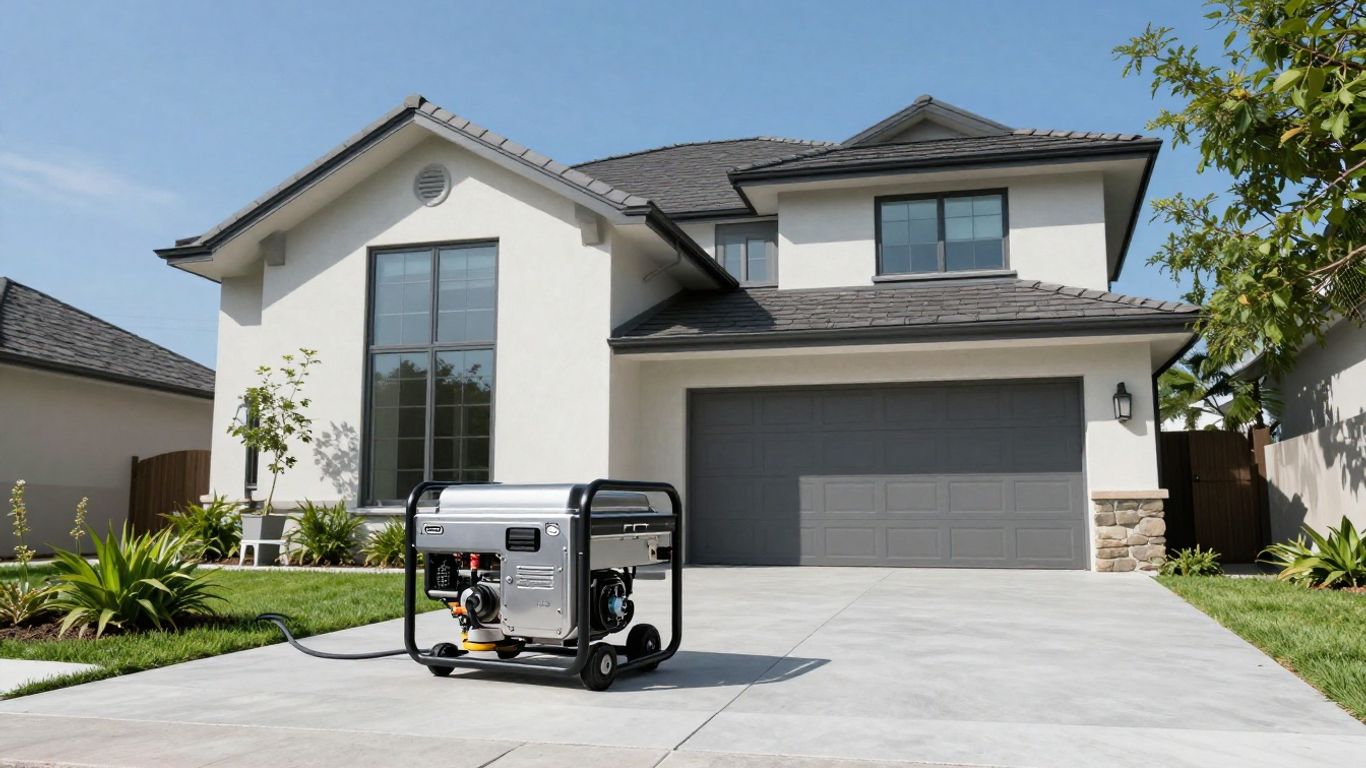
Right, let’s talk about the bits and bobs that make a generator actually useful and safe. You don’t want to be faffing about with a dodgy machine when the lights go out, do you?
Automatic Carbon Monoxide Shutoff
This is a big one for safety. Generators produce carbon monoxide (CO), which is a silent killer. If you’ve ever accidentally put a portable generator too close to the house or a window, you’ll know how worrying it can be. Many newer models have a built-in sensor that detects dangerous CO levels and shuts the engine down. It’s a simple feature, but it could genuinely save lives. Always make sure your generator is placed well away from any openings to your home, even with this feature.
Low Total Harmonic Distortion (THD)
If you’ve got fancy electronics – laptops, TVs, gaming consoles, that sort of thing – you need to be aware of power quality. Standard generators can sometimes produce ‘dirty’ power, which is a bit wobbly and can actually damage sensitive gadgets. Look for generators with a low Total Harmonic Distortion (THD) rating, ideally below 5-6%. Inverter generators are usually the best bet for this clean power.
Electric Start For Convenience
Remember those old pull-cords? Yeah, not fun, especially when it’s chucking it down with rain and you need power now. Most decent portable generators these days come with an electric start. It’s usually just a key or a button – much easier and quicker. It means you can get the generator up and running without a wrestling match.
Fuel Gauge And Runtime Considerations
Running out of fuel mid-outage is a proper pain. A fuel gauge lets you see at a glance how much juice you’ve got left. It’s a simple thing, but it stops you from guessing. Also, think about how long you need it to run. Some fuels, like propane, store for ages without going off, which is handy if you’re not using it regularly. Petrol can go stale after a few months if you don’t use a stabiliser.
Selecting The Right Generator Size
Right, so you need to figure out how much power your generator needs to chuck out. It’s not as tricky as it sounds, honest. You’re basically working out what you absolutely need to run when the lights go out.
Calculating Running And Starting Watts
First off, you need to know about two types of watts: running watts and starting watts. Running watts are what an appliance uses all the time. Starting watts are that extra kick needed to get things like fridges or air con units going. This starting surge can be double or even triple the running watts, so it’s a biggie.
-
Find the data plate: Look on your appliances for their wattage. If it’s not there, you might need to do a bit of digging online.
-
Add up the running watts: List everything you want to run and sum up their continuous power needs.
-
Find the highest starting watt appliance: Note down the biggest starting watt requirement from your list.
-
Total it up: Add your total running watts to the highest starting watt figure. This gives you a good idea of the minimum you’ll need.
It’s always better to have a bit more power than you think you’ll need.
Portable Generator Wattage Ranges
Portable generators are usually measured in watts, and they come in different sizes for different jobs. You’re not going to power your whole house with most portables, but they’re great for essentials.
-
Small (1,000-2,500 watts): Good for a few lights, charging phones, maybe a small fan. Think camping or a very basic emergency kit.
-
Medium (3,000-5,000 watts): Can handle a fridge, some lights, a microwave, and maybe a small heater. This is a popular size for many homes.
-
Large (5,000-10,000+ watts): These can power more appliances, maybe even a well pump or a small air conditioning unit. They get heavy though!
Remember to factor in that starting wattage when picking your portable. You don’t want to overload it the moment you switch it on.
Standby Generator Wattage Requirements
Standby generators are the big boys, designed to keep your whole house ticking over. They’re rated in kilowatts (kW).
-
For most average-sized homes, a 14–22 kW whole-home generator is the appropriate size. A professional can determine the correct generator size by calculating the total running watts required for your home’s essential appliances and systems.
-
Larger homes with more demanding appliances (like multiple air conditioning units or electric heating) might need 25 kW or more.
-
It’s all about matching the generator’s output to your home’s peak demand. Don’t guess here; get it calculated properly.
Sizing is the most important technical step in buying a home generator. It is not about the physical size, but the electrical output, measured in watts. Add up the starting watts of the appliances you want to run simultaneously to get the total generator size you need. A professional assessment for your generator system includes this precise calculation to make sure your system is perfectly matched to your needs.
Fuel Sources For Your Generator
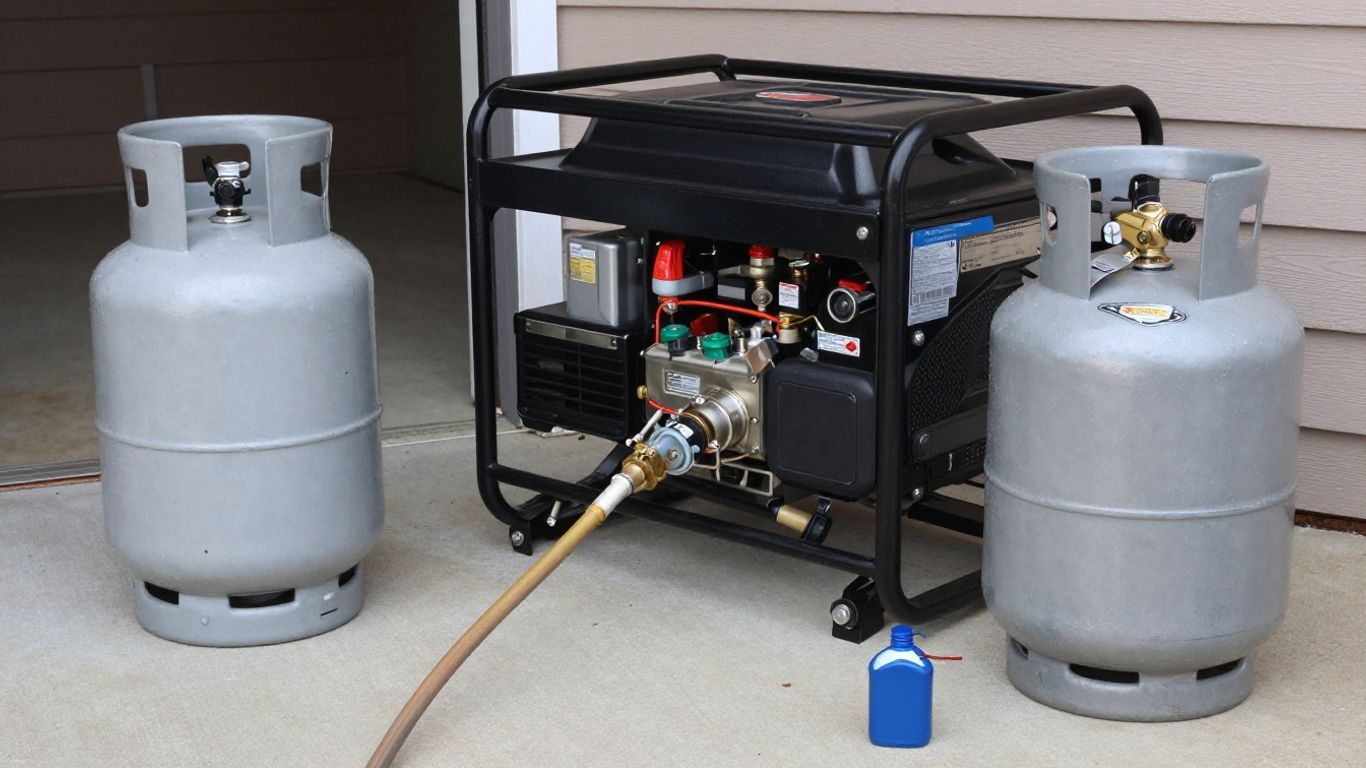
Right then, let’s chat about what actually makes your generator go. Choosing the right fuel is a big deal, and it really depends on what you need it for and how much hassle you’re willing to put up with.
Natural Gas: A Limitless Supply
This one’s pretty straightforward. If you’ve got a natural gas line coming into your house, a standby generator can tap right into it. This means you’ve got a virtually endless fuel supply, so you don’t have to worry about running out mid-outage. It’s super convenient because it’s always there. The downside? It’s not as energy-dense as other fuels, so you might need a bigger generator for the same power output. Plus, it’s only for standby units, not the portable kind.
Liquid Propane: Reliable Storage
Propane is a popular choice, especially for portable generators, though some standby units can use it too. You store it in tanks, much like you might for a barbecue. This gives you a good amount of fuel on hand, and it’s generally cleaner burning than petrol. You can get different sized tanks, from small ones for smaller generators to larger ones for longer run times. The main thing is keeping an eye on your fuel level and having spare tanks ready. It’s less powerful than diesel, mind you.
Diesel: Long-Term Availability
Diesel generators are often seen as the workhorses, especially for bigger jobs or longer outages. Diesel fuel stores pretty well for longer periods compared to petrol, which is a big plus. It’s also less of a fire risk than petrol. You’ll find diesel more common in larger, industrial-style portable generators or some standby units. Just make sure you’re getting good quality diesel and storing it properly to avoid any gunk building up.
Solar Power: An Eco-Friendly Option
This is the green choice, using the sun’s energy. Solar generators usually involve solar panels that charge up a battery. When the power goes out, the battery powers your devices. It’s free energy from the sun, which is brilliant. However, it’s heavily dependent on the weather. If it’s cloudy or dark, you’re not generating much. For this reason, most people use solar as a backup to another generator, or they have a really good battery storage system. It’s great for smaller loads or topping up power, but might not be enough on its own for a whole house during a prolonged outage.
Here’s a quick look at the pros and cons:
-
Natural Gas:
-
Pros: Unlimited supply, no refuelling needed.
-
Cons: Only for standby, less energy-dense.
-
-
Liquid Propane:
-
Pros: Good storage, cleaner burn.
-
Cons: Need to monitor tank levels, less powerful than diesel.
-
-
Diesel:
-
Pros: Good storage life, lower fire risk, powerful.
-
Cons: Can be noisier, more common in larger units.
-
-
Solar:
-
Pros: Free energy, eco-friendly.
-
Cons: Weather dependent, often needs a backup.
-
Always remember safety first. No matter what fuel you choose, make sure your generator is set up correctly and in a well-ventilated area, especially if it’s a petrol or diesel model. Carbon monoxide is a silent killer, so never run one indoors or too close to windows and doors.
The Importance Of Professional Installation
Right, let’s talk about getting your generator set up properly. It might seem like a job you could tackle yourself, but honestly, it’s best left to the pros. Getting it wrong can be a real safety hazard, not to mention it could mess up your shiny new generator.
Standby Generator Installation Essentials
For a standby unit, professional installation isn’t just recommended, it’s a must. These systems are wired directly into your home’s main electrical panel and hooked up to your gas or propane supply. A qualified electrician or gas engineer will handle all of this. They’ll make sure the unit is securely mounted, often on a concrete pad, and that all the connections are safe and up to code. This is the kind of work that needs a certified touch to avoid any nasty surprises. A professionally installed standby generator offers automatic power restoration during outages. It detects power loss and starts within seconds, ensuring your home remains powered [6723].
Transfer Switches For Portable Units
Even with a portable generator, you need to think about how you’ll connect it safely. Just running extension cords everywhere isn’t always the best or safest option, especially if you want to power larger appliances. This is where a transfer switch comes in. An electrician can install one of these, which acts as a safe gateway between your generator and your home’s wiring. It stops power from flowing back into the grid, which is dangerous for utility workers and can damage your generator. It also lets you power hardwired appliances like your central heating or a well pump.
Ensuring Safe And Efficient Operation
Getting the generator installed is only half the battle. Regular check-ups are a good idea too. Think of it like getting your car serviced. A professional can spot potential issues before they become big problems, making sure your generator runs smoothly when you really need it. This includes checking fuel lines, electrical connections, and the overall performance of the unit. It’s all about making sure you’ve got reliable backup power, without any of the risks associated with DIY electrical work.
Don’t skimp on installation. It’s a critical step for safety, performance, and peace of mind. A proper setup means your generator will be ready to go when the lights go out, without causing any electrical headaches.
Understanding Home Generator Costs
Right then, let’s talk about the elephant in the room: the price tag. Generators aren’t exactly pocket change, but think of it as an investment in keeping things running when the grid goes down. The cost really depends on what you’re after.
Portable Generator Price Points
For a portable unit, you’re looking at a range. A basic model, good for a few essentials, might set you back between £400 and £800. If you want something a bit more robust, maybe with electric start and a decent fuel tank, expect to pay more like £800 to £2,000. These are great if you need power on the go or just for a few key items.
Standby Generator System Investment
Now, standby generators are a different ballgame. The unit itself can cost anywhere from £1,500 to £4,000, depending on its size and features. But that’s just the start. Installation is where a big chunk of the cost comes in. You’ll need a concrete base, fuel line connection, and electrical work. All in, a fully installed standby system can easily be between £4,000 and £8,000, sometimes more if your setup is tricky.
Factors Affecting Installation Expenses
Several things can bump up the installation cost:
-
Location: If the ideal spot for the generator is far from your house or your main electrical panel, you’ll pay more for extra wiring and piping.
-
Fuel Source: Connecting to natural gas might be simpler than installing a large propane tank.
-
Electrical Upgrades: Sometimes, your home’s existing electrical system might need some work to safely handle the generator’s output.
-
Site Prep: If the ground isn’t level or needs significant work for the concrete pad, that adds to the bill.
Remember, the price you see on the generator itself is only part of the story. Always get a full quote that includes installation, fuel hook-up, and any necessary electrical work. It’s better to have a clear picture upfront than to be surprised later.
So, What’s the Takeaway?
Right then, choosing a generator might seem a bit much at first, but hopefully, this guide has made it a bit clearer. Whether you’re after a portable one for the odd camping trip or a big standby unit to keep the whole house humming when the lights go out, there’s definitely something out there for you. Just remember to think about what you actually need it for, how much power you’ll need, and what fuel makes the most sense. Don’t forget that getting a professional to sort out the installation, especially for the bigger units, is always a good shout for safety and peace of mind. Take your time, do your homework, and you’ll end up with a generator that’s just right for your needs.
Frequently Asked Questions
Do I really need a generator for my home?
Think about what you absolutely can’t live without during a power cut. If losing power means no heating or cooling in extreme weather, spoiled food, or being unable to charge important devices like phones or medical equipment, then yes, a generator is a really good idea. It’s all about keeping your family safe and comfortable when the grid goes down.
What’s the difference between a portable and a standby generator?
A portable generator is like a big, powerful tool you can move around. You’d typically store it in your shed or garage and wheel it out when you need it, hooking it up with extension cords. A standby generator, on the other hand, is permanently installed outside your house, wired straight into your home’s electrics, and it automatically kicks in when the power fails. Standby ones are more for whole-home backup, while portables are for essential items.
How do I figure out what size generator I need?
It’s a bit like planning a party – you need to know how many guests (appliances) you want to cater for! You’ll need to work out the ‘running watts’ (what an appliance uses constantly) and the ‘starting watts’ (a bigger surge needed to get motors going, like in a fridge). Add up the starting watts for everything you want to run at the same time, and that’s roughly the size you’ll need. It’s best to get a professional to help with this calculation.
Can I just plug any appliance into any generator?
Not quite! Some appliances, especially sensitive electronics like laptops or TVs, need really clean, stable power. Generators with ‘low Total Harmonic Distortion’ (THD) provide this. Inverter generators are usually the best for this. Plugging sensitive gear into a generator with ‘dirty’ power could potentially damage it. Always check the generator’s specs and your appliance needs.
Is it safe to run a generator indoors?
Absolutely not! Generators produce carbon monoxide, which is a deadly, invisible gas. You must always run them outside, well away from windows, doors, and air vents to prevent the fumes from entering your home. Many newer portable generators have an automatic shutoff feature if carbon monoxide levels get too high, but it’s still crucial to use them outdoors.
Do I need an electrician to install a generator?
For standby generators, professional installation by a qualified electrician is a must. They handle the tricky wiring and fuel connections safely. Even with portable generators, if you want to connect it to your home’s electrical system using a transfer switch (which is the safest way to power hardwired items like your furnace), you’ll definitely need an electrician to do that part for you.