

Choosing the Right Home Backup Generator: A 2026 Buyer’s Guide


Right then, let’s talk about getting a home backup generator. You know, those things that save your bacon when the power goes out, which seems to happen more often than we’d like these days, doesn’t it? Whether it’s a storm or just dodgy wiring somewhere down the line, being left in the dark is a proper pain. So, figuring out which home backup generator is the right one for you is pretty important. It’s not just about buying the first one you see; there’s a bit more to it than that, honestly. We’ll go through what you actually need, what’s out there, and what to look out for so you don’t end up with something that’s no good for you.
Key Takeaways
-
Figure out exactly what you need your home backup generator to power. Add up the watts for all your essential appliances, but don’t forget the extra ‘kick’ they need to start up – that’s the starting watts.
-
There are a few main types of generators to choose from: big standby ones that stay put and power your whole house automatically, smaller portable ones you can move around, and quiet inverter types that are good for sensitive electronics.
-
Think about what fuel your generator will use. Petrol, propane, and natural gas are common, and some can even use more than one. Solar generators are also an option if you’re after something greener.
-
Safety first! Make sure your generator is installed properly, well away from the house, and always know the risks, especially carbon monoxide. Regular checks and maintenance are a must to keep it working when you need it.
-
Don’t just go for the cheapest option. Balance the cost with the power it offers and how reliable the brand is. Sometimes spending a bit more upfront saves you hassle later.
Understanding Your Home Backup Generator Needs
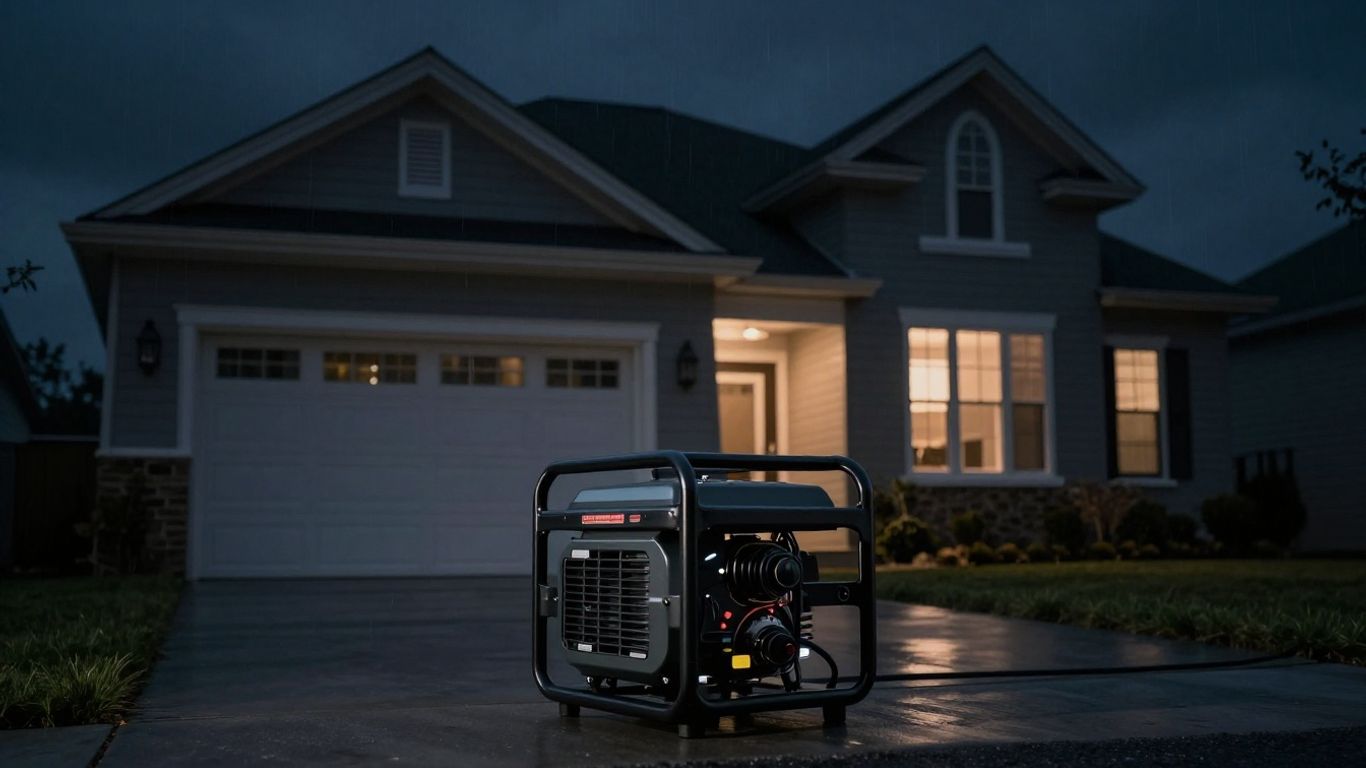
Right then, let’s get down to brass tacks. Before you even think about buying a generator, you need to know what you actually need it for. It’s not a one-size-fits-all deal, is it? Think about what you absolutely can’t live without when the lights go out.
Calculating Essential Power Requirements
This is the big one. You need to figure out how much juice you’ll need. Don’t just guess. Make a list of everything you want to power. We’re talking the fridge, a few lights, the telly, maybe the kettle. Then, find out how many watts each of those things uses. Most appliances have a sticker with this info. Add them all up. That’s your baseline.
Starting Versus Running Watts Explained
Here’s a bit of a curveball: some things need a big kick to get going. Think of your fridge motor or a washing machine. They need more power to start up than they do to keep running. This is called ‘starting watts’ or ‘surge watts’. You need to add the highest starting wattage of any one appliance to your total running wattage. This stops your generator from conking out the moment you switch something on.
Here’s a quick look at some common items:
|
Appliance |
Running Watts |
Starting Watts |
|---|---|---|
|
Fridge/Freezer |
150-200 |
600-1200 |
|
Microwave |
800-1500 |
800-1500 |
|
Kettle |
1500-2000 |
1500-2000 |
|
Lights (LED) |
5-15 |
5-15 |
|
Laptop Charger |
50-100 |
50-100 |
Remember, these are just rough guides. Always check your appliance’s label.
Considering Future Power Demands
Think ahead a bit. Are you planning on getting a new freezer next year? Or maybe you’ll want to run a bigger telly? It’s worth adding a bit of extra capacity to your calculation now. It’s cheaper to get a slightly bigger generator than you need right now than to buy a new one down the line. Aim for about 20-25% more than your calculated total. This gives you some breathing room and stops you from overloading the generator if you plug in an extra item.
Don’t forget about things like sump pumps if you’re in a flood-prone area. They can draw a fair bit of power, especially when they kick in.
So, before you look at any models, grab a notepad and do this homework. It’ll save you a lot of hassle and make sure you get a generator that actually does the job you need it to.
Exploring Different Types Of Home Backup Generators
Right then, let’s chat about the different kinds of generators you can get. It’s not a one-size-fits-all situation, so knowing your options is key.
Standby Generators For Whole-Home Protection
These are the big boys. Permanently installed outside your house, they hook straight up to your mains electrics. When the power goes out, they just… start. Usually running on natural gas or propane, they’re brilliant for keeping everything running, no matter how long the outage lasts.
-
Automatic switch-on: No faffing about, they just do their thing.
-
Whole-home power: Lights, heating, fridge – the lot.
-
Long run times: No need to keep refuelling.
They cost more upfront and need a pro to fit them, but for total peace of mind, they’re hard to beat.
Portable Generators For Flexibility
These are your go-to for a bit of everything. They run on petrol and are great for keeping your essentials ticking over – think fridge, some lights, maybe the telly.
-
Move ’em around: Take ’em camping, use ’em for DIY.
-
Cheaper to buy: Easier on the wallet to start with.
-
Power the basics: Good for keeping critical stuff running.
You’ll need to start them manually and keep them topped up with fuel. They’re a solid choice if you want flexibility without breaking the bank.
Inverter Generators For Sensitive Electronics
Want quiet power for your gadgets? Inverter generators are the ones. They’re clever because they adjust their engine speed to match the power you need. This means they use less fuel and are much quieter than standard portables.
-
Clean power: Safe for laptops, phones, and other delicate bits.
-
Quiet operation: Less noise pollution for you and the neighbours.
-
Fuel efficient: Saves you money on petrol.
They usually don’t pack as much punch as a regular portable, but if you’ve got sensitive electronics, they’re a top pick.
Solar Generators As An Eco-Friendly Choice
These are the new kids on the block, and they’re pretty neat. Basically, they’re big batteries you can recharge using solar panels, a wall socket, or even your car.
-
Zero emissions: No fumes, so they’re safe indoors.
-
Silent running: You won’t even know they’re on.
-
Rechargeable: Use the sun, the mains, or your car.
They’re ideal if you’re after a greener option and don’t need to power your entire house. You can often link them up to get more power, too.
Remember, no matter the type, always put petrol-powered generators outside and well away from windows and doors to avoid carbon monoxide poisoning. They’re not for indoor use, ever.
Key Features To Look For In A Home Backup Generator
Right then, let’s talk about what actually matters when you’re picking a generator. It’s not just about the brand name, you know. Think about these bits and bobs before you hand over your cash.
Fuel Options: Petrol, Propane, Natural Gas, And More
This is a big one. What do you want to feed your generator?
-
Petrol (Gasoline): Easy to find, but can go off if you don’t use it. Best to use a stabiliser or run the tank dry before storing.
-
Propane (LPG): Stores for ages, burns cleaner. You’ll need tanks, though, and might need to swap them out when they’re empty.
-
Natural Gas: Hook it up to your mains supply. No refilling needed, but you need a gas line run to where the generator will sit. Check if your pressure is up to scratch.
-
Dual-Fuel: Best of both worlds, often petrol and propane. Gives you options if one fuel is hard to get.
Think about what’s easiest for you to get hold of and store.
Noise Levels And Neighbourly Considerations
Nobody likes a racket. Generators can be loud, and you don’t want to annoy your neighbours, especially if you’re running it for a while.
-
Check the decibel (dB) rating: Lower is better. Aim for something under 60 dB if you can, especially if it’s going to be close to your house or your neighbours’.
-
Inverter generators are usually quieter: They have a more consistent engine speed, so they don’t have to run at full blast all the time.
-
Location matters: Put it as far away from your house and your neighbours’ houses as possible. A solid fence or some thick bushes can help muffle the sound a bit.
Remember, a quieter generator means a more peaceful experience for everyone during an outage.
Battery Life And Chemistry For Longevity
If you’re looking at battery-powered or solar generators, this is key. You want something that lasts.
-
LiFePO4 (Lithium Iron Phosphate): This is the gold standard right now. They last for thousands of charge cycles, are safer, and don’t degrade as quickly as older lithium types.
-
Capacity (Wh): How much power can it store? More watt-hours means it can run your stuff for longer.
-
Charge Cycles: How many times can it be fully charged and discharged before its capacity drops significantly? Look for at least 1,000, but 3,000+ is even better for LiFePO4.
Scalability To Meet Growing Needs
What if your power needs change? Maybe you get a new appliance, or you decide you want to run more things.
-
Can you link units together? Some portable power stations let you connect two or more for more power.
-
Can you add extra batteries? Some systems allow you to expand the battery storage capacity.
It’s worth thinking about if you might need more juice down the line. It’s cheaper to upgrade or expand later than to buy a whole new, bigger unit.
Ensuring Safe And Reliable Generator Operation
It’s all well and good having backup power. But if your setup isn’t safe, you could face bigger problems than just a dark kitchen. Let’s keep things simple and focus on getting it right – for you, your customers, and your kit.
Proper Installation And Location Guidelines
Location could save your life. For petrol and gas models, run them outside – never indoors, garages, or sheds. Keep at least 20 feet away from doors and windows, with the exhaust blowing away from buildings. This is the number one way to avoid carbon monoxide hazards, according to these clear generator placement tips.
-
Use outdoor extension leads rated for heavy loads.
-
Park your portable generator on solid ground, clear of puddles or wet grass.
-
Always point exhausts away from people and structures.
Running a generator in the wrong spot can turn a power outage into a real emergency. Take five minutes to check – it’s always worth it.
Understanding Safety Risks Like Carbon Monoxide
Petrol and gas-powered generators produce carbon monoxide – a clear, odourless gas that’s deadly. A spinning fan or open window is not enough. Fit a CO alarm wherever you use or store powered equipment. Look at solar and battery models for safe indoor power: no fumes, no noise.
Main points to remember:
-
Never run petrol or gas generators indoors.
-
Install CO detectors wherever fuel is stored or used.
-
Don’t refuel a hot generator; wait for it to cool right down.
The Importance Of Regular Maintenance Checks
Generators like a bit of love. Regular maintenance makes them dependable and safer during crunch time.
Here’s a simple check routine:
-
Fire it up monthly – that keeps the battery and fluids right.
-
Top up engine oil or replace according to the manual.
-
Swap spark plugs and air filters seasonally.
-
For solar models, check cables and clean dust off panels.
|
Task |
Fuel Generators |
Solar/Battery Generators |
|---|---|---|
|
Run test monthly |
Yes |
If possible |
|
Clean/replace filter |
Yes |
N/A |
|
Charge/Discharge |
N/A |
Yes |
|
Spot for rust/corrosion |
Yes |
Yes |
Don’t put it off – failing to maintain your backup can leave you in the cold (sometimes literally) when the power trips.
Safety isn’t a hassle – it’s your best insurance. You don’t need specialist skills, just a routine and common sense.
Making The Right Choice For Your Household
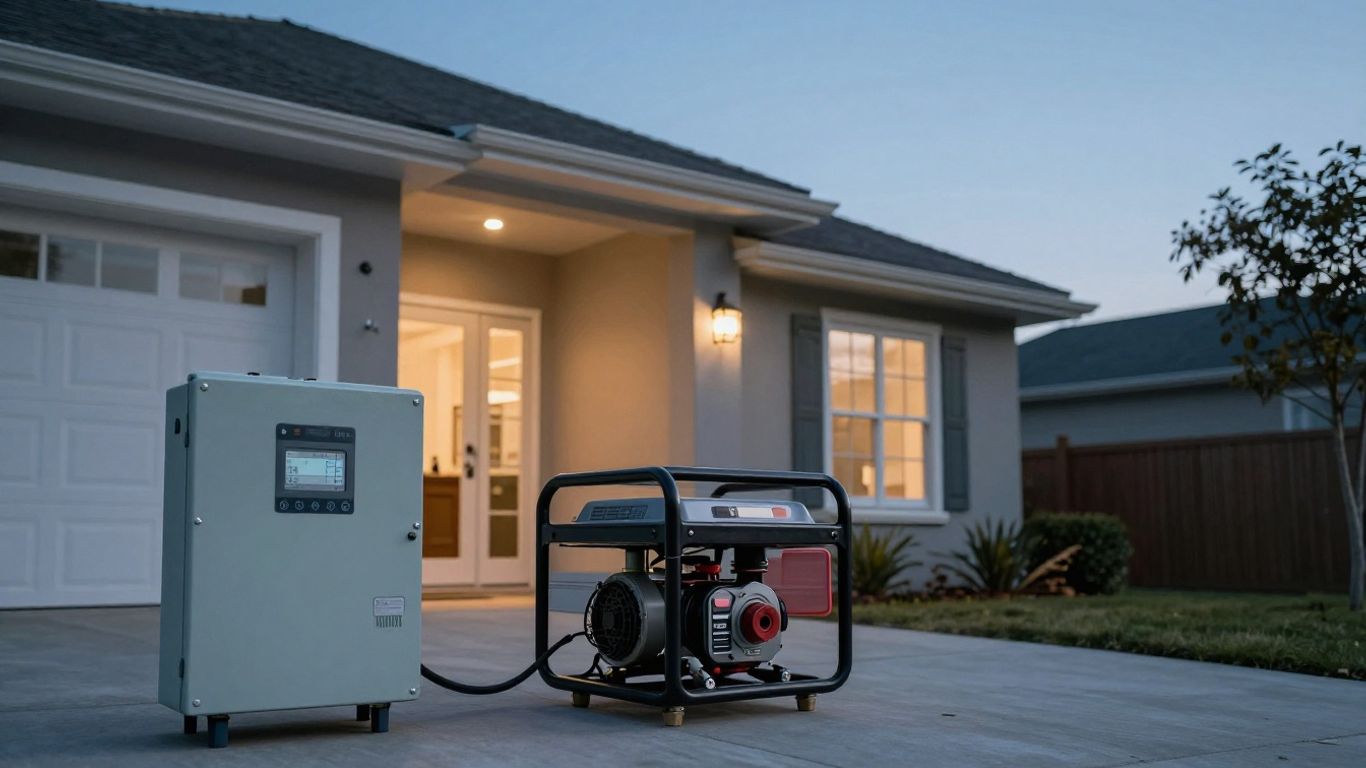
Right then, you’ve done your homework on what you need and what’s out there. Now, how do you actually pick the one that’s going to be your best mate when the lights go out? It’s not just about the price tag, though that’s a biggie. It’s about getting a generator that fits your life, your home, and your peace of mind.
Balancing Cost And Performance
Look, nobody wants to spend a fortune, but going too cheap can bite you later. Think about what you really need to run. Is it just the fridge and a few lights, or do you need the telly and the Wi-Fi too?
-
Essentials Only: Fridge, freezer, a couple of lights, phone chargers. A smaller, cheaper unit might do.
-
Comfort Zone: Add the TV, internet router, maybe a microwave. You’ll need a bit more power.
-
Whole Hog: Heating, multiple appliances, maybe even the kettle. This is where the bigger, pricier models come in.
Don’t overbuy if you don’t need it, but don’t skimp if you’ll be left in the dark with essential kit not running.
Choosing A Generator Brand You Can Trust
Some names have been around for ages, and for good reason. They’ve got a track record. But don’t dismiss newer brands, especially with the rise of inverter and solar tech.
-
Check Reviews: See what other folks are saying. Are they happy with reliability? What’s the customer service like?
-
Warranty: A decent warranty gives you breathing room if something goes wrong.
-
Parts & Service: Can you actually get it fixed if it breaks down? Are parts easy to find?
Think of it like buying a car. You want something reliable that won’t let you down when you need it most. A bit of research now saves a lot of headaches later.
When To Call In The Professionals
Most portable generators are pretty plug-and-play, but if you’re looking at a standby unit that’s wired into your home’s electrical system, you absolutely need a qualified electrician.
-
Standby Generators: These need professional installation. It’s about safety and making sure it works correctly with your home’s wiring.
-
Transfer Switches: If you’re connecting a larger portable generator to your home’s circuits, a transfer switch is a must. An electrician can fit this safely.
-
Fuel Lines: For natural gas or propane standby units, the fuel line connection should be done by a pro.
Don’t mess about with mains electrical connections yourself. It’s dangerous and could void warranties or insurance. If in doubt, always ask an expert. It’s cheaper than a hospital visit or a house fire.
Troubleshooting Common Home Backup Generator Issues
Right then, let’s talk about when your generator decides to play up. It happens to the best of us, and knowing a few common fixes can save you a lot of hassle when the lights go out.
Addressing Startup Problems
So, you flick the switch, and… nothing. Frustrating, eh? For petrol or diesel generators, stale fuel is often the culprit. It can clog up the works. Also, check the spark plug – is it clean and properly connected?
-
Fresh Fuel: Always use fresh fuel, or add a stabiliser if it’s been sitting. Try draining the old stuff if it’s been more than a few months.
-
Air Filter: A blocked air filter stops the engine breathing. Give it a clean or replace it.
-
Battery Check: If it’s an electric start, make sure the battery is charged.
For battery-powered or solar generators, it might just be a flat battery. Give it a good charge. If it’s still a no-go, there might be a fault with a component.
Resolving Fuel-Related Hiccups
Fuel issues aren’t just about starting. If your generator runs, then sputters out, it’s often fuel-related too.
-
Fuel Cap Vent: Make sure the fuel cap isn’t blocked. It needs to let air in.
-
Fuel Filter: A dirty fuel filter restricts flow. Replace it if it looks grubby.
-
Carburettor: This is a bit more fiddly, but a gummed-up carburettor is a common issue with older fuel.
Remember to always turn off the generator and let it cool before fiddling with fuel lines or filters. Safety first!
Preventing Overloading and Mechanical Failures
Plugging in too much is a classic mistake. You’ll notice the generator getting louder, lights flickering, or appliances cutting out. Don’t push your generator beyond its limits.
-
Know Your Watts: Keep a list of your essential appliances and their starting and running watts. Don’t exceed the generator’s capacity.
-
Gradual Power-Up: Turn on appliances one by one, starting with the biggest power draw.
-
Regular Servicing: Like any engine, generators need TLC. Check oil levels, change filters, and give it a run every so often, even when you don’t need it. This keeps everything ticking over nicely and prevents those nasty mechanical failures when you least expect them.
So, what’s the takeaway?
Right then, choosing a home backup generator might seem a bit much at first, but hopefully, this guide has made it a bit clearer. It’s really about figuring out what you absolutely need to keep running when the lights go out – think fridge, heating, maybe the telly. Don’t forget to factor in those starting watts for things like your fridge kicking in. Whether you go for a big standby unit that just handles everything automatically, or a more portable one you can move around, there’s something out there. Just remember to keep it maintained, check the fuel, and you should be pretty well set for whatever the weather throws at you. Stay safe and stay powered up!
Frequently Asked Questions
How do I figure out how much power my generator needs to provide?
It’s a bit like planning a party! First, jot down all the essential stuff you absolutely need to keep running when the power goes out – think your fridge, lights, maybe the Wi-Fi router, and your phone charger. Then, find out how much ‘oomph’ (that’s wattage) each item needs to start up and keep going. Add all those running wattages together for your basic need. Don’t forget the big surge appliances like fridges or microwaves need when they first switch on – add the highest ‘starting wattage’ to your total. To be safe and avoid overloading, it’s a good idea to pick a generator that’s about 20% more powerful than your calculated needs. This gives it a bit of breathing room!
What’s the difference between starting watts and running watts?
Think of it like this: ‘Running watts’ is the steady power an appliance needs to just do its job, like keeping the fridge cold. ‘Starting watts’, on the other hand, is the extra kick of power an appliance needs for a brief moment when you first switch it on – like when a fridge’s compressor kicks in. This starting surge can be much higher than its running power, so it’s super important to account for it when you’re sizing up a generator.
Are there generators that don’t make much noise?
Definitely! If you’re worried about disturbing the neighbours or just prefer a quieter life, look for ‘inverter generators’. They’re designed to be much quieter than the older, noisier types because they adjust their engine speed based on how much power you’re actually using. Even better are ‘solar generators’ (which are basically big battery packs charged by solar panels or a plug). They’re completely silent because they have no engine at all!
Can I use a generator indoors?
Absolutely not! This is a really important safety point. Generators that run on fuel like petrol or propane produce dangerous fumes, especially carbon monoxide, which you can’t see or smell but can be deadly. These types of generators MUST be used outdoors, well away from any windows, doors, or vents to stop those fumes from getting inside your home. Solar generators, however, are safe to use indoors as they don’t produce any fumes.
How often do I need to look after my generator?
Generators, like cars, need a bit of TLC to keep them running smoothly. If you have a fuel-powered generator, it’s a good idea to check it over every few months, especially before the winter or storm season. This includes making sure the fuel is fresh (or stabilised), checking oil levels, and giving it a quick run to keep things ticking over. Solar generators are generally lower maintenance, but you’ll still want to ensure the battery is kept charged and check for any obvious wear and tear. Regular checks mean it’ll be ready to go when you need it most!
What if I need more power later on?
That’s a great question! Some modern generator systems, especially the battery-powered or ‘solar generator’ types, are designed to be expandable. This means you can often link up extra battery units or power modules to increase the total power output and how long it can run. It’s a smart way to start with a system that meets your current needs but allows you to grow it as your requirements change, without having to buy a whole new, bigger generator.