

Choosing the Right Generator for Mobile Catering Vans


Getting your mobile catering van up and running means more than just great food. You need reliable power to keep everything going, from the fridge to the fryer. Choosing the right generator for your mobile catering business isn’t always straightforward, with so many options out there. This guide will help you figure out what you really need to power your culinary dreams on the go.
Understanding Your Mobile Catering Power Needs
So, you’re getting into the mobile catering business. That’s awesome! But before you start dreaming about perfectly grilled burgers or artisanal coffee, let’s talk about the engine that makes it all happen: your generator. It’s not just a box that makes noise; it’s the heart of your operation. Getting this part wrong can mean a lot of headaches, like equipment failing mid-rush or, worse, disappointing a line of hungry customers. Figuring out exactly how much power you need is the absolute first step to picking the right generator.
Calculating Total Wattage Requirements
This is where we get down to brass tacks. You need to know the total power draw of everything you plan to run in your van. Think of it like making a grocery list – you wouldn’t go to the store without knowing what you need, right? Same goes for power. You’ll want to list out every single appliance: your fridge, freezer, griddle, fryer, coffee machine, lights, POS system, even that little fan you might use on a hot day. For each item, find its wattage. Usually, this is printed on a sticker on the appliance itself or in its manual. Add all these numbers up. This gives you your baseline running wattage. For food trucks, this can range quite a bit, often falling somewhere between 1000 and 10,000 watts, depending on how many gadgets you’re packing. A small coffee van will need far less than a full-blown kitchen on wheels.
Assessing Appliance Starting vs. Running Watts
Here’s a little trick that catches a lot of people out: appliances don’t all use the same amount of power when they first kick on as they do when they’re just humming along. Think about a refrigerator; it needs a big jolt of power to get the compressor going, but then it settles down. This initial surge is called ‘starting watts’ or ‘surge watts,’ and it can be significantly higher than the ‘running watts’ or ‘continuous watts’ the appliance uses normally. You need to account for the highest starting wattage of any single appliance, plus the running watts of everything else you might have on at the same time. If you don’t, you risk tripping breakers or even damaging your generator.
Here’s a quick look at how it works:
-
Appliance A: 1000 running watts, 2500 starting watts
-
Appliance B: 1500 running watts, 3000 starting watts
-
Appliance C: 500 running watts, 1000 starting watts
In this example, your highest starting wattage is 3000 watts (from Appliance B). Your total running watts would be 1000 + 1500 + 500 = 3000 watts. The peak demand for starting would be 3000 (highest start) + 1000 (Appliance A running) + 500 (Appliance C running) = 4500 watts. You need a generator that can handle at least this 4500-watt peak.
Determining Peak Demand and Buffer Power
Now that you know your running watts and your starting watts, it’s time to think about the future and unexpected moments. You don’t want your generator to be struggling every time you turn something on. It’s wise to add a buffer, usually around 20-25%, to your total calculated wattage. This buffer acts like a safety net. It means your generator won’t be running at its absolute limit all the time, which is better for its lifespan and prevents those annoying power dips when you’re busiest. So, if your calculated peak demand (including the highest starting wattage) is, say, 4500 watts, adding a 25% buffer means you’d be looking for a generator rated for at least 5625 watts (4500 x 1.25). This extra capacity gives you peace of mind and ensures your operation runs smoothly, even during the lunch rush.
When you’re calculating your power needs, it’s easy to get caught up in just the big appliances. Don’t forget the small stuff, like lighting, pumps, or even charging your phone. These little draws add up, and they can make a difference when you’re trying to hit that perfect wattage sweet spot.
Key Generator Features for Catering Vans
When you’re out there slinging food, the generator isn’t just a box that makes noise; it’s the heart of your operation. Picking the right one means looking beyond just the raw power. You’ve got to think about how it fits into your daily grind and keeps your customers happy.
Prioritizing Quiet Operation for Customer Experience
Nobody likes a racket, especially when they’re trying to enjoy a meal or just hang out. A loud generator can really kill the vibe, not to mention make it tough for you to hear orders. Look for generators that advertise low decibel (dB) ratings. Many modern generators are designed with noise reduction in mind, using better mufflers and engine enclosures. It’s worth spending a little extra here if it means happier customers and a more pleasant atmosphere around your van.
Ensuring Fuel Efficiency and Extended Run Times
Running out of fuel mid-rush is a nightmare scenario. You want a generator that sips fuel rather than guzzles it, especially if you’re out for a long day. This not only saves you money on fuel costs but also means fewer stops to refuel, letting you focus on serving. Some generators have eco-modes or can run efficiently at lower loads, which can make a big difference over the course of a busy event.
Here’s a quick look at how fuel type can impact run time:
|
Fuel Type |
Typical Run Time (50% Load) |
Notes |
|---|---|---|
|
Petrol |
8-10 hours |
Widely available, but can be less efficient. |
|
Propane (LPG) |
10-19 hours (with 19kg bottle) |
Cleaner burning, often longer run times with larger tanks. |
|
Diesel |
12+ hours |
Generally very fuel-efficient for heavy use. |
Evaluating Portability and Compact Design
Your catering van likely doesn’t have a ton of extra space. The generator needs to be manageable to move around, load, and unload, but also fit neatly into its designated spot without taking up valuable real estate. A heavy, bulky generator can be a real pain. Think about the weight, the dimensions, and whether it has sturdy wheels or handles that make it easy to transport. Some units are designed specifically to be compact and lightweight for mobile applications.
Choosing the Right Generator Fuel Type
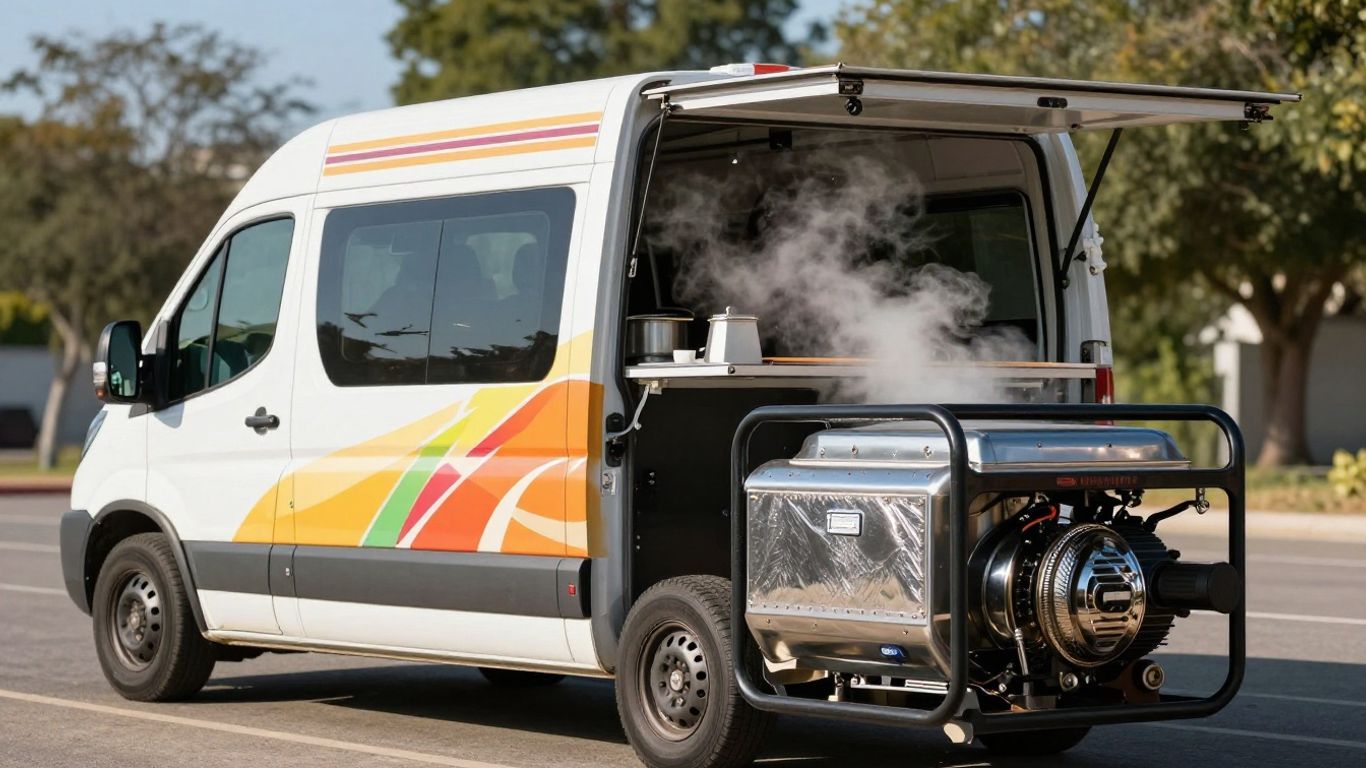
When you’re outfitting your mobile catering van, picking the right generator is a big deal. And a huge part of that decision comes down to the fuel it runs on. Think of it like choosing what your van eats – it affects how it performs, how much it costs to run, and even how clean it is. This isn’t just about keeping the lights on; it’s about how your whole operation runs day-to-day.
Propane: Clean Burning and Streamlined Setup
Propane LPG Generators are really popular choice for food trucks these days, and for good reason. It burns a lot cleaner than petrol, which means less gunk building up in the engine and fewer emissions. This is great for your van’s health and also for your image, especially if you’re in areas where people care about the environment. Plus, a lot of catering vans already use propane for cooking equipment like fryers or grills. If you can use the same fuel for both your cooking and your generator, it really simplifies things. You’re not juggling as many different types of fuel, and you might even be able to use the same tanks. It’s a win-win for efficiency.
Petrol: Availability and Power Output
Petrol is the easiest fuel to get your hands on. You can find a gas station pretty much anywhere, which is a big relief when you’re on the road and need to refuel quickly. For many new businesses, this convenience makes petrol generators the go-to option. They often offer a good amount of power for their size, too. However, gasoline doesn’t last forever. It can start to go bad after just a few months, especially if it sits in the tank for a while. This can lead to engine problems down the line. Also, gas generators can sometimes be a bit louder and produce more fumes than other types.
Diesel: Fuel Efficiency for Heavy-Duty Use
Diesel generators are known for being workhorses. They’re often more fuel-efficient than gasoline models, meaning you can run them for longer periods without needing to refuel, which can save you money over time. This makes them a solid choice if your catering van is running for many hours a day, every day. Diesel engines are also typically built to last and can handle tough conditions. The main downside is that diesel fuel can sometimes be a bit more expensive upfront, and the generators themselves might be a bit heavier and less portable than their gasoline counterparts. They can also be a bit noisier than propane options.
The choice of fuel isn’t just about what’s easiest to find; it’s about matching the generator’s needs to your business’s daily grind. Consider your typical operating hours, how often you’ll be refueling, and the local availability and cost of each fuel type. A little planning now can save you a lot of headaches later.
Safety and Compliance for Your Generator
When you’re out there running your mobile catering business, the last thing you want is a generator that causes trouble. That means paying attention to a couple of big things: safety and following the rules. It’s not just about keeping yourself and your customers safe, but also about avoiding fines and making sure you can actually operate where you want to.
Meeting Emission and Noise Level Regulations
Let’s talk noise first. Nobody likes a super loud machine buzzing away while they’re trying to enjoy their food. Plus, most places you’ll want to set up shop – like festivals, food truck parks, or even just certain city streets – have rules about how much noise you can make. These rules are usually measured in decibels (dB), and they often cap things around 65-70 dB from about 20 feet away. If your generator is louder than that, you could be asked to turn it off, or worse, get a ticket. It’s a good idea to look for generators that are advertised as ‘quiet’ or ‘low noise’. Sometimes, a simple sound-dampening cover can make a big difference too.
Importance of Proper Ventilation and Exhaust
This is a really big one, and it’s all about carbon monoxide (CO). When your generator runs, it puts out this gas that you can’t see or smell, but it’s dangerous. You absolutely must never run your generator inside your food truck or any enclosed space. It needs to be outside, with the exhaust pointing away from any people or your food prep area. Think about where the fumes are going – you don’t want them blowing back into your truck or towards your customers. Proper ventilation is key to preventing CO buildup, which can happen fast and be deadly.
Here’s a quick rundown on keeping things safe:
-
Never run the generator indoors. Always outside, in the open air.
-
Position the exhaust carefully. Make sure fumes blow away from your truck and people.
-
Install CO detectors. Have working detectors inside your truck and test them regularly.
-
Refuel safely. Turn the generator off and let it cool down before adding gas.
Understanding Warranty and Manufacturer Support
Generators are an investment, and like any piece of equipment, they can have issues. That’s where the warranty comes in. When you buy a generator, check out the warranty details carefully. You want one that’s designed for commercial use, not just for occasional home use. A good commercial warranty will usually cover parts and labor for a decent period, maybe a few years. It’s your safety net if something goes wrong unexpectedly. Also, find out who you can call for help if you have problems. Knowing you have manufacturer support or a local repair shop that knows your specific model can save you a lot of headaches and downtime when you least expect it.
When you’re looking at generators, don’t just focus on the power output. Think about the rules of the places you’ll be operating and how to keep everyone safe. A little bit of planning now can save you a lot of trouble later on.
Inverter vs. Conventional Generators for Catering
When you’re outfitting a mobile catering van, one of the big decisions you’ll face is the type of generator to power your operation. It really comes down to two main categories: inverter generators and conventional generators. They both make electricity, sure, but how they do it and the quality of that electricity are pretty different, and that matters a lot for your food business.
Benefits of Inverter Generators for Sensitive Electronics
Think about all the tech you rely on: your point-of-sale system, maybe a digital menu board, credit card readers, even the fancy coffee machine. These aren’t built to handle the kind of power fluctuations that come out of a standard generator. Conventional generators often produce what’s called “dirty power.” This is because their engine speed changes directly with the power output, leading to inconsistent voltage. This unstable electricity can actually damage or even fry your sensitive electronics, leading to costly repairs and downtime you just can’t afford.
Inverter generators, on the other hand, are designed to produce “clean power.” They use a smart little microprocessor to convert the raw AC power into DC, and then back into a really stable, pure AC sine wave. It’s much closer to the power you get from your wall outlet at home, which is exactly what your delicate equipment needs to run smoothly and reliably.
Smoother Energy Output and Quieter Performance
Beyond just protecting your gear, inverter generators offer a smoother ride all around. That consistent, clean power means your appliances will likely run more efficiently and without those annoying hiccups. Plus, they’re generally much quieter than their conventional counterparts. For a catering van, especially if you’re parked near customers or in a residential area, noise can be a real buzzkill. A quieter generator means a more pleasant atmosphere for your customers and less chance of complaints.
Comparing Fuel Efficiency and Portability
When you’re comparing these two types, fuel efficiency is another big win for inverters. Because their engines can adjust their speed based on the power demand, they don’t have to run at full throttle all the time. This can lead to significant fuel savings over the course of a long day, meaning fewer stops for gas and more money in your pocket. Portability is also often a strong suit for inverter generators. They tend to be more compact and lighter than conventional models with similar power outputs, making them easier to load, unload, and position in your van.
Here’s a quick rundown:
-
Inverter Generators: Produce clean, stable power; generally quieter; more fuel-efficient; often more portable; ideal for sensitive electronics.
-
Conventional Generators: Produce “dirty” power (higher THD); can be louder; less fuel-efficient; typically heavier and bulkier; best suited for basic tools or non-sensitive equipment.
Choosing an inverter generator is often the smarter investment for a mobile catering business. While the initial cost might be a bit higher, the protection it offers your equipment, the improved customer experience due to lower noise, and the long-term fuel savings usually make it well worth the price. It’s about reliability and keeping your business running smoothly, day in and day out.
Generator Size and Capacity Considerations
Picking the right generator size for your mobile catering van isn’t just about having enough power; it’s about having the right amount of power. Too little, and you’ll be dealing with tripped breakers and unhappy customers when your equipment can’t keep up. Too much, and you’re just burning extra fuel and wasting money upfront. It’s a balancing act, for sure.
Matching Generator Size to Catering Business Scale
Think about what you’re cooking and how much. A simple coffee cart with just an espresso machine and a grinder has vastly different power needs than a full-blown taco truck running fryers, griddles, and multiple refrigerators. Your generator needs to match the scale of your operation. If you’re just starting out with a few basic appliances, a smaller unit might do the trick. But if you plan to expand or offer a wider menu, you’ll want to factor that in now to avoid needing an upgrade too soon.
Understanding Small, Medium, and Large Generator Outputs
Generators are generally categorized by their wattage output. This is the key number to look at. Here’s a rough breakdown:
-
Small Generators: Typically produce up to 4,000 watts. Good for basic needs like lighting, a small fridge, and maybe one or two low-power appliances.
-
Medium Generators: Usually range up to 6,000 watts. These can handle more demanding appliances and a few more items running at once.
-
Large Generators: Often capable of 8,000 watts or more. These are for serious operations with multiple high-draw appliances like commercial griddles, deep fryers, and large refrigeration units.
Remember, these are just general guidelines. Always check the specific wattage requirements for your appliances.
Avoiding Undersized or Oversized Unit Pitfalls
An undersized generator is a recipe for disaster during a busy service. Imagine your deep fryer shutting off mid-fry because the generator can’t handle the load. Not good. On the flip side, an oversized generator is like buying a sports car when you only need to drive to the grocery store – it’s overkill, costs more to run, and the initial investment is higher than necessary.
The sweet spot is finding a generator that meets your peak demand with a little bit of extra capacity. This buffer prevents the generator from being overworked, which extends its lifespan and reduces the chance of unexpected shutdowns. Aim for a generator that’s about 20-25% more powerful than your calculated maximum need.
To figure out your needs, add up the running watts of all appliances that will be on simultaneously. Then, find the appliance with the highest starting wattage (the surge needed to turn it on) and add that to your total running watts. That sum is your minimum requirement. Don’t forget that buffer!
Maintenance and Installation Best Practices
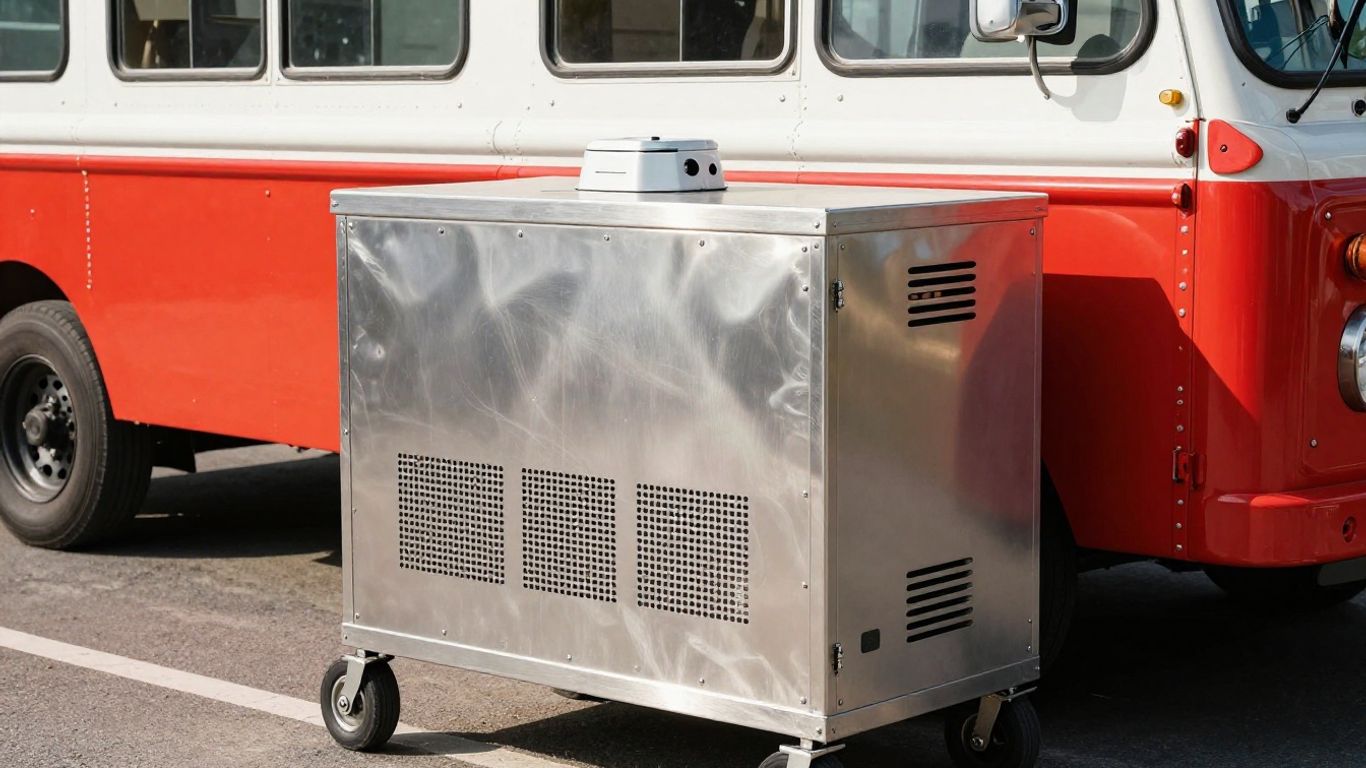
Keeping your generator in tip-top shape is super important for your mobile catering business. Think of it like this: a generator is the heart of your operation, powering everything from your fryers to your lights. If it quits on you, especially during a busy service, that’s a whole lot of lost sales and unhappy customers. A solid maintenance plan isn’t just about keeping things running; it’s about saving money on fuel and avoiding costly repairs down the line.
Routine Checks for Longevity and Reliability
Regular checks are your first line of defense against unexpected breakdowns. It doesn’t take much time, but it makes a huge difference. Here’s a breakdown of what you should be doing:
-
Daily Checks (Before Every Shift):
-
Check Oil Level: This is non-negotiable. Running an engine low on oil is the fastest way to cause serious damage. A quick dipstick check takes seconds.
-
Check Fuel Level: Seems obvious, right? But you’d be surprised how many people get caught out. Make sure you have enough fuel to get through your planned service.
-
Visual Inspection: Give the unit a quick look-over. Are there any loose wires, signs of leaks, or anything that just looks out of place?
-
-
Monthly Checks (Around Every 100 Hours):
-
Clean or Replace Air Filter: A dirty air filter is like trying to breathe through a straw. It makes the engine work harder and use more fuel. Cleaning or replacing it is a simple fix that boosts efficiency.
-
Perform a Load Test: Start the generator and run all your main appliances for about 20-30 minutes. This makes sure it can handle your peak demand and keeps the internal parts lubricated, preventing carbon buildup.
-
The first oil change after the initial break-in period (usually around 20-25 hours) is critical. During this time, tiny metal particles from new engine parts get into the oil. Changing it early removes these abrasives, protecting your engine for the long haul.
Professional Installation for Safety and Ventilation
Getting your generator installed correctly from the start is just as vital as maintaining it. Proper installation means safety for you, your customers, and your equipment, plus it helps the generator run more efficiently.
-
Secure Mounting: Your generator needs to be firmly bolted down to the truck. This prevents it from shifting or vibrating loose while you’re driving, which is a major safety hazard.
-
Proper Ventilation: Generators produce exhaust fumes, including carbon monoxide, which is dangerous. You absolutely need to ensure the exhaust is routed safely away from any occupied areas of your truck and any areas where customers will be. Good airflow around the generator itself also helps prevent overheating.
-
CO Detectors: Install multiple battery-operated carbon monoxide detectors inside your food truck. Test them weekly to make sure they’re working.
-
Safe Refueling Practices: Always turn the generator off and let it cool down completely before adding fuel. This is a simple step that significantly reduces the risk of fire.
Budgeting for Ongoing Maintenance and Repairs
Don’t forget that maintenance isn’t free. You need to factor in the cost of oil, filters, spark plugs, and any potential repairs into your business budget. Think about your warranty too – understand exactly what it covers and what it doesn’t. It’s a good idea to find a local, authorized service center for your generator brand before you need them, just in case a major issue pops up. Having a plan for both routine upkeep and unexpected repairs gives you peace of mind and keeps your business running smoothly.
Wrapping It Up
So, picking the right generator for your food truck isn’t just about getting something that makes noise. It’s about making sure your business can actually run smoothly, day in and day out. You’ve got to figure out exactly how much power you need, think about where you’ll be operating, and what kind of fuel makes the most sense for you. Don’t forget about noise levels and making sure it’s safe. Taking the time to get this right means fewer headaches down the road and more happy customers enjoying your food. It’s a big decision, but with a little planning, you’ll find the perfect power partner for your mobile kitchen.
Frequently Asked Questions
How do I figure out how much power my food truck needs?
To know how much power your food truck needs, you have to add up the power, or watts, that all your machines use. Look at each appliance, like your fridge or oven, and find out how many watts it needs. Add all those numbers together. It’s also smart to get a generator that’s a little bit stronger than what you need, just in case.
What’s the difference between an inverter generator and a regular one for my food truck?
An inverter generator is usually quieter and gives off a steadier, cleaner flow of electricity. This is better for sensitive electronics like your cash register or tablet. Regular generators can be louder and their power might not be as smooth, which could harm delicate equipment.
Why is a quiet generator important for a food truck?
Having a quiet generator is a big plus because loud noises can scare away customers or bother people nearby. Many places, like parks or special events, have rules about how noisy generators can be. A quieter generator helps you follow these rules and makes for a more pleasant experience for everyone.
What kind of fuel is best for a food truck generator?
The best fuel depends on what’s easiest for you. Propane is clean and can often use the same tanks as your cooking equipment, making things simpler. Gasoline is easy to find but can be noisy. Diesel is good for long hours and is fuel-efficient. Think about what’s available where you operate and what fits your budget.
How often should I maintain my food truck generator?
You should check your generator regularly, like before each use or at least once a week, to make sure it’s running well. This includes checking the oil, air filter, and making sure everything is clean and tight. Doing regular check-ups helps prevent big problems and keeps your generator working for a long time.
Can I install the generator myself, or should I hire someone?
While you might be tempted to install it yourself, it’s usually best to have a professional do it. They know how to set it up safely, make sure it has enough air to keep cool, and properly handle the exhaust fumes. This is important for safety and to make sure the generator works correctly and lasts longer.