

Choosing the Right Generator for Your Home: A Comprehensive Guide


Right then, let’s talk about getting a generator for your home. Power cuts are a real pain, aren’t they? Suddenly, the fridge is off, the Wi-Fi’s gone, and it feels like the dark ages. Having a generator can sort all that out, keeping the important stuff running. But picking the right one? It can feel a bit much with all the options out there. Don’t worry though, we’ll walk through what you need to know to find a generator for home that actually suits you.
Key Takeaways
-
Figure out what you absolutely need powered during a blackout – think fridge, lights, maybe medical gear. This helps you work out the total power (wattage) you’ll need from your generator for home.
-
Decide if a portable generator, which you can move around, is best, or if a standby generator, which is permanently installed, offers the convenience you’re after.
-
Consider your fuel options: natural gas is handy if you have a line, propane is a solid backup, and diesel can be powerful but might need more upkeep.
-
Match the generator’s size to your needs. Small ones are good for essentials, medium ones for more comfort, and large ones for keeping everything running like normal.
-
Think about where it’ll go, how noisy it is, and if it’s easy to use and maintain. Professional installation is usually the way to go for safety and proper hook-up.
Understanding Your Home’s Power Requirements
Right then, let’s get down to brass tacks. Before you even think about buying a generator, you need to know what you actually need it to do. It’s not a one-size-fits-all situation, is it? What powers your neighbour’s place might be overkill, or not enough, for yours.
Assessing Essential Appliance Needs
First off, make a list of the absolute must-haves. What has to stay on when the lights go out? Think about:
-
Fridge/Freezer: Nobody wants their food to go off.
-
Lights: Basic safety and being able to see.
-
Medical Equipment: If anyone in the house relies on it, this is non-negotiable.
-
Phone Chargers: Staying connected is pretty important these days.
-
Boiler/Heating System: Especially if it’s freezing outside.
Just jot down everything you can’t live without for a few hours, or maybe a few days.
Calculating Total Wattage Requirements
Now, for each item on your list, you need to find out how much power it uses. You’ll usually find this on a sticker on the appliance itself, or in its manual. It’ll be in watts (W). Some appliances, like fridges or power tools, use a lot more power when they first start up – this is called ‘starting wattage’. You need to account for both the normal running wattage and the starting wattage.
Your generator needs to be powerful enough to handle the highest starting wattage of any single appliance, plus the combined running wattage of everything else you want on at the same time.
Here’s a rough idea for some common items:
|
Appliance |
Running Watts (approx.) |
Starting Watts (approx.) |
|---|---|---|
|
Fridge/Freezer |
150-200 W |
600-800 W |
|
Lights (LED) |
10-20 W |
N/A |
|
Laptop Charger |
50-100 W |
N/A |
|
Mobile Phone |
5-10 W |
N/A |
|
Microwave |
800-1200 W |
N/A |
|
Kettle |
1500-2500 W |
N/A |
|
Electric Heater |
1500-2000 W |
N/A |
|
Boiler |
100-300 W |
300-500 W |
Note: These are just estimates. Always check your specific appliance labels.
Considering Comfort Levels During Outages
So, you’ve got your ‘must-haves’ sorted. But what about comfort? Do you want to be able to run your TV, charge multiple devices, maybe even use your oven? Or are you happy just keeping the essentials ticking over?
Think about:
-
How long do outages usually last in your area? If it’s just a few hours now and then, maybe the basics are fine. If you’re often without power for days, you’ll want more.
-
What’s your tolerance for being uncomfortable? Some people are fine with a bit of darkness and no Wi-Fi, others really struggle.
-
Do you have young children or elderly relatives? Keeping them warm and comfortable might be a higher priority.
Figuring out what you really need, and what you’d like to have, is the first big step. Don’t just guess; do a bit of homework on your appliances. It’ll save you a headache later on.
Choosing Between Portable And Standby Generators
Right then, let’s talk generators. You’ve got two main types to think about: portable ones and standby units. Each has its own job, so picking the right one is key.
The Flexibility Of Portable Generators
These are your go-to if you need power on the move. Think outdoor events, camping trips, or just powering a few bits and bobs during a short outage. They’re generally cheaper to buy upfront, which is a big plus. You can easily move them around, so they’re not stuck in one spot. They’re brilliant for powering essential items like your fridge, a few lights, and maybe your phone charger.
-
Lower initial cost: Easier on the wallet to start with.
-
Move them around: Use them where you need them, when you need them.
-
Good for essentials: Perfect for keeping critical things running.
Just remember, you’ll need to set them up manually each time, and you’ll have to store fuel like petrol, which needs careful handling. Always run them outside, well away from windows and doors, to avoid nasty fumes. You can even connect some portable generators to your home’s breaker box using a transfer switch for more robust power portable generators.
The Convenience Of Standby Generators
Standby generators are a different beast altogether. They’re installed permanently at your home and hook straight into your mains electricity. The best bit? They kick in automatically the moment the power goes out. No faffing about in the dark. They usually run on natural gas or propane, so you don’t need to worry about storing fuel or refilling them.
-
Automatic start-up: Power back on without you lifting a finger.
-
Whole-home power: Can often run most, if not all, of your house.
-
Reliable fuel: No need to store petrol; they use your home’s gas supply or a propane tank.
These are more expensive, mind you, and you’ll need a professional to install them. But for total peace of mind, especially if you have medical equipment or just hate being without power, they’re hard to beat.
When To Opt For Whole-Home Coverage
So, when do you go for the full-on standby system? If you’re looking to power your entire house – heating, cooling, all your appliances, the lot – then a standby generator is usually the way to go. They’re designed for this kind of heavy lifting. Portable generators, even the bigger ones, usually top out at powering just the essentials. If you’ve got a big family, work from home, or just want to keep everything running as normal during an outage, whole-home coverage is worth the investment. It’s about keeping your life ticking over, no matter what the weather throws at you.
Choosing between portable and standby generators really comes down to your budget, how much power you need, and how much effort you’re willing to put in when the lights go out. Think about what you absolutely can’t live without and go from there.
Exploring Generator Fuel Options
Right then, let’s chat about what makes your generator tick. The fuel you pick makes a big difference to how it runs, how much it costs, and how much hassle it is.
The Benefits Of Natural Gas Generators
If you’ve got a mains gas line, this is a doddle. It’s basically plug-and-play power. No need to store fuel or fill up tanks. It just works when the power goes out. Plus, it burns pretty clean, which is good for the environment and your generator’s insides.
-
Always ready: No refuelling needed.
-
Clean burn: Less mess, less wear.
-
Convenient: Connects straight to your gas supply.
Propane As A Reliable Fuel Source
No mains gas? No problem. Propane is a solid backup. You’ll need a tank, of course, which you can get in various sizes. It’s cleaner than petrol and lasts ages in the tank.
-
Good for storage: Propane keeps well.
-
Cleaner than petrol: Better for your generator.
-
Widely available: Easy to get refills.
Remember to check local rules for storing propane tanks. Safety first!
Understanding Diesel Generator Capabilities
Diesel generators are often seen as the workhorses, especially for bigger jobs. They’re known for being tough and efficient, meaning you get more power for your fuel. However, diesel fuel needs careful storage to stay in good condition, and these units can be a bit noisier.
-
Powerhouse: Great for heavy loads.
-
Fuel efficient: Good mileage for the power.
-
Durable: Built to last.
Fuel Choice Summary
|
Fuel Type |
Pros |
Cons |
|---|---|---|
|
Natural Gas |
Continuous supply, clean, low upkeep |
Requires mains gas connection |
|
Propane |
Easy to store, cleaner than petrol |
Needs tank, can be less powerful than gas |
|
Diesel |
Powerful, efficient, durable |
Needs careful storage, can be noisy |
Selecting The Right Generator Size For Your Needs
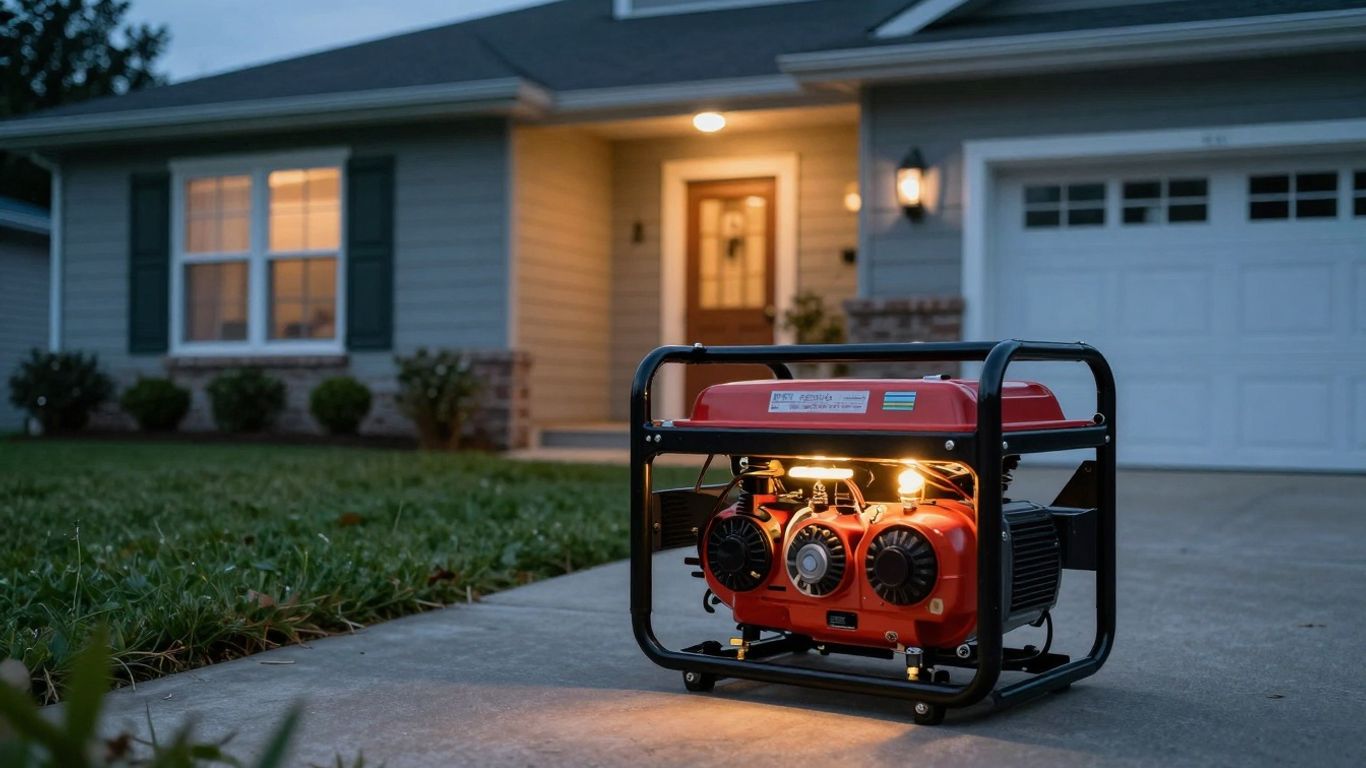
Right, so you’ve figured out what you need to power. Now, let’s talk about how big a generator you actually need. It’s not a one-size-fits-all situation, is it? Get it wrong, and you’ll either be stuck with a generator that can’t cope, or you’ll have paid for more power than you’ll ever use. Let’s break it down.
Small Generators For Essential Power
These are your go-to if you just need the absolute basics. Think fridge, a couple of lights, maybe your phone charger. They’re usually portable, so you can wheel them out when you need them.
-
Perfect for: Keeping essentials running, like your fridge and some lights.
-
Wattage: Typically between 5,000 and 7,500 watts.
-
Use case: Great for smaller homes or if you’re happy to go without the big stuff during a power cut.
Medium-Sized Options For Comfort
Want a bit more? These generators can handle more. You’re looking at running your fridge, lights, TV, and maybe even your central heating or air conditioning for a bit.
-
Good for: Keeping things comfortable, powering multiple appliances.
-
Wattage: Generally from 8,000 to 12,000 watts.
-
Example: You could run your fridge, lights, a laptop, and the boiler.
Large Generators For Complete Backup
This is the big league. If you want your whole house to run as normal, even when the grid’s down, you need one of these. We’re talking about powering everything – your heating, all your appliances, your entertainment systems, the lot.
-
Ideal for: Large homes or if you simply can’t do without anything.
-
Wattage: 12,000 watts and upwards, often much higher for whole-house systems.
-
Benefit: Total peace of mind, no compromises during an outage.
The key is to list everything you want to power and add up their wattages. Don’t forget to factor in the ‘starting’ wattage for things like fridges or pumps, as they use more power when they kick in.
Remember to check the ‘running’ and ‘starting’ watts for each appliance. You’ll find this on the appliance’s label or in its manual. Add them all up, and that’s your target wattage. Always aim for a generator that’s a bit bigger than your total, just to be safe and avoid overworking it.
Key Considerations For Generator Installation
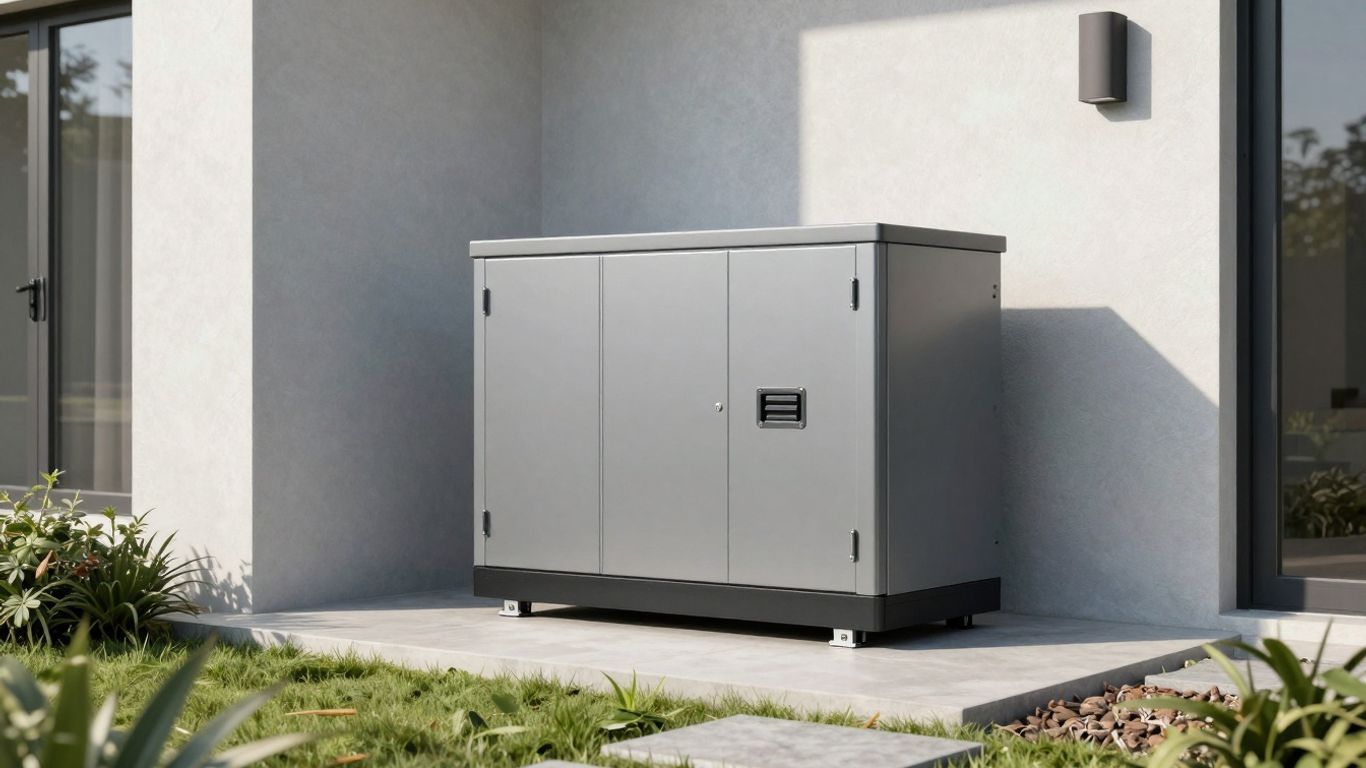
Right, so you’ve picked your generator. Brilliant. Now, how do you get it hooked up and running safely? This bit’s important, and honestly, it’s not really a DIY job for most of us. Getting it installed properly means it’ll work when you need it most, and more importantly, it’ll be safe.
Professional Installation For Safety
Seriously, don’t try to wing this yourself. Incorrect wiring or fuel line setup can be dangerous, leading to electrical shocks or even fires. A qualified professional knows all the ins and outs, making sure everything’s up to scratch with safety regulations. They’ll handle the tricky bits, so you don’t have to worry about a thing. It’s about peace of mind, really. You can find local professionals who specialise in generator installation to get the job done right.
Integrating With Your Home’s Electrical System
This is where the magic happens, connecting your new power source to your house. A pro will make sure the generator talks nicely to your home’s main electrical panel. This usually involves a transfer switch. It’s a clever bit of kit that stops the generator from sending power back into the grid (which is a big no-no and dangerous for utility workers) and switches your home’s power source from the grid to the generator automatically or manually.
Here’s a quick rundown of what’s involved:
-
Transfer Switch: Essential for safe connection. Automatic ones switch over instantly; manual ones need you to flip a switch.
-
Wiring: Proper gauge wiring is used to handle the load safely.
-
Fuel Lines: If it’s not a portable you’re plugging in, dedicated fuel lines need secure, leak-free installation.
Choosing The Ideal Generator Location
Where you put the generator matters. You can’t just plonk it anywhere. Think about:
-
Airflow: Generators need space to breathe. Blocking vents can cause overheating.
-
Noise: Keep it away from bedroom windows if you can. Check local noise ordinances too.
-
Weather Protection: While many are built for outdoors, some extra shelter from harsh weather can prolong its life.
-
Fuel Storage: If you’re using propane or diesel, safe and legal storage is a must.
-
Distance from House: For standby units, there are usually minimum distance requirements from your home and property lines for safety reasons.
A good spot means it’s accessible for maintenance but out of the way of daily life and potential hazards like flooding. Always check your local council’s rules on placement before deciding.
Additional Features To Look For
Noise Levels And Your Neighbours
Generators can be noisy. Check the decibel (dB) rating before you buy. A quieter model means happier neighbours. Look for units specifically designed for low noise output. Some are enclosed in sound-dampening casings. Think about where you’ll place it too – further from boundaries is usually better.
Ease Of Use And Maintenance
Nobody wants a headache when the power goes out. Look for generators with features like electric start. This means no pulling on a cord in the dark and rain. Check how easy it is to access filters and oil for regular checks. A clear control panel is a big plus. Simple maintenance schedules are key. Most manufacturers will give you a guide on what needs doing and when. It’s usually things like checking oil, air filters, and spark plugs. Doing this regularly keeps your generator running smoothly for years.
Smart Technology Integration
Modern generators can do more than just make power. Some connect to your home Wi-Fi. You can then monitor their status using a smartphone app. This lets you see fuel levels, check if it’s running, and even start or stop it remotely. This is handy if you’re away from home when a power cut happens. It gives you peace of mind knowing you can keep an eye on things. It also helps you know when it might need refuelling or maintenance.
So, What’s the Takeaway?
Right then, choosing a generator might seem a bit much at first, but hopefully, this guide has made it a bit clearer. It’s all about figuring out what you actually need – like, do you just want to keep the fridge running, or do you want the whole house humming along? Think about where you’ll put it, what fuel makes sense for you, and don’t forget to factor in the cost. Getting a pro to sort out the installation is usually a good shout too, just to make sure it’s all safe and sound. At the end of the day, having a generator means you can stop worrying about those power cuts and just get on with things. Cheers for reading!
Frequently Asked Questions
Right, so how do I figure out how much power my house actually needs?
Easy peasy! Think about what absolutely *has* to stay on when the lights go out. We’re talking the fridge, maybe your medical gear, and some lights. Jot down those items and then look up how many watts they use. Add those up, and you’ve got a good starting point for the generator’s power.
Portable generator or a standby one – what’s the big difference?
Picture this: a portable generator is like a trusty companion you can wheel around for camping or smaller jobs. A standby generator, on the other hand, is a permanent fixture hooked up to your house, ready to kick in automatically when the power cuts out. It’s all about whether you need flexibility or ultimate convenience.
What are the main fuel options, and which is best for me?
You’ve got a few choices here! Natural gas is super convenient if you’ve got a line to your house, as it just keeps going. Propane is a solid backup and easy to store, while diesel generators are real workhorses, often used for bigger jobs. Think about what’s easiest to get hold of and what fits your budget.
How do I choose the right size generator so I don’t get it wrong?
It’s all about matching the generator’s power (measured in watts) to what you need to run. For just the essentials, a smaller one might do. If you want to keep your heating and all your telly running, you’ll need a bigger one. It’s better to have a bit of extra power than not enough!
Do I really need a professional to install my generator?
Honestly, yes! Connecting a generator to your home’s electrical system is a bit tricky and can be dangerous if not done right. A qualified installer makes sure it’s all safe, up to code, and works perfectly with your home’s wiring. Peace of mind is worth it!
Are there any other things I should look out for when buying?
Definitely! Think about how noisy the generator is – you don’t want to annoy the neighbours! Also, consider how easy it is to start and maintain. Some newer ones even have smart tech that you can control with your phone. It’s the little things that can make a big difference.