
Find Your Perfect Commercial Kitchen for Hire in the UK: A Comprehensive Guide

Thinking about getting a commercial kitchen for hire in the UK? It can feel a bit daunting at first, especially if you’re new to this. But honestly, it’s a really smart move for lots of food businesses. Whether you’re a street food whizz, a baker, or a caterer, finding the right space can make a huge difference. This guide is here to break it all down for you, making sure you find a kitchen that fits your business perfectly.
Key Takeaways
- There are different types of commercial kitchens available for hire, like dark kitchens for delivery or commissary kitchens for production, so pick one that suits your business model.
- When looking for a commercial kitchen to rent, check what’s included, like good ventilation and cleaning facilities, and see if you can adapt the space to your needs.
- Make sure the kitchen has the right equipment for you, from fridges and freezers to cooking gear and prep surfaces. If not, check if you can bring your own.
- Consider where the kitchen is located and if it’s easy for your suppliers and customers to get to. Also, always visit the space before you sign anything.
- Understand all the costs involved, not just the rent, but also any extra fees or contract terms, to make sure it’s a good deal for your business long-term.
Understanding Your Commercial Kitchen For Hire Options
So, you’re looking for a kitchen space to get your food business cooking? Great! There are a few ways to go about it, and knowing your options is the first step to finding the right fit. It’s not just about four walls and a hob; it’s about finding a space that works for you.
Exploring Different Kitchen Types
Commercial kitchens aren’t all the same. Think about what you actually need to do. Are you all about deliveries? Then a dark kitchen might be your jam. These are set up purely for online orders, often housing several different food brands under one roof. It’s a smart way to test out different menus or brands without the fuss of a front-of-house.
Then there are commissary kitchens, sometimes called central production units. These are bigger operations, often used for large-scale food prep or as a hub for multiple businesses. If you’re making a lot of one thing, like sauces or baked goods, this could be the way to go.
Some places offer custom or hybrid kitchens. This means you can work with the provider to design a space that’s exactly how you want it. You get to pick the layout and equipment that suits your specific dishes and workflow. This flexibility means you only pay for what you use.
Who Benefits from Kitchen Rentals?
Honestly, loads of people! If you’re a street food vendor needing a base to prep and store your gear, a rental kitchen is perfect. Coffee shops and cafes can use them to expand their menu or handle busy periods without cramming into their existing space.
Bakers, takeaway-only spots, and catering companies all find these spaces a lifesaver. Even pop-up restaurants can use them to get their temporary venture off the ground. Basically, if you make food and need a professional space to do it, a commercial kitchen for rent is worth a look.
- Street food vendors
- Bakers and patissiers
- Catering companies
- Takeaway businesses
- Pop-up restaurants
Comparing Rental vs. Ownership
Owning your own kitchen sounds grand, but let’s be real, it’s a massive commitment. You’re talking big upfront costs, plus all the ongoing bills for maintenance, repairs, and utilities. It ties you down to one spot, too.
Renting, on the other hand, is much more flexible. You avoid those huge initial expenses and can scale up or down as your business needs change. It means your money can go into your ingredients and your staff, not a mortgage. Plus, you often get access to professional equipment and facilities without the hassle of buying and maintaining it all yourself. For many mobile caterers, this is a game-changer. You can find a wide range of options for temporary kitchen hire.
Renting a commercial kitchen means you can focus on what you do best – cooking amazing food – without getting bogged down in property management or expensive equipment upkeep. It’s about smart business, not just cooking.
Key Features To Look For In A Kitchen Rental
Right then, you’ve decided renting a commercial kitchen is the way to go. Brilliant! But what exactly should you be looking for? It’s not just about four walls and a hob, is it? Let’s break down the important bits.
Essential Included Amenities
Think about what you absolutely need to get cooking straight away. Most kitchens will have the basics, but it’s worth checking the specifics. You want hygienic surfaces, decent ventilation, and proper drainage. Don’t forget about waste disposal – nobody wants a bin overflowing on day one. Some places might even throw in access to cold storage, which is a lifesaver for mobile caterers. Always ask what’s included before you sign anything.
Here’s a quick checklist:
- Ventilation: Is it good enough for what you cook?
- Surfaces: Easy to clean and food-safe?
- Drainage: Does it handle your needs?
- Waste: How is it managed?
- Storage: Any fridge or freezer space available?
Customisation And Flexibility
This is where renting really shines. You’re not stuck with someone else’s idea of a perfect kitchen. If you’ve got your own specialist kit, make sure there’s space and power for it. Some kitchens let you tweak the layout a bit, which can make a huge difference to workflow. It means you only pay for what you use and set it up how you like. This flexibility is key for optimising your kitchen expenses.
Access And Availability
When can you actually get in? This is a big one for mobile caterers who might need to prep at odd hours or load up early for an event. Check the access times – is it 24/7, or just standard business hours? Also, think about parking and loading bays. If you’re constantly in and out with stock and equipment, a tight squeeze or a long walk from the van is a real pain. Make sure the kitchen fits your schedule, not the other way around.
Security is also part of access. You want to know your gear and ingredients are safe when you’re not there. Look for good locks, maybe even CCTV if it’s a concern.
Equipping Your Commercial Kitchen Space
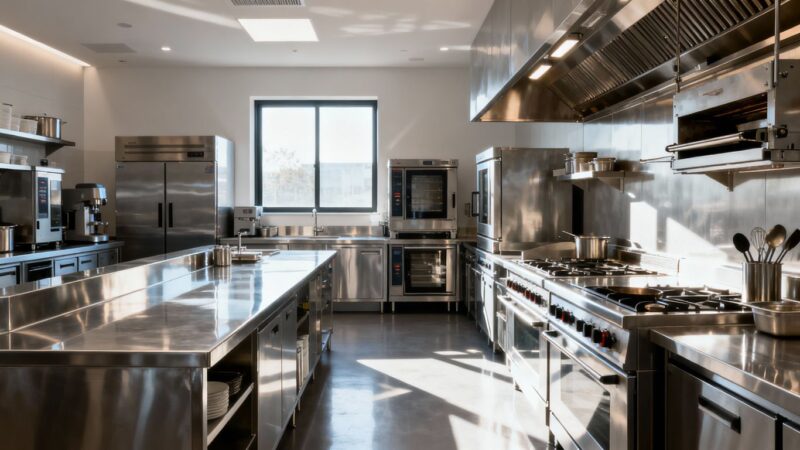
Right then, let’s talk about getting your hired kitchen kitted out. This is where the magic happens, so you need the right tools for the job. Think about what you actually do all day. Are you whipping up fancy cakes, searing steaks, or maybe slinging burgers? Your equipment needs to match your menu.
Essential Refrigeration And Freezing
Keeping your ingredients fresh is a big deal. You’ll need space to chill and freeze. Look for kitchens that already have good refrigeration. If not, you’ll need to factor in bringing your own, which can be a pain.
- Counter fridges: Good for quick access to common items.
- Upright fridges/freezers: Offer more storage space.
- Walk-in cold rooms/freezer rooms: Ideal for larger operations or bulk buying.
Make sure any fridge or freezer you use is commercial grade. Domestic ones just won’t cope with the constant use.
Core Cooking Equipment
This is your main kit. Ovens, hobs, fryers – the works. Most rental kitchens will have some basics, but you might need to bring in specialist gear.
- Ovens: Gas, electric, or combi ovens are common. A combi oven can steam and bake, which is pretty handy.
- Hobs/Burners: You’ll want sturdy commercial burners for quick, high heat.
- Fryers: Essential for chips, fried chicken, and more. Check if they’re gas or electric.
- Grills/Griddles: Perfect for burgers, steaks, and breakfast items.
- Microwaves: Get a proper commercial one. They’re built to last, unlike your average home microwave.
Preparation And Sanitation Essentials
Don’t forget the bits that make prep and cleaning easier. Good prep surfaces and sinks are a must. And you absolutely have to keep things clean.
- Prep Tables: Look for stainless steel. Easy to wipe down and hygienic.
- Sinks: You’ll need a good sink for washing up, plus a separate hand-washing sink. Health and safety rules!
- Dishwashers: A commercial dishwasher saves loads of time.
- Cleaning Supplies: Make sure you have access to commercial-grade cleaners and sanitisers. Colour-coded chopping boards are also a good idea to stop cross-contamination.
Always check the ventilation system. Good extraction is vital for a comfortable and safe working environment, especially when you’re cooking up a storm.
If you’re unsure about what kit you need, have a chat with the kitchen provider or a chef mate. Getting the right equipment from the start saves a lot of hassle later on.
Making The Right Choice For Your Business
So, you’ve explored the options and know what you need. Now, let’s nail down the perfect kitchen for your mobile catering business. It’s not just about four walls and a hob; it’s about finding a space that works for you.
Assessing Your Specific Business Needs
Think about what you actually do. Are you baking cakes for events? Frying up burgers for festivals? Your menu dictates your equipment needs. Don’t pay for a massive, industrial setup if you just need a decent oven and prep space.
- What’s your menu? List every dish.
- How much volume? How many covers or orders per day/week?
- What equipment is non-negotiable? Fryers? Combi oven? Blast chiller?
- What’s your budget? Be realistic about what you can afford.
Your business needs should be the compass guiding your kitchen search.
The Importance Of Location
Location isn’t just about looking good; it’s about practicality. For mobile caterers, this means easy access to major roads for getting to events. It also means thinking about where your suppliers are and where your customers are.
- Access to main roads: Crucial for getting to bookings on time.
- Proximity to suppliers: Saves time and delivery costs.
- Local demand: Is the kitchen near areas you often work?
Consider a kitchen in a business park or industrial estate. They often have better transport links and are more affordable than city centre spots. Finding a good commercial kitchen for rent can make a big difference.
Visiting Potential Kitchen Spaces
Never, ever book a kitchen without seeing it first. Photos can be deceiving. You need to get a feel for the place.
- Check the layout: Does it flow well? Can you move around easily when it’s busy?
- Inspect the equipment: Is it clean and well-maintained? (Even if you’re bringing your own, check the basics).
- Look at storage: Is there enough space for your ingredients and finished products?
- Ask about utilities: Are they included? What are the power outputs?
Take a notepad and pen. Jot down everything. Ask about cleaning schedules and waste disposal. It might seem boring, but these details matter.
Imagine turning up to your first big event and realising the fridge is too small, or the ventilation is rubbish. A site visit stops these nightmares before they start. It’s your chance to ask those nagging questions and make sure the space feels right. You want a kitchen that helps you succeed, not one that holds you back. Find your ideal kitchen today.
Navigating The Costs Of Kitchen Hire
Factors Influencing Rental Prices
So, you’ve found a few kitchens that look promising. Now, let’s talk brass tacks: the cost. It’s not just a simple number; several things bump the price up or down. Think about the size of the kitchen – a tiny prep space won’t cost the same as a large unit with room for multiple chefs. Location is a big one too; a kitchen in central London will naturally cost more than one in a smaller town. The equipment included also plays a part. If it’s fully kitted out with top-notch gear, expect to pay a bit more than for a basic shell.
Here’s a quick rundown of what affects the price:
- Size: Bigger space, bigger bill.
- Location: Prime spots cost more.
- Equipment: High-end gear adds to the cost.
- Time: Peak hours or 24/7 access might have different rates.
- Contract length: Longer commitments can sometimes mean better deals.
Always get a detailed quote tailored to your needs. Don’t just rely on advertised prices; they can be a starting point, but your specific requirements will shape the final figure.
Understanding Contractual Obligations
This is where you need to read the fine print. Contracts can be tricky, and you don’t want any nasty surprises down the line. Most places will ask for a security deposit. This is usually refundable when you leave, provided you’ve stuck to the agreement and left the place in good nick. Check the contract for any hidden fees, like charges for using specific equipment or extra costs for waste disposal. Also, look closely at the notice period required if you decide to leave. Breaking a contract early can sometimes land you with a hefty penalty, so make sure you’re comfortable with the terms before signing.
Always ask for clarification on anything you don’t understand in the contract. It’s better to ask a ‘silly’ question now than to face a costly problem later. Your business depends on it.
Long-Term Cost Considerations
Think beyond the monthly rent. What are the ongoing costs? You’ll need to factor in utilities – are they included, or will you pay extra? What about insurance? You’ll likely need your own public liability insurance, but check if the kitchen provider has any building insurance you need to contribute to. Consider the cost of consumables too – cleaning supplies, gas, electricity for your own equipment. If you’re bringing in a lot of your own gear, think about maintenance. The cheapest rental isn’t always the most cost-effective in the long run. Look at the total picture to see where you’ll get the best value for your money and keep your business profitable.
Maximising Your Kitchen Rental Investment
So, you’ve found a great commercial kitchen to rent. Brilliant! Now, how do you make sure you’re getting the most bang for your buck? It’s not just about turning up and cooking; it’s about smart planning and using the space to its full potential. Think of it as a business tool, not just a place to prep.
Adapting To Seasonal Demand
Food businesses often have busy and quiet periods. Think summer festivals, Christmas parties, or even just the weather. Your rental kitchen can be a real asset here. Need to ramp up production for a big event? You’ve got the space. Things slowing down? You can scale back your usage without being stuck with a massive overhead.
- Plan ahead for busy spells: Order supplies in advance, schedule extra staff if needed, and book more kitchen time.
- Use quieter times wisely: This is perfect for menu development, deep cleaning, or staff training.
- Communicate with the kitchen provider: Let them know your expected busy and quiet periods. They might have suggestions or be able to offer flexible rates.
Opportunities For Collaboration
Don’t forget you’re sharing a space. This can be a good thing! Other caterers in the kitchen might be your next big collaborator or even just a friendly face to share tips with.
- Share bulk buying power: Can you team up with another caterer to buy ingredients in larger, cheaper quantities?
- Cross-promotion: If you do different types of food, could you recommend each other to clients?
- Equipment sharing: Need a specific piece of kit for a one-off job? See if a neighbour has it and can lend it out (for a small fee, perhaps).
Remember, building good relationships with other kitchen users can lead to unexpected opportunities and a more supportive working environment. It’s about community as much as it is about cooking.
Planning For Future Growth
Your rental kitchen should support your business as it grows, not hold it back. Think about what you might need in six months or a year.
- Scalability: Can you easily increase or decrease your usage? Does the provider offer different sized spaces or more hours if you need them?
- Menu expansion: Does the kitchen have the facilities to support new dishes or cuisines you might want to try?
- Location, location, location: Is the current kitchen in a spot that will still work if your delivery radius or customer base changes?
Choosing a kitchen that offers flexibility means you won’t have to face the hassle and cost of moving every time your business takes a step forward. The right rental kitchen grows with you.
So, What’s Next?
Right then, finding the right commercial kitchen for your food business in the UK might seem like a big task, but hopefully, this guide has made it a bit clearer. We’ve looked at all sorts of things, from the different types of kitchens out there to what you should be checking before you sign anything. Remember, it’s all about matching the space to what you actually do. Don’t rush it, have a good look around, and ask plenty of questions. Getting this bit right means you can get on with what you do best – making brilliant food. Good luck out there!
Frequently Asked Questions
What exactly is a commercial kitchen for hire?
Think of it as a fully kitted-out kitchen space that you can rent, usually by the hour or day. It’s perfect if you’re a food truck owner, caterer, or starting a food business and don’t have your own place to cook up a storm. It’s got all the professional gear you’d expect, saving you loads of hassle and cash compared to building your own.
Who usually rents these kitchens?
Loads of different food folks! Street food vendors, mobile caterers, bakers, pop-up restaurants, even big food companies that need extra space for testing new recipes. Basically, anyone who needs a professional kitchen but doesn’t want the massive commitment of owning one.
What sort of equipment can I expect to find?
It really depends on the place, but generally, you’re looking at commercial-grade ovens, hobs, fryers, fridges, freezers, and prep areas. Some places might have more specialised bits and bobs. It’s always best to check exactly what’s included before you book, so you know you’ve got everything you need.
How much does it cost to rent a kitchen?
The price can change quite a bit. It depends on how big the kitchen is, where it’s located (London is usually pricier!), and for how long you need it. Some places charge by the hour, others by the day. Make sure you read the contract carefully to see what’s included and if there are any hidden fees.
Can I customise the kitchen to my needs?
Often, yes! While the basic setup is there, many places let you bring in your own specific equipment or arrange the layout a bit. It’s worth chatting with the rental company about what you can and can’t do to make sure it works for your business style.
What’s the difference between renting and owning a kitchen?
Renting is way more flexible and cheaper to start with. You don’t have to worry about buying the equipment or fixing it when it breaks. Owning means you have total control and it’s yours 24/7, but it’s a massive upfront cost and ongoing responsibility. For most new or growing businesses, renting makes a lot more sense.