

Delicious Catering for a Small Party: Your Ultimate Guide


Planning a get-together for just a few friends or family? Amazing! Hosting a small party can be super fun, but figuring out the food and drinks can sometimes feel like a lot. You want everyone to have a brilliant time without you being stuck in the kitchen all night. That’s where thinking about catering for a small party comes in. It doesn’t have to be complicated or break the bank; it’s all about making things easy and tasty for everyone involved. Let’s get this sorted so you can actually enjoy your own shindig!
Key Takeaways
-
Figure out what kind of food you want and how much you’re willing to spend before anything else.
-
Always check for any dietary needs or allergies your guests might have.
-
Think about food that’s easy to eat while standing and chatting, like small bites or food stations.
-
Don’t forget drinks! Batch cocktails or a nice selection of wines and beers can really add to the atmosphere.
-
Consider hiring help if you want to relax and enjoy the party yourself, but make sure to read reviews and do tastings first.
Planning Your Small Party Catering
Understanding Your Catering Needs
Think about what kind of party you’re having. Is it a relaxed get-together or something a bit more formal? This will shape the food you need. For a casual bash, think easy-to-eat finger foods. For a sit-down meal, you’ll need something more substantial. Consider the time of day too – brunch, lunch, or dinner all need different approaches.
Setting Your Catering Budget
Be clear about what you can spend. Catering costs can add up. Look at prices per head or for set packages. Don’t forget extra bits like service fees, delivery, and any hired equipment. It’s wise to have a buffer for unexpected costs.
-
Per-person pricing: Good for when guest numbers might change.
-
Package deals: Can offer better value, especially for larger groups.
-
Hidden costs: Always ask about service charges, delivery, and rentals.
Always get a written quote detailing everything. This stops nasty surprises later on.
Guest Count and Dietary Needs
Know exactly how many people are coming. This is key for ordering the right amount of food. Also, ask guests about any allergies or special diets when they RSVP. This is super important for safety and making sure everyone can enjoy the food.
|
Dietary Need |
Example Dishes |
|---|---|
|
Vegetarian |
Mushroom Wellington, Lentil Shepherd’s Pie |
|
Vegan |
Roasted Vegetable Skewers, Chickpea Curry |
|
Gluten-Free |
Grilled Chicken Salad, Rice Noodle Stir-fry |
|
Nut Allergy |
Fruit Platter, Seed-based Crackers (check labels) |
|
Dairy-Free |
Sorbet, Coconut Milk Panna Cotta |
It’s better to have a little extra food than not enough.
Delicious Food Ideas for Your Gathering
Right then, let’s talk about the grub. For a smaller party, you want food that’s easy to handle, tastes brilliant, and doesn’t tie you down. Think less fuss, more flavour.
Bite-Sized Delights for Easy Mingling
Finger food is your best mate here. It means guests can grab a bite while they’re chatting, holding a drink, or even doing a bit of a boogie. It keeps things moving and relaxed.
-
Mini Savouries: Think tiny quiches, sausage rolls, or even small stuffed mushrooms. Easy to pop in your mouth.
-
Skewers: Chicken satay, caprese skewers (cherry tomato, mozzarella, basil), or even fruit skewers. They look good and are simple to eat.
-
Dips & Dippers: A couple of nice dips like hummus or a creamy onion dip with some pitta bread, veggie sticks, and crackers. Keep the dips in small bowls so they don’t make a mess.
Safety Note: Make sure anything served cold is kept chilled, and hot food stays warm. Use chafing dishes or insulated containers if you’re not serving straight away.
Interactive Food Stations
These are brilliant for getting people involved and add a bit of fun. They also mean guests can pick exactly what they fancy.
-
Slider Bar: Offer a couple of types of mini burgers (beef, chicken, veggie) with a selection of toppings like cheese, onions, pickles, and different sauces. Guests build their own.
-
Taco/Fajita Bar: Cooked fillings like seasoned chicken or beef, plus bowls of lettuce, salsa, sour cream, cheese, and warm tortillas. Everyone can assemble their own.
-
Loaded Potato Skins: Offer baked potato skins with a few different fillings like cheese and chives, bacon bits, or chilli. Simple but always a hit.
Setting up a food station doesn’t need to be complicated. A separate table with clearly labelled dishes is all you need. It makes guests feel looked after and gives them a bit of control over their meal.
Sweet Treats to Delight Your Guests
Don’t forget the sweet stuff! Again, keep it simple and easy to eat.
-
Mini Desserts: Think small brownies, lemon tarts, or chocolate mousse pots. Guests can try a couple without feeling too full.
-
Fruit Platter: A colourful mix of fresh fruit is always refreshing and a good lighter option.
-
Cupcakes or Cake Pops: These are already portioned and easy to handle. Plus, they look pretty!
Example: For a birthday, you could have a small cake and then a selection of mini cupcakes and brownies on a stand. It looks impressive but is easy to manage.
Beverages to Complement Your Party
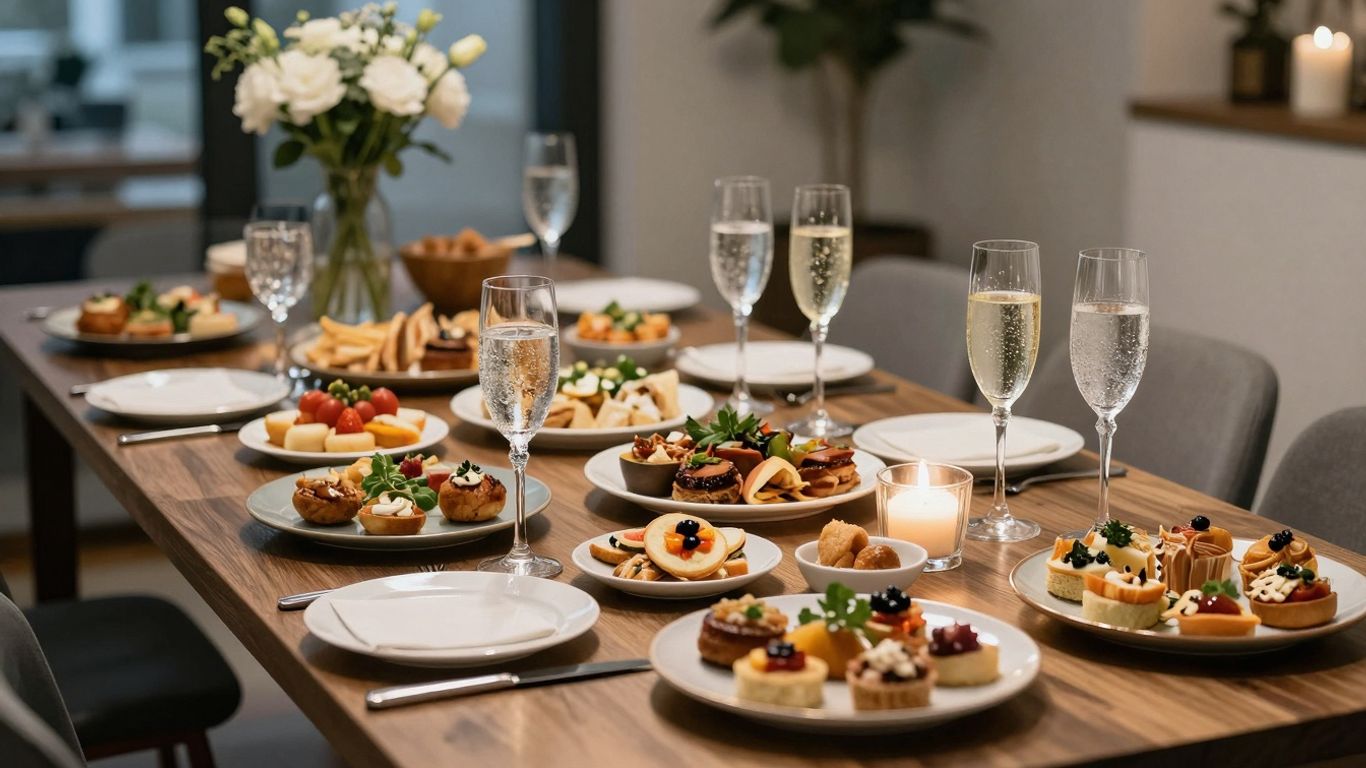
Batch Cocktails for Effortless Serving
Make drinks simple for you and your guests. Think big jugs of sangria, rum punch, or even a spiked lemonade. They’re easy to make ahead and just need pouring. This means less time behind the bar and more time enjoying the party. Plus, guests can help themselves, which is always a bonus.
A Selection of Wines and Beers
Keep it straightforward. A couple of red and white wines, plus a lager and maybe an ale, usually covers most tastes. Having them chilled and ready to go is key. Think about a cooler or ice bucket so they’re easily accessible. It’s a simple touch that makes a big difference.
Festive Non-Alcoholic Options
Don’t forget those who aren’t drinking alcohol. Freshly squeezed juices, sparkling water with fruit slices, or a homemade lemonade feel special. A mint and cucumber infused water is refreshing and looks great. It shows you’ve thought of everyone.
Choosing the Right Catering Service

When to Hire Professional Help
Cooking for a few mates is one thing, but feeding a crowd? That’s a different ball game. If your guest list is creeping up, or you just fancy a stress-free day, it’s time to call in the pros. Trying to manage food for more than, say, eight people yourself can quickly turn your party from fun to frantic. Professional caterers have the kit, the staff, and the know-how to handle it all, leaving you free to actually enjoy your own party. They’re pros at making sure food is safe and tastes great, even for larger numbers.
What to Look for in a Caterer
Finding the right caterer is like finding a good mate – they get what you’re after and make things easy. Start by asking about their experience with parties like yours. Someone who usually does big weddings might not be the best fit for a small, intimate dinner. You want someone who understands your vibe.
-
Check their credentials: Make sure they’re properly licensed and insured. It’s not the most exciting chat, but it’s important for peace of mind and safety.
-
Ask about staff: How many people will they send? What will they be doing? Good staffing means smooth service.
-
Dietary needs: Can they handle allergies or specific diets? A good caterer will have a plan for this.
-
References: Ask for recent contacts from similar events. Chatting to past clients is a great way to get the real lowdown.
A caterer should feel like a partner, not just a supplier. They should be keen to chat through your ideas and suggest ways to make your party special. If they seem cagey or rushed, it might be a sign to look elsewhere.
Understanding Different Service Styles
Caterers offer different ways of serving food, and picking the right one can save you money and hassle.
-
Drop-off: This is often the simplest and most budget-friendly. They bring the food, set it up, and leave. Perfect for more casual get-togethers where you don’t need full service.
-
Buffet: Guests help themselves. It’s usually cheaper than plated meals and works well for mingling. Make sure there’s enough space for a queue!
-
Plated Service: This is more formal, with staff serving each guest at their table. It’s pricier but feels a bit more special.
The best caterers will be happy to explain the pros and cons of each style for your specific party. They should also be upfront about all costs, including service fees, delivery, and any extras. Don’t be afraid to ask for a breakdown.
Making the Most of Your Catering Choice
The Benefits of Customised Menus
Want food that’s just right for your party? Custom menus are the way to go. They let you nail the flavour, fit your budget, and make sure everyone’s happy. It’s all about making the food personal to your event.
-
Budget control: Tailor the menu to what you can spend. No nasty surprises.
-
Personal touch: Food that tells a story or fits your party theme.
-
Dietary needs sorted: Everyone gets something delicious to eat.
-
Fresh ingredients: Use what’s in season for the best taste.
Reading Reviews and Conducting Tastings
Before you book, do your homework. Look at what other people say. Tastings are your chance to try before you buy.
-
Check reviews: Focus on events like yours. What did people say about the food and service?
-
Taste test: Sample the dishes. See how they look and taste. Ask about how the food travels and stays warm.
-
Ask questions: How do they handle dietary needs? What will the setup look like on the day?
A good caterer will be excited to show you what they can do. They’ll offer ideas and make sure the food is perfect for your guests.
Finalising Arrangements with Your Caterer
Once you’ve picked your caterer, it’s time to sort out the details. Clear communication is key.
-
Confirm numbers: Give them your final guest count. Discuss any last-minute changes.
-
Talk timings: When do they need access? When will food be served?
-
Logistics: Where will they set up? Do you need to clear space? Check out this guide for more on planning.
-
Payment: Understand the payment schedule and what’s included.
So, there you have it!
Planning food for a small party doesn’t have to be a headache. Whether you’re going for easy-to-grab bites, a fun build-your-own station, or something sweet to finish, the main thing is to keep it relaxed and enjoyable for everyone, including yourself. Remember, good food and good company are what make a party memorable. So, relax, have fun with your guests, and let the food do the talking. Cheers to your next get-together!
Frequently Asked Questions
How much food should I get for my small party?
For smaller gatherings, think about bite-sized snacks that people can easily grab while they’re chatting. Stuff like mini quiches, cocktail sausages, or small sandwiches usually go down a treat. It’s better to have a few different options that are easy to eat than one big meal that’s a bit messy. Remember, people often graze at smaller parties rather than sit down for a full meal.
Do I really need a caterer for a small party at home?
Not always! If it’s a really casual get-together, you can totally handle the food yourself. But if you want to actually relax and enjoy your own party without being stuck in the kitchen, hiring a caterer, even just for a few hours or for drop-off service, can be a lifesaver. They take care of the cooking, serving, and even the cleanup, meaning more time for you to mingle with your guests.
What’s the difference between buffet and plated service for a small party?
Buffet style is where all the food is laid out, and guests help themselves. It’s usually more relaxed and can be cheaper. Plated service is more formal, where food is brought to each guest at their seat. For a small party at home, a buffet or food stations often work best as they encourage people to move around and chat.
How do I figure out the budget for catering?
First, decide how much you’re willing to spend overall. Then, think about the number of guests you’re expecting. Most caterers charge per person, so get a rough idea of what that might be in your area. Be honest with caterers about your budget; good ones can usually suggest menu options that fit your price range without skimping on quality.
What if some guests have allergies or special diets?
It’s super important to ask your guests about any dietary needs when they RSVP. Once you know, tell your caterer straight away. Most caterers are used to this and can easily make dishes that are vegetarian, vegan, gluten-free, or free from common allergens like nuts or dairy. It’s all about making sure everyone can enjoy the food safely.
How far in advance should I book a caterer?
For smaller parties, you might get away with booking a few weeks in advance, especially if it’s during a less busy time. However, popular caterers can get booked up quickly, particularly around holidays or on weekends. It’s always best to start looking and making inquiries at least 1-2 months before your party to be safe and get the best choice.