Coffee Machines Suitable for Coffee Vans


Starting a coffee van can be a great way to serve quality coffee without the overheads of a traditional café. One of the most important decisions is choosing the right coffee machine. It needs to be reliable, capable of handling busy service periods, and suitable for use in a mobile environment. Many mobile caterers choose Fracino LPG coffee machines or dual fuel coffee machines because they are designed specifically for coffee vans, trailers, and other off-grid setups where electrical power may be limited. Below are some key points to consider when selecting a coffee machine for a mobile coffee business.
Key Takeaways
When choosing a coffee machine for your coffee van, think about its size to make sure it fits and is easy to move. Power needs are also super important – can your generator handle it? Durability matters a lot too, since it’ll be on the move. And don’t forget capacity; it needs to keep up with your customers.
For mobile coffee setups, a dual-boiler machine is often better than a single-boiler. It lets you brew and steam at the same time, which means faster service when things get busy and more consistent drink quality. While single boilers can work, dual boilers really help with efficiency. Fracino dual fuel coffee machines are often chosen for coffee vans because they are designed with mobile catering in mind and can operate in environments where power supply is limited.
Look for machines that are built tough for life on the road. Things like sturdy construction and good quality parts will make a difference. Also consider how easy the machine is to use and clean, because it will be used frequently during busy trading periods.
Make sure your power setup is sorted. Know the voltage and wattage your machine needs and check if your generator is big enough. It’s usually a good idea to have a generator slightly larger than the minimum requirement to handle peak demand. LPG or dual fuel coffee machines can help reduce electrical load, which is why they are popular with mobile coffee vans.
Brands like La Marzocco, Nuova Simonelli, Astoria, Sanremo, Rocket Espresso, and Wega are well known for producing reliable commercial coffee machines. Fracino is also widely used in the mobile catering sector, particularly for LPG and dual fuel coffee machines designed for coffee vans and off-grid coffee setups.
Key Considerations For Your Coffee Van Machine
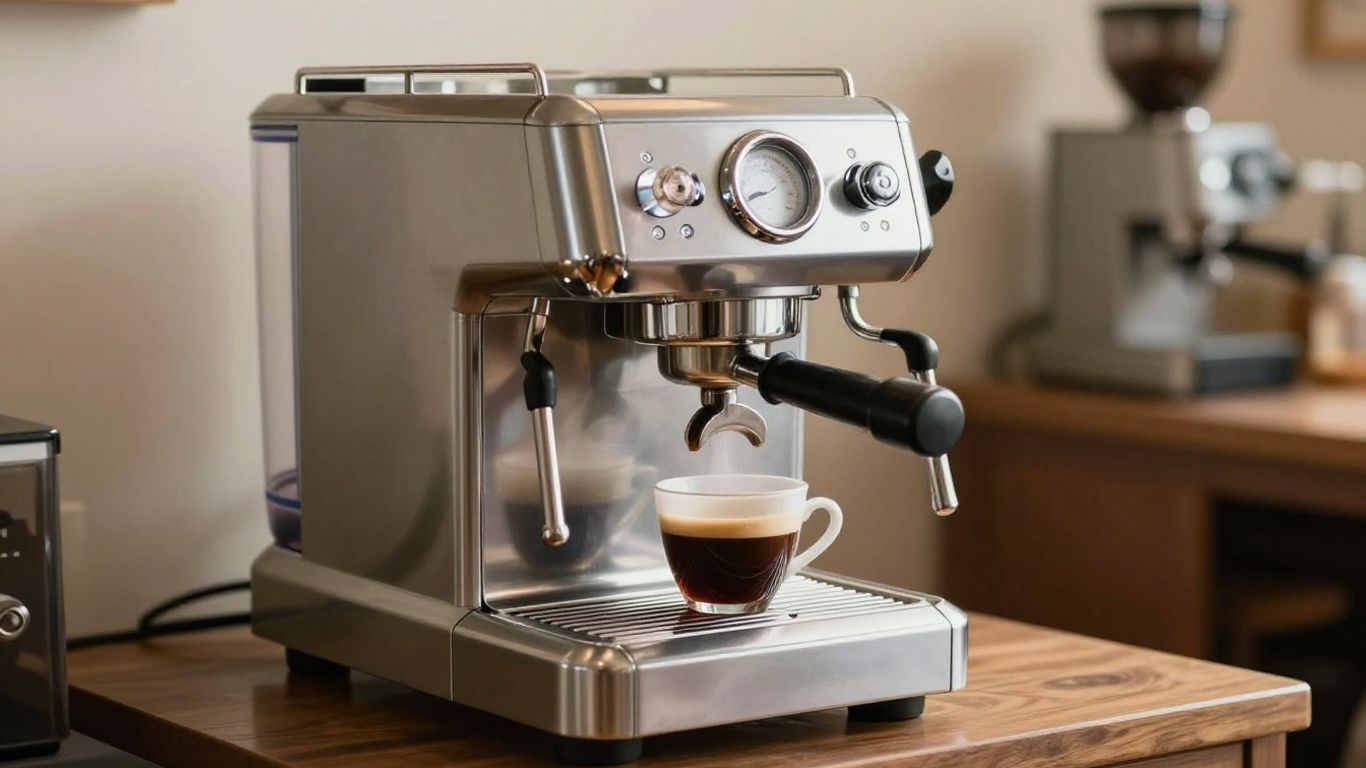
So, you’re thinking about hitting the road with your own coffee van? That’s awesome! But before you start dreaming of latte art on wheels, let’s talk about the heart of your operation: the espresso machine. Picking the right one isn’t just about looks; it’s about making sure it can handle the hustle and bustle of mobile life.
Assessing Machine Size and Footprint
Your van is probably not as big as a cafe, right? So, the machine’s physical size is a big deal. You need something that fits comfortably in your workspace without making it feel cramped. Think about how much counter space you have and if the machine can be secured easily when you’re driving. A machine that’s too big can be a real pain to maneuver and might even be a safety hazard on the move.
Evaluating Power Requirements and Generator Compatibility
This is super important. Espresso machines, especially the good ones, can be power-hungry. You’ve got to figure out what kind of electricity your machine needs – usually measured in volts and watts – and then make sure your generator can actually handle it. It’s a good idea to have a generator that’s a bit more powerful than you think you’ll need, maybe 30-50% extra capacity. This way, you won’t overload it when you’re trying to pull shots and steam milk at the same time during a rush.
Ensuring Durability for Mobile Operations
Life on the road is tough on equipment. Your machine will deal with bumps, vibrations, and maybe even temperature swings. You need a machine that’s built tough. Look for solid construction, good quality materials, and a brand known for making reliable gear. A machine that can withstand the daily grind (pun intended!) will save you a lot of headaches and repair costs down the line.
Determining Necessary Capacity for Order Volume
How many coffees do you plan on selling during a busy market day or festival? Your machine needs to keep up. If you’re expecting long lines, you’ll want a machine that can produce shots quickly and consistently without breaking a sweat. Some machines can only handle one or two drinks at a time, while others are designed for higher output. Matching the machine’s capacity to your expected customer flow is key to happy customers and a smooth operation.
Choosing the right machine is like picking the right partner for your mobile coffee adventure. It needs to be reliable, capable, and fit perfectly into your unique setup. Don’t rush this decision; it’s one of the most significant investments you’ll make for your business.
Choosing The Right Espresso Machine For Coffee Van
Picking the right espresso machine for your coffee van is a big deal. It’s not just about making coffee; it’s about making it fast, consistently, and reliably, all while you’re on the move. You’ve got limited space and power, and your customers expect great drinks, no matter if you’re at a farmer’s market or a busy street corner.
Single Boiler vs. Dual Boiler Machines
When you’re looking at machines, you’ll see single boiler and dual boiler setups. A single boiler machine heats water for both brewing espresso and steaming milk in the same tank. This means you have to wait between making an espresso and steaming milk, which can slow you down when you’ve got a line forming. On the flip side, a dual boiler machine has two separate tanks: one for brewing and one for steaming. This lets you do both at the same time, making service much quicker. For a busy coffee van, a dual boiler is usually the way to go if you plan on serving a lot of milk-based drinks.
Here’s a quick look at the differences:
-
Single Boiler:
-
Simpler design, often less expensive.
-
Requires switching between brew and steam modes.
-
Can lead to slower service during peak times.
-
-
Dual Boiler:
-
Allows simultaneous brewing and steaming.
-
Better temperature stability for consistent shots.
-
Ideal for high-volume operations and complex drinks.
-
Features That Enhance Efficiency
Beyond the boiler setup, other features can really speed things up. Look for machines with programmable shot timers so you can pull consistent espresso shots without having to watch the clock. Some machines have larger water tanks or direct plumbing options, which means less refilling during busy shifts. Automatic steam wands can also be a lifesaver, frothing milk to the right temperature with less effort from the barista. Think about how many drinks you expect to make per hour and choose a machine that can keep up.
Brand Reputation and Reliability
When you’re operating a business out of a van, breakdowns are a nightmare. You want a machine that’s built tough and has a good track record. Brands that have been around for a while and are known for making commercial-grade equipment are usually a safe bet. They tend to use better parts and have designs that hold up to daily use. It’s worth doing a bit of research into brands that are popular with other mobile coffee vendors. They often have machines that are specifically designed with portability and durability in mind, which is exactly what you need.
Choosing a machine that’s too small might mean you can’t handle demand, but one that’s too big could be a logistical headache. Finding that sweet spot is key to a smooth operation.
Essential Features For Mobile Espresso Machines
When you’re outfitting a coffee van, the machine’s features aren’t just about making good coffee; they’re about making good coffee while on the move. Think about what really matters when space is tight and you’re serving customers from a vehicle.
Compact Design and Portability
This is a big one. You’ve got limited square footage in a van, so the machine needs to fit without taking over the whole workspace. Look for models that are specifically designed with smaller footprints in mind. Some machines are built to be lighter and have a lower profile, making them easier to maneuver during setup and pack-down. It’s not just about fitting it in; it’s about being able to move it safely when the van is driving.
Water Reservoir and Plumbing Options
How will your machine get water? This is a critical decision for a mobile setup. You’ll likely have two main choices:
-
Direct Plumbed: This connects directly to a water line, like you’d have in a brick-and-mortar shop. It’s convenient because you don’t have to refill a tank, but it requires a more complex setup with water tanks, pumps, and filtration systems in your van. It also means you need access to a water source at your location.
-
Water Tank: Many mobile-friendly machines come with a built-in water reservoir. This is simpler to manage – you just fill it up. However, you’ll need to keep an eye on the water level and refill it regularly, especially during busy periods. The size of the tank matters here; a larger tank means fewer refills.
Ease of Use and Maintenance
Time is money, especially when you’re serving coffee from a van. You want a machine that’s straightforward to operate, even when things get hectic. This means intuitive controls and simple workflows for pulling shots and steaming milk. Also, think about cleaning. A machine that’s easy to clean daily will save you a lot of hassle. Look for accessible parts and straightforward cleaning procedures. You don’t want to be wrestling with complicated parts when you’re trying to get ready for the morning rush or close up shop.
The reality of a mobile coffee business is that things can get messy, and you’ll be working in tight quarters. Choosing equipment that simplifies your workflow, rather than complicating it, is key to keeping your sanity and your customers happy. Think about how quickly you can go from zero to serving your first customer, and how easy it is to keep things tidy throughout the day.
Powering Your Mobile Coffee Operation
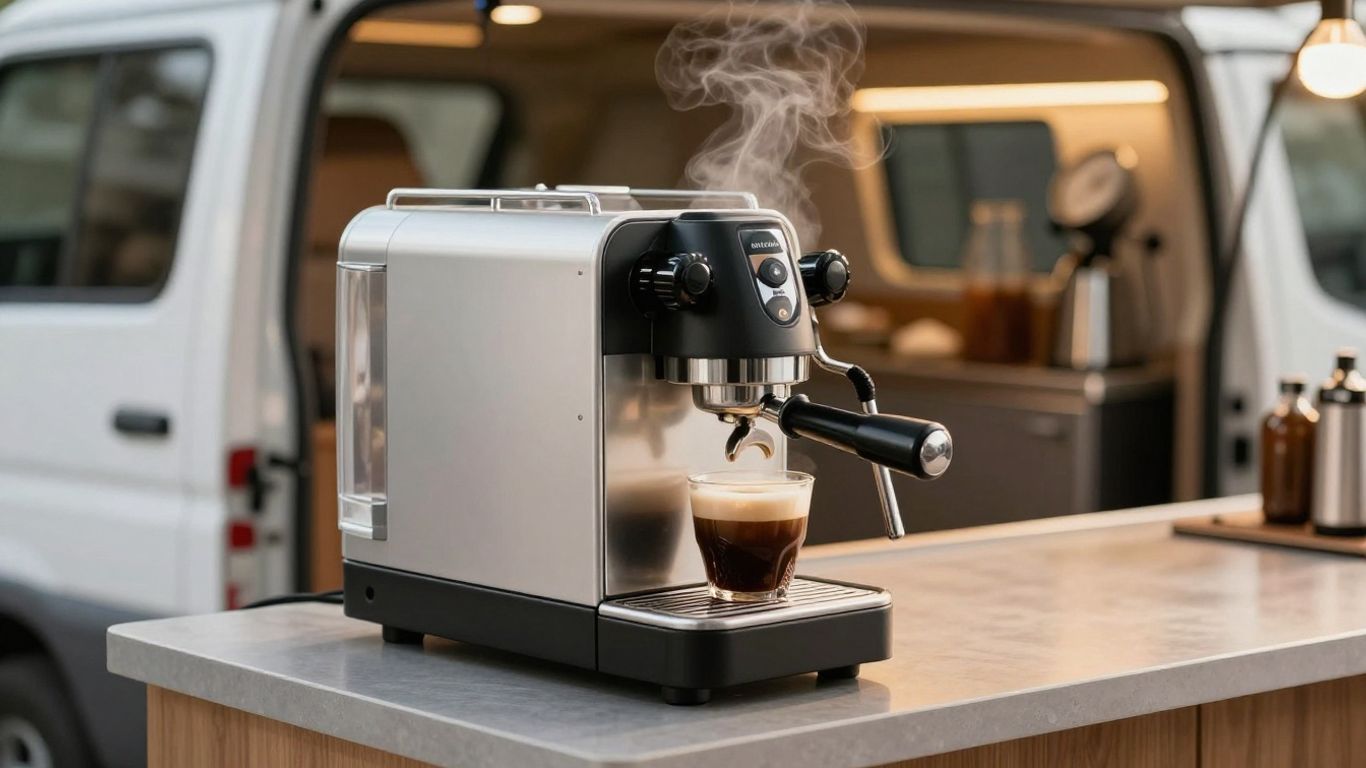
Getting the electricity right for your coffee van is super important. You can’t just plug into any outlet and expect things to run smoothly, especially when you’re making lattes and cappuccinos on the go.
Understanding Voltage and Wattage Needs
Most coffee vans run on standard 120V power, but the real trick is figuring out the wattage. Your espresso machine is usually the biggest power hog. A typical single-group machine might pull anywhere from 1,000 to 1,800 watts. Add in your grinder, a small fridge, maybe a water heater, and you can quickly hit the limit of what a standard circuit can handle. It’s often best to dedicate a separate, strong circuit just for your espresso machine. This prevents other equipment from tripping breakers when you’re in the middle of a rush.
Generator Sizing for Peak Demand
If you’re not always plugged into shore power, you’ll need a generator. Don’t just get the smallest one you can find. You need to think about your busiest times. What’s the maximum power you’ll draw when the espresso machine, grinder, and everything else are running at once? A good rule of thumb is to size your generator so that your peak load is only about 70-80% of its total capacity. This gives you some breathing room and helps the generator last longer. For example, if your total equipment needs 3,000 watts, you’ll want a generator rated for at least 4,000-4,500 watts.
Here’s a quick look at typical power draws:
|
Equipment |
Typical Wattage (approx.) |
Amps (at 120V) |
Notes |
|---|---|---|---|
|
Single-Group Espresso Machine |
1000 – 1800W |
8 – 15A |
Biggest power consumer |
|
Coffee Grinder |
200 – 500W |
2 – 4A |
Varies by motor size |
|
Refrigerator (small) |
100 – 300W |
1 – 3A |
Continuous draw, plus startup surge |
|
Water Heater |
500 – 1500W |
4 – 12A |
If separate from espresso machine |
Dedicated Circuits for Espresso Machines
Seriously, this is worth repeating. Your espresso machine needs its own power line. Think about it: you’re pulling a lot of amps to heat water and pump it at high pressure. If your grinder or lights are on the same circuit, a sudden surge from the espresso machine could cause everything to go dark. This means unhappy customers and lost sales. Most mobile setups aim for at least one dedicated 20-amp circuit for the espresso machine, and sometimes even more depending on the machine’s power needs and other equipment.
When planning your electrical setup, always check the specific wattage and amperage requirements listed on your equipment. It’s better to have a little extra power capacity than not enough. Overloading circuits isn’t just inconvenient; it can be a safety hazard and damage your expensive gear.
Top Espresso Machine Brands For Mobile Setups
When you’re outfitting a coffee van, picking the right brand for your espresso machine is a big deal. You want something that’s built tough, performs well under pressure, and won’t quit on you when you’ve got a line out the door. Some brands just have a reputation for making machines that can handle the mobile life.
La Marzocco And Nuova Simonelli
La Marzocco is practically a legend in the espresso world. Their machines are known for being super reliable and making fantastic coffee. For a van, you’d probably look at their smaller, more compact models. They’re built like tanks, which is exactly what you need when you’re bouncing down the road.
Nuova Simonelli is another big name. They make machines that are often a bit more budget-friendly than La Marzocco but still offer great performance. They’ve got a good range of machines that can fit into a smaller space, and many baristas find them pretty straightforward to use. They balance quality with practicality, which is a sweet spot for mobile setups.
Astoria And Sanremo
Astoria makes some seriously robust machines. They’re designed for commercial use, so they’re built to last and handle a lot of drinks. You might find their machines a bit larger, so you’ll need to measure your van space carefully, but they can be a solid choice if durability is your top priority.
Sanremo is a brand that’s been gaining a lot of traction, especially for mobile setups. They often have models that are designed with space-saving in mind, and they tend to be pretty user-friendly. Plus, they look pretty sharp, which can be a nice bonus for your van’s aesthetic.
Rocket Espresso And Wega
Rocket Espresso is a bit of a favorite among those who appreciate good design and solid build quality. While some of their machines are geared more towards home use, they do have commercial-grade options that could work in a van if you’re looking for something a bit more boutique. They’re known for their attention to detail.
Wega machines are another commercial workhorse. They’re built for high volume and reliability, which is exactly what you need when you’re serving coffee on the go. You’ll find them in a lot of cafes, and for good reason – they just keep going. They might require a bit more power, so make sure your generator can handle it.
Specific Machine Recommendations
Compact Single-Group Options
When space is tight, a single-group machine is often the way to go. These units are designed to be smaller and use less power, making them a good fit for many mobile setups. They’re great for getting started, especially if you’re not expecting massive queues right away. Think of them as your reliable workhorse for crafting individual, quality drinks.
-
Rocket Boxer 1 Group: This machine is a solid choice for its compact size and commercial-grade build. It’s built to handle consistent use, which is a must when you’re out serving customers. It usually runs on a standard 20-amp circuit, which is often manageable with a decent generator.
-
Nuova Simonelli Oscar II: Known for its quiet operation and good temperature stability, the Oscar II is another compact option. It’s a heat-exchange machine, meaning you can steam milk and pull shots at roughly the same time, which speeds things up.
-
Rancilio Silvia Pro X: While often seen in home settings, the Pro X is a dual-boiler single-group that offers excellent temperature control and the ability to steam and brew simultaneously. It’s a bit more advanced but provides great consistency.
Remember to always check the exact power draw (wattage) and water needs for any machine you consider. It’s better to have a little extra capacity than to be caught short when you’re busy.
High-Performance Dual Boiler Systems
If you’re aiming for higher volume and want to keep service moving quickly, a dual boiler machine is worth the investment. These machines have separate boilers for brewing espresso and steaming milk. This means you can do both at the same time without affecting the temperature of either, leading to faster service and more consistent drinks, especially during peak hours. They do require more power, so make sure your generator can handle it.
-
La Marzocco Linea Mini/Micra: While often considered home machines, their commercial-grade components and excellent performance make them popular for mobile setups. They offer fantastic temperature stability and build quality. The Micra is even more compact than the Mini.
-
Astoria/Sanremo Compact Dual Boiler: Many brands offer smaller dual-boiler models designed with commercial use in mind. These often provide the power and features of larger machines in a more van-friendly footprint. Look for models that specifically mention suitability for mobile operations.
-
Wega Polaris: This is a robust dual-boiler option that balances performance with a relatively manageable size for a commercial machine. It’s built for durability and consistent output.
All-In-One Coffee Cart Packages
Sometimes, the easiest route is to buy a pre-built coffee cart or package. These often come with a machine, grinder, and sometimes even a small fridge, all integrated into a mobile unit. This can save you a lot of time and hassle in planning and setup. You’re essentially buying a ready-to-go business.
-
Custom-Built Carts: Many companies specialize in building custom coffee carts. You can often choose the espresso machine and other components that best fit your needs and budget. This gives you the most flexibility.
-
Pre-Configured Packages: Some suppliers offer packages that include a popular commercial espresso machine, a quality grinder, and basic plumbing. These are usually designed for quick deployment and can be a good starting point.
-
Trailer Conversions: If you’re starting with a trailer, you can outfit it with a machine and all the necessary equipment. This allows for more space and customization compared to a smaller cart. The key here is to ensure all components are securely mounted for travel.
When looking at packages, pay close attention to the specifications of the included espresso machine, particularly its power requirements and footprint, to make sure it aligns with your overall operational plan.
Wrapping It Up
So, picking the right coffee machine for your mobile setup really boils down to a few key things. You’ve got to think about how much space you actually have, how much power you can get, and if the machine can keep up when you’re slammed with orders. Don’t forget about how tough it needs to be for life on the road. Whether you’re eyeing a compact single-group or a more robust dual-boiler, the goal is to find something that fits your budget and your workflow. Get this part right, and you’re well on your way to serving up great coffee wherever the road takes you.
Frequently Asked Questions
What’s the most important thing to think about when picking a coffee machine for a food truck?
The most crucial things are size and power. Your machine needs to fit comfortably in your truck without taking up too much space, and it must work with the generator or power source you’ll be using. You don’t want it to be too big or draw too much electricity.
Do I really need a fancy dual boiler machine for my coffee cart?
A dual boiler machine isn’t a must-have, but it’s super helpful, especially when you’re busy! It lets you make espresso and steam milk at the same time, which means faster service. Plus, it keeps the temperature just right for great-tasting coffee every time, which is key when lots of customers are waiting.
How do I know if my generator can handle the coffee machine?
You need to check the machine’s power needs (called wattage and amps) and compare it to what your generator can supply. It’s a good idea to have a generator that’s about 30-50% stronger than what you think you’ll need. This way, you won’t overload it when everything is running, like the espresso machine, grinder, and maybe a fridge.
What makes a coffee machine good for being on the road?
Machines built for mobile use are usually smaller and tougher. They can handle being moved around and might have features like built-in water tanks, making them easier to set up anywhere. Durability is key because they’ll be used a lot and might face different weather conditions.
Are there specific brands known for making good coffee machines for trucks?
Yes, several brands are popular for their reliable machines that work well in mobile setups. Brands like La Marzocco, Nuova Simonelli, Astoria, and Rocket Espresso are often recommended because their machines are known for being dependable and performing well, even with heavy use.
What if my truck doesn’t have a direct water hookup?
No problem! Many coffee machines designed for mobile use come with their own water tanks. This means you can bring your own water supply and don’t need to be connected to a plumbing system. Just make sure you have a way to refill the tank easily.