
Best LPG Generators for Mobile Catering: UK Buyer’s Guide


When your catering van rolls up to an event without mains electricity, what keeps your fridges cold, your coffee machine hot, and your till ringing? The right generator makes all the difference. This guide walks you through everything you need to know to choose the best LPG generator for your mobile catering business.
An LPG generator is the standard choice for mobile food businesses across the UK. Unlike petrol generators that require separate fuel storage, propane generators use the same fuel already powering your cooking equipment—eliminating the need for multiple fuel types on board and simplifying your operations.
Why LPG Generators Are the Go-To Choice for Mobile Caterers
Mobile caterers consistently choose LPG generators over petrol-only models because they solve the fuel redundancy problem. Your cooking equipment already runs on propane, so adding an LPG generator means one less fuel type to buy, store, and manage on your van or trailer. When you’re juggling multiple operational demands at a busy event, fuel simplicity matters.
Beyond convenience, propane generators offer performance advantages. Modern inverter-based LPG models deliver clean, stable power critical for sensitive equipment like EPOS terminals and coffee grinders—unlike conventional generators which can cause voltage fluctuations that damage electronics. Propane engines also run quieter than equivalent petrol models, which matters when you’re working at markets or community events where noise restrictions apply. And because propane burns cleaner than petrol, you’ll find less carbon buildup in the engine, extending maintenance intervals and reducing running costs.
What to Look for When Buying an LPG Generator
1. Power Output (kW/Watts)
Generator power is measured in kilowatts (kW) or watts. For mobile catering, your actual needs depend entirely on what equipment you’re running simultaneously. A market stall with just lighting and a till needs roughly 2kW. A food van with a fridge, coffee machine, and lights typically requires 3–4kW of stable power. A full commercial trailer with multiple fridges, bain maries, griddles, and backup power should have 6–8kW available. The key is matching wattage to your actual simultaneous load—undersize and your equipment won’t run reliably; oversize and you’re paying for capacity you’ll never use.
2. Inverter vs Conventional
Inverter generators produce electronically-regulated, stable voltage output. This matters hugely if you’re running sensitive electronics like EPOS systems, modern coffee grinders, or phone chargers—voltage spikes from conventional generators can damage these devices permanently. Inverter models cost more upfront but protect your valuable equipment. Conventional generators are simpler and cheaper, suitable if you’re only powering heating elements (bain maries, griddles) or basic lighting. For most mobile caterers, the inverter premium is worth the protection it offers your electronics.
3. Dual Fuel Capability
Some generators run on both propane and petrol. This flexibility means if you ever run out of propane at a remote location, you can switch to petrol as emergency backup. Dual fuel models cost slightly more than LPG-only units, but that flexibility can be valuable for caterers working irregular routes or remote sites where propane supply isn’t guaranteed. For most UK-based operations with reliable bottled propane access, dual fuel is a nice-to-have rather than essential—but it’s increasingly affordable enough that many buyers choose it for peace of mind.
4. Noise Level
Generator noise is measured in decibels (dB). A conventional petrol generator typically produces 75–90dB; quieter inverter models deliver 60–75dB at operating distance. At outdoor events, 10dB difference is noticeable to customers—louder generators create a negative atmosphere and may breach local noise restrictions. Propane engines naturally run quieter than petrol equivalents, and inverter models add further noise reduction through electronic regulation. If you work regular markets or residential events, prioritising a quieter inverter LPG model is an investment in your reputation and peace of mind.
5. Runtime and Fuel Efficiency
Propane consumption varies by load and engine efficiency. A mid-range 3.5kW inverter generator typically runs 4–8 hours on a standard 13kg propane bottle, depending on how hard the engine is working. Larger 19kg bottles extend runtime proportionally. Inverter models run more efficiently under partial load—if you’re only drawing 1.5kW from a 3.5kW generator, fuel consumption drops significantly compared to a conventional model at the same output. When comparing generators, check the fuel consumption rate (litres per hour) rather than just tank size; efficiency matters more for day-long events.
Our Top Picks: Best LPG Generators for UK Mobile Caterers
Best for Market Stalls: Champion 2200W Mighty Atom Dual-Fuel
The Champion Mighty Atom is the standard choice for market traders and small event caterers. At 2.2kW output, it reliably powers lighting, an EPOS till, and basic charging needs. The inverter design protects electronics, dual fuel capability adds flexibility, and at just 25kg it’s portable enough to carry to different pitches weekly. Noise sits around 65dB, making it event-friendly. Runtime on a 13kg bottle is roughly 6–8 hours. Price point sits around £400–500. For traders just starting out or working compact pitches, this is where most begin.
Best Mid-Range: Champion 3500W Dual-Fuel Inverter
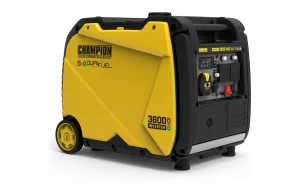
Step up to the Champion 3500W and you gain genuine catering capability. This unit handles a domestic fridge, coffee machine, multiple lights, and EPOS simultaneously without strain—the real sweet spot for most food van operators. Inverter output protects sensitive equipment, dual fuel adds backup flexibility, and at roughly 75kg it’s still manageable with two people and a trolley. Noise is around 68dB. Runtime on a 13kg bottle is 4–6 hours under mixed load. Priced around £600–700, this delivers serious capability without premium pricing. Most established mobile caterers use this class of generator.
Best for Full Trailer Setups: Champion 7000W LPG Dual-Fuel
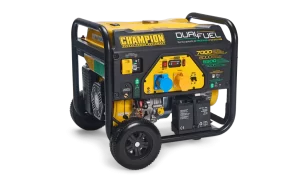
For commercial trailers with multiple pieces of equipment, the 7kW Champion handles everything simultaneously—commercial fridges, bain maries, griddles, coffee machines, lights, and EPOS all running together. Electric start means no pull-cord hassles. Inverter output protects all electronics. At roughly 95kg and needing dedicated storage on larger trailers, this isn’t portable between sites, but it’s built for one-location heavy-duty use. Noise sits around 70dB. Runtime on a 19kg bottle reaches 8–10 hours. Priced around £1,200–1,500, it’s the investment choice for serious commercial caterers.
Sizing Your Generator: What Wattage Do You Need?
The correct generator size depends entirely on what you’re running simultaneously. Here’s what typical mobile catering equipment draws:
Equipment Power Requirements:
Domestic fridge: 100–200W | Coffee machine: 1,000–1,500W | Bain marie: 1,200–1,500W | LED lighting (full setup): 100–200W | EPOS till and card reader: 50–100W | Electric griddle or hotplate: 2,000–3,000W | Phone/tablet charger: 20–50W
Add up the maximum simultaneous draw. A van running fridge (150W) + coffee machine (1,200W) + lights (150W) + EPOS (75W) needs approximately 1,575W continuously. Add 20% headroom for startup surges: 1,575 × 1.2 = 1,890W, so a 3.5kW generator gives comfortable margin. If you add an electric griddle (2,500W), you’re now at 4,000W continuous, requiring a 5–6kW unit to maintain headroom.
Don’t guess. Write down every piece of equipment you use, check the nameplate wattage (usually on the back), add everything that runs simultaneously, multiply by 1.2, then round up to the nearest generator size available. Undersizing means equipment won’t start or will shut down under load; oversizing wastes fuel and money.
LPG Safety and Ventilation
Propane generators produce carbon monoxide (CO) as exhaust—a colourless, odourless gas that’s lethal in enclosed spaces. Your generator should always be positioned outside your van or trailer, with the exhaust pointing away from entry points and customer areas. Never run a generator inside a food trailer, even with doors open; ventilation is unpredictable and CO can accumulate quickly.
For stationary trailer setups, position the generator at least 2 metres away and downwind if possible. Use a flexible exhaust extension to direct fumes further away. A portable battery-powered CO detector should be inside your trailer during operation—set it to alert at 35 ppm. Propane generators also require separate regulator systems from your cooking LPG supply; never attempt to run both from the same bottle or regulator.
For metal-bodied trailers, earth bonding (connecting the generator frame to the trailer chassis with heavy copper cable) prevents static discharge and electrical hazards. Check your local authority guidelines for outdoor event catering—some venues require certified electrical inspections or specific safety documentation for generator use. Keep your generator serviced annually and never modify fuel or electrical systems yourself.
Frequently Asked Questions
What size generator do I need for a food van?
Most food vans require 3–4kW continuous power. A typical setup with fridge, coffee machine, lights, and EPOS draws roughly 1,500–2,000W, so a 3.5kW inverter generator provides safe headroom. Larger trailers with multiple appliances need 5–7kW minimum.
Can I run a coffee machine on an LPG generator?
Yes, but only on an inverter-based LPG generator. Coffee machines need stable, regulated power to heat water properly. Conventional generators cause voltage fluctuations that damage heating elements and electronic controls. An inverter LPG generator delivers clean, stable power safe for coffee equipment.
How long will a 13kg propane bottle run a generator?
Runtime depends on load and efficiency. A mid-range 3.5kW inverter generator typically runs 4–8 hours on a 13kg bottle. Under light load (1.5kW draw), expect closer to 10 hours. Heavy continuous load (3.5kW) reduces it to 4–5 hours.
Are LPG generators quieter than petrol?
Yes, propane engines naturally run quieter. An LPG inverter model typically produces 65–70dB, while equivalent petrol generators reach 75–85dB. The difference is noticeable at customer-facing events.
Do I need a dual fuel generator for mobile catering?
Not essential, but valuable as backup. If you work consistent UK routes with reliable propane access, an LPG-only model is sufficient and slightly cheaper. Dual fuel adds emergency flexibility for remote locations at modest premium cost.
Can I use my generator inside a catering trailer?
Never. Propane generators produce lethal carbon monoxide. Always position generators outside your trailer with exhaust directed away. Interior generator use causes fatal CO accumulation within minutes.
What is the best LPG generator for market stalls?
The Champion 2200W Mighty Atom is the standard for traders. It’s portable at 25kg, inverter-based for electronics protection, delivers reliable 2.2kW for lights and EPOS, and costs around £400–500. Perfect for weekly pitch work.
Ready to Upgrade Your Power Setup?
Choosing the right LPG generator transforms how you operate at events and remote locations. Whether you’re starting with a compact market stall setup or powering a full commercial trailer, MobCater stocks a range of propane and dual-fuel generators specifically selected for UK mobile catering. Browse our complete generator range to find the right fit for your business, complete with expert sizing advice and installation support.