

What size portable power station do I need?
A portable power station is a big rechargeable battery with normal 3-pin sockets and USB ports. Pick what you want to run and for how long, and this calculator works out the two numbers that matter: the watts it must deliver and the watt-hours of battery you need. It then shows the EcoFlow and BLUETTI power stations we sell that cover both.
- 1Pick what you want to run
- 2Check the hours a day
- 3See the units that fit
Start from a typical setup, then adjust:
Phones, laptops and cameras
- Phone (charging)10 W · USB or 12 V2 h on charge is about one full charge
- Tablet (charging)15 W · USB or 12 Vhours on charge
- Laptop50 W
- Camera battery charger10 W · USB or 12 Vhours on charge
- Drone battery charger60 Wabout one battery an hour
Stall, till and lights
- Card machine (charging)10 W · USB or 12 Vhours on charge
- Till or tablet POS with receipt printer30 W
- Wi-Fi router or 4G hub10 W
- LED festoon string (10 m, about 20 bulbs)20 W
- LED lamp or light bar10 W
- Fairy lights (LED)5 W
- Speaker (Bluetooth or small PA)20 W
Fridges, freezers and coolboxes
- 12 V compressor coolbox (on the 12 V socket)50 W · runs on and off (35%) · USB or 12 V
- Mini fridge (mains)60 W · +120 W to start · runs on and off (35%)
- Full-size fridge (household)100 W · +200 W to start · runs on and off (35%)
- Under-counter catering fridge150 W · +300 W to start · runs on and off (35%)
- Chest freezer100 W · +200 W to start · runs on and off (35%)
Home, van and camping
- TV (LED, 32 to 43 inch)60 W
- Desk or pedestal fan40 W
- CPAP machine (no heated humidifier)40 W
- Electric blanket (single)60 W
- E-bike battery charger150 Wabout one full charge in 4 h
- Cordless tool battery charger100 W
- Corded drill or saw800 W · +800 W to start
Kitchen and heating (short bursts only)
- Small or travel kettle (1 kW)1,000 W · heatingtime at full power
- Standard kettle (3 kW)3,000 W · heatingtime at full power
- Coffee pod machine1,300 W · heatingtime heating
- Blender700 W · +700 W to start
- Microwave (800 W cooking power)1,200 W · heating
- Hair dryer2,000 W · heating
- Electric fryer or griddle (3 kW)3,000 W · heatingtime at full power
- Urn or water boiler (3 kW)3,000 W · heatingtime at full power
- Fan heater (2 kW)2,000 W · heating
Your own items
Not listed? Add your own
Figures are typical UK values for each appliance. Your own appliance's data plate or charger label is the final word: volts x amps = watts (230 V x 0.5 A = 115 W). For a fridge with an energy label, kWh per year ÷ 365 gives its Wh a day.
Typical power station sizes at a glance
| Setup | Output | Battery used per day | Suggested minimum battery |
|---|---|---|---|
| Market stall, 8 hours (card machine, 2 phone charges, LED festoon) | 50 W | 280 Wh | 330 Wh |
| 12 V compressor coolbox for 24 hours | 50 W | 420 Wh | 470 Wh |
| Laptop and Wi-Fi router, working day | 60 W | 380 Wh | 450 Wh |
| Camping weekend day (coolbox, 2 phones, lamp, speaker) | 100 W | 570 Wh | 650 Wh |
| Power cut essentials (fridge, router, 2 lamps) | 130 W | 1,180 Wh | 1,390 Wh |
| Card machine and till for an 8-hour day | 40 W | 320 Wh | 380 Wh |
| Festival phone-charging station (20 phone charges, 1 lamp) | 210 W | 450 Wh | 510 Wh |
Typical figures for guidance only; use the calculator for your own kit.
Power stations that fit
Pick what you want to run above to see the units that cover it. Until then, here is every power station we sell, smallest first.
Just right
More headroom
All our power stations
Runtimes are estimates from the battery size and your list. Browse the full range: portable power stations · generator size calculator
Portable power stations we sell
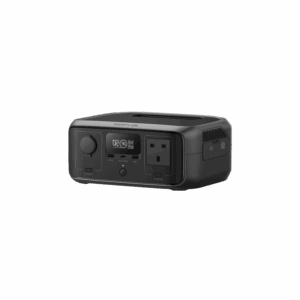


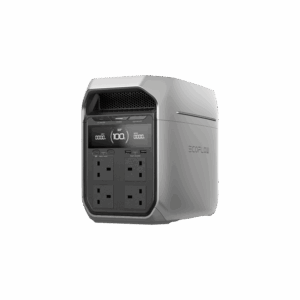
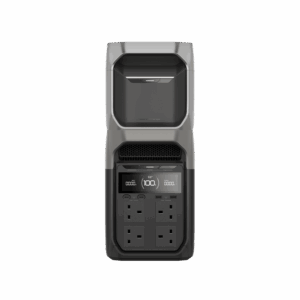
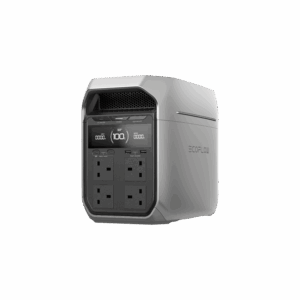
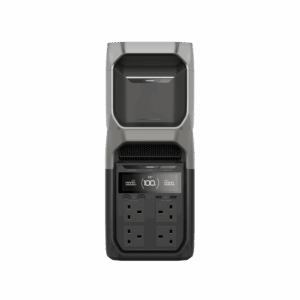


BLUETTI Premium 100 V2 Portable Power Station | 1,800W 1,024Wh
£570.00 inc VAT · free delivery over £200

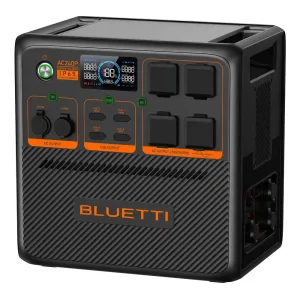
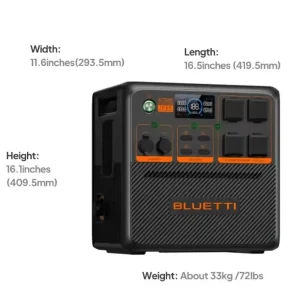
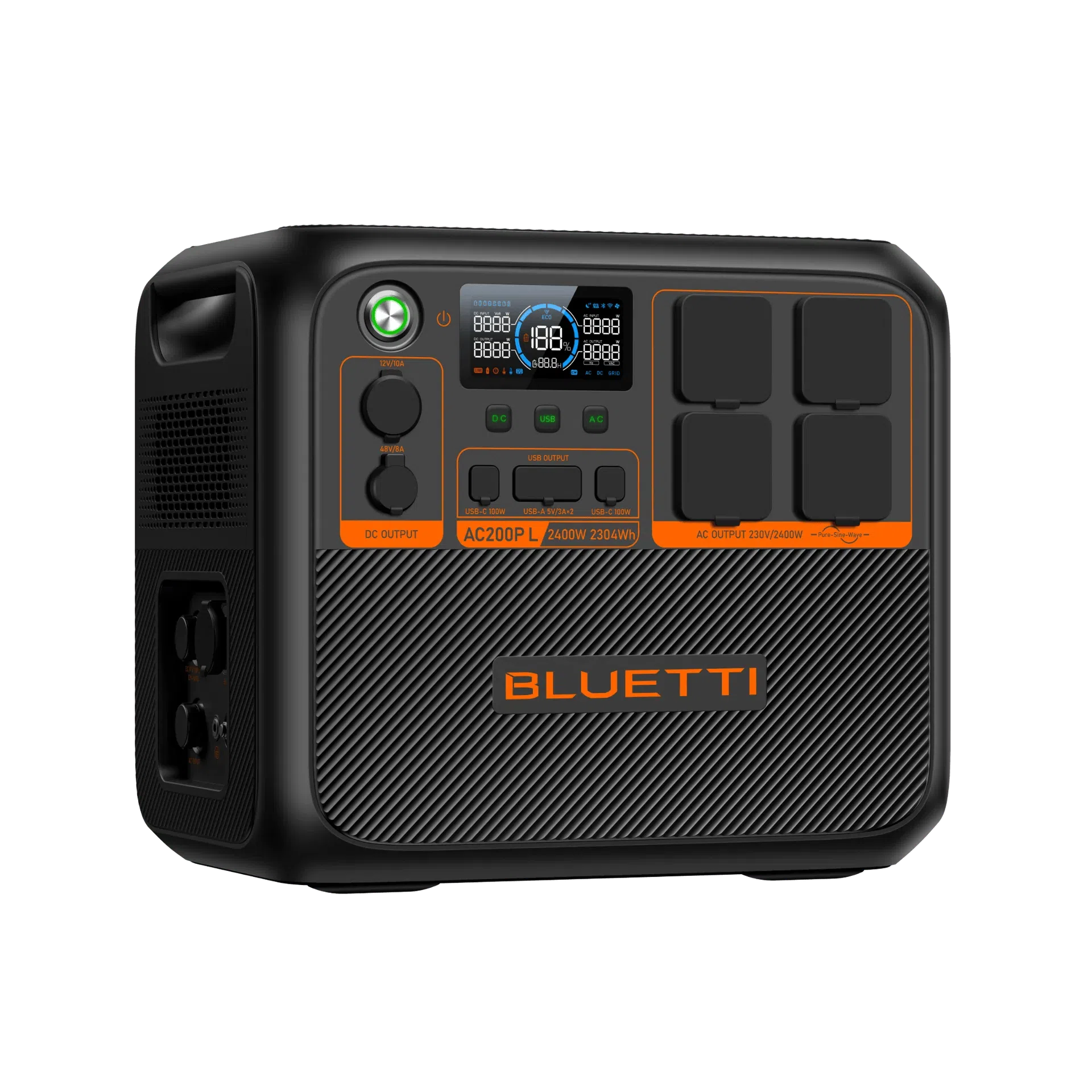
BLUETTI AC200PL Portable Power Station 2400W Fast Charge 1.5Hr
£1,449.00 inc VAT · free delivery over £200

Compare the power stations we sell
Every figure below is taken from the product's own listing. Surge is the short burst a unit can give for a motor or compressor to start; where a listing gives no surge figure we size to the rated output.
| Power station | Battery | Rated output | Surge / boost mode | Recharging | Backup (UPS) |
|---|---|---|---|---|---|
| EcoFlow RIVER 3 | 245 Wh | 300 W | No surge figure listedX-Boost 600 W | Mains: full in about 1 hourSolar: up to 110 W · Car: up to 100 W | 10 ms UPSNoise: under 30 dB |
| EcoFlow RIVER 3 (10ms UPS) | 245 Wh | 300 W | No surge figure listedX-Boost 600 W | Mains: full in about 1 hourSolar: up to 110 W · Car: up to 100 W | 10 ms UPSNoise: under 30 dB |
| BLUETTI AC70P | 864 Wh | 1,000 W | No surge figure listedPower Lifting 2,000 W | Mains: 0 to 80% in 45 minSolar: up to 500 W · Car: 12 / 24 V | 20 ms UPS |
| EcoFlow DELTA 3 | 1,024 Wh | 1,800 W | 3,600 W surgeX-Boost 2,400 W | Mains: 0 to 80% in 45 minSolar: up to 500 W · Car: 12 V socket | 10 ms EPSNoise: as low as 30 dB at 600 W |
| EcoFlow DELTA 3 Plus | 1,024 Wh | 1,800 W | 3,600 W surgeX-Boost 2,400 W | Mains: 0 to 100% in about 56 minSolar: up to 1,000 W · Car: 12 V socket | 10 ms UPS |
| BLUETTI Premium 100 V2 | 1,024 Wh | 1,800 W | 3,600 W surgePower Lifting 2,700 W | Mains: 0 to 80% in 45 minSolar: up to 1,000 W · Car: yes | 10 ms UPSNoise: about 30 dB at light load |
| BLUETTI AC180P | 1,440 Wh | 1,800 W | No surge figure listedPower Lifting 2,700 W | Mains: 0 to 80% in about 45 minSolar: up to 500 W · Car: yes | 20 ms UPS |
| BLUETTI AC240P | 1,843 Wh | 2,400 W | No surge figure listedPower Lifting 3,600 W | Mains: 0 to 80% in 45 min (turbo)Solar: up to 1,200 W · Car: 12 / 24 V | 15 ms UPS |
| BLUETTI AC200PL | 2,304 Wh | 2,400 W | No surge figure listedPower Lifting 3,600 W | Mains: 0 to 80% in about 1 hourSolar: up to 1,200 W · Car: 12 / 24 V | 20 ms UPS |
| BLUETTI Apex 300 | 2,764.8 Wh | 3,840 W | No surge figure listedPower Lifting 7,680 W (resistive loads) | Mains: 0 to 80% in about 40 minSolar: up to 2,400 W | 20 ms UPS |
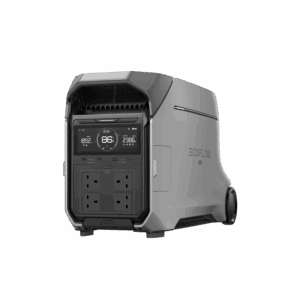
| EcoFlow DELTA Pro 3 | 4,096 Wh | 4,000 W | 8,000 W surge | Mains charging (time not listed)Solar: up to 2,600 W · Car: 12 V / 48 V | 10 ms EPS/UPSNoise: 30 dB at 2,000 W |
How a portable power station works
What is a portable power station?
A portable power station is a large rechargeable lithium battery with a built-in inverter, which turns the stored energy into normal 230 V mains power, plus USB and 12 V sockets. There is no engine and no fuel, so it is silent, gives off no fumes and can be used indoors, in a gazebo or at a pitch where generators are banned. Charge it up, use it, then charge it again.
Watts and watt-hours, the simple version
Think of a water tank. Watts (W) are how fast the tap runs: how much power your kit draws at once. Watt-hours (Wh) are how much water is in the tank: how much energy the battery holds. A 50 W laptop for 6 hours uses 300 Wh. You need both: enough watts to run everything at once, and enough watt-hours to last the day.
How do you recharge it?
- Mains: the fastest. The DELTA 3 listing gives 0 to 80% in 45 minutes.
- Solar panels: each unit has a maximum solar input, from 110 W on the RIVER 3 to 2,600 W on the DELTA Pro 3. In UK weather panels usually give well below their rating.
- Car 12 V socket: slow, about 100 W, so a 1,024 Wh unit needs roughly 10 hours of driving.
- Generator: plug the charging lead into a generator's socket just like the mains. Handy for topping up on a long event.
What is it good for, and what isn't it?
| Good for | Not good for |
|---|---|
| Card machines, tills, phones and laptops | Fryers, griddles and hot plates |
| LED and festoon lighting | Urns, water boilers and 3 kW kettles |
| Coolboxes and fridges, overnight or for a day | Heaters and hot cupboards all day |
| Quiet pitches, indoor markets and home backup | Anything that heats for hours: use a generator |
Keeping a till or router running: UPS and pass-through
Every power station we sell lists a UPS (uninterruptible power supply) mode or pass-through charging. Leave it plugged into the mains with your till, router or fridge plugged into it. If the mains fails, the listings give a switchover of 10 to 20 milliseconds, quick enough for most tills, routers and computers to keep running. Check the listing's exact figure for sensitive kit.
X-Boost and Power Lifting are not extra power
EcoFlow's X-Boost and BLUETTI's Power Lifting let a heating appliance that is bigger than the rated output run at reduced power by lowering the voltage. A 3 kW kettle on an 1,800 W unit will boil, just slowly. They do not help motors or electronics, and they are not a higher rating, so this calculator sizes to the rated output and the listed surge figure only.
How long does the battery last?
All the power stations we sell use LiFePO4 (lithium iron phosphate, also called LFP) cells. Where the listing states it, they are rated for 3,000 to 4,000 or more charge cycles before capacity drops to 80%. Charged once a day, 3,000 cycles is over 8 years.
Can I add more battery later?
Some models take the maker's extra batteries: the DELTA 3 and DELTA 3 Plus expand to 5 kWh, the DELTA Pro 3 to 12 kWh, the AC240P to 10,443 Wh and the Apex 300 to 58 kWh, according to their listings. The AC240P and AC200PL listings offer an extra battery option on the product page.
Safety
Keep it dry, ventilated and out of direct sun, and within the operating temperatures on its listing (typically -10 or -20°C to 40 or 45°C; charge above 0°C). Do not cover the vents, and follow the maker's manual.
Please read: this calculator is a guide
- Results are estimates based on typical wattages and the details you enter. Real appliances, start-up surges, battery age, temperature and inverter losses all vary, so real run times can be shorter.
- Always check the data plate or manufacturer’s specification of your appliances and of the power station you choose.
- Use and charge a power station as its manual says, with its vents clear. If you recharge it from a generator, run the generator outdoors only, well away from doors, windows and vents, and never inside a van, tent or building.
- Product figures come from manufacturers’ published specifications and can change. Check the product page before ordering.
- Not sure? Call 01923 559 077 or use the chat and we’ll check your list before you buy.
The calculator is provided as a free guide. MobCater cannot accept responsibility for decisions based only on its estimates. This does not affect your statutory rights.
Frequently asked questions
What can a 1000Wh power station run?
A 1,000 Wh power station gives roughly 850 Wh at its mains sockets once inverter losses are taken off. That is about 17 hours of a 50 W laptop, 40 hours of a 20 W LED festoon, a 100 W household fridge for about a day, or around 45 phone charges from USB. Our 1,024 Wh units are rated at 1,800 W, so they cannot run a 3 kW kettle at full power.
How long will a power station run a fridge?
A fridge's compressor switches on and off, so over a day it uses far less than its rated watts. Assuming it runs 35% of the time, a 100 W household fridge uses about 840 Wh a day, so a 1,024 Wh power station runs it for about a day. A 50 W 12 V compressor coolbox uses about 420 Wh a day, so a 245 Wh unit lasts about 12 hours. Heat and door opening use more.
Can a power station run a coffee machine?
A pod coffee machine, yes, if the power station's rated output is above the machine's wattage. Most pod machines draw around 1,200 to 1,500 W while heating, which our 1,800 W units cover, and each cup only heats for a short time. A commercial espresso machine is different: its 2 to 3 kW boiler heats on and off all day, which is a job for a generator.
Power station or generator for a food stall?
Use a power station for quiet, low-power jobs: card machines, tills, lights, phones, a coolbox or small fridge, and pitches where engines are banned. It is silent, has no fumes and can be used indoors. Use a generator for heat: fryers, griddles, urns and kettles draw 2 to 3 kW for hours, and a 3 kW load would empty our largest 4,096 Wh power station in a little over an hour.
What is the difference between watts and watt-hours?
Watts (W) measure how much power something draws at a moment; watt-hours (Wh) measure how much energy is stored or used over time. Think of a water tank: watts are how fast the tap runs, watt-hours are how much water is in the tank. A 50 W laptop running for 6 hours uses 300 Wh. A power station needs enough watts to run your kit and enough watt-hours to last the day.
Can I use a power station while it is charging?
Yes. Every power station we sell lists a UPS (uninterruptible power supply) mode or pass-through charging, so you can leave it plugged into the mains with a till, router or fridge plugged into it. If the mains fails, the listings give a switchover of 10 to 20 milliseconds, quick enough for most tills, routers and computers. Check the exact figure on the listing for sensitive equipment.