Gas Espresso Machines for Mobile Catering


Thinking about taking your coffee game mobile? A gas espresso machine could be just the ticket for catering gigs or setting up a coffee truck. These machines offer a way to make proper espresso drinks even when you’re away from a standard power outlet. We’ll look at what makes them tick and how to pick the right one for your needs.
Key Takeaways
-
When picking a gas espresso machine for mobile use, think about how it runs on both gas and electricity (dual fuel).
-
You need to figure out how much power your machine needs and if your mobile setup can provide it, especially if you’re running off a generator or battery.
-
The size and weight matter a lot for mobile setups. You need something that fits and is easy to move around.
-
Look for machines built tough, with strong gas burners that keep up with demand, and flexible power options for different locations.
-
Proper installation for gas and water is important, and you’ll need a reliable power source, like a battery and inverter, for the controls if you’re off-grid.
Choosing Your Gas Espresso Machine
Understanding Dual Fuel Capabilities
When you’re looking at espresso machines for a mobile setup, the idea of ‘dual fuel’ is a big one. It basically means the machine can run on gas (like LPG or Butane) and also on electricity. This is a game-changer for catering because it gives you options. If you’re parked somewhere with no power hook-up, you can just switch to gas. This flexibility means you’re not tied to a specific location or power source. It’s like having a backup plan built right in. You’ll want to check what types of gas the machine can use, as different areas might have different supplies available. Most dual fuel machines are designed to give you the same power and performance whether you’re on gas or electric, so you don’t lose out on quality.
Assessing Power Requirements for Mobile Use
Figuring out how much power your machine needs is pretty important, especially when you’re working from a van or trailer. Gas machines often need a small amount of electricity to run their control systems and pumps. For example, some machines might need around 350 watts. This might not sound like much, but you need to make sure your power setup can handle it. This could be a generator, a leisure battery with an inverter, or a hook-up. It’s a good idea to have a bit of extra power capacity, maybe 30-50% more than the machine’s stated requirement, just to be safe. This stops things from getting overloaded when you’re busy.
Here’s a quick look at power needs for some models:
|
Model |
Gas Rating |
Electric Rating |
Element Rating |
|---|---|---|---|
|
CON1ELPG |
1800 watts |
350 watts |
2.8kw |
|
5500 watts |
350 watts |
2.85kw |
Considering Machine Size and Portability
Space is always a premium when you’re fitting out a mobile catering unit. You need a machine that’s not too big to fit, but also not so small that it can’t keep up with demand. Think about the counter space you have available and how easy it will be to get the machine in and out if you ever need to. Some machines are designed with mobile use in mind, perhaps being a bit more compact or having features that make them easier to secure when you’re driving. You’ll also want to consider the weight; you don’t want something that’s a struggle to move around.
When you’re looking at machines, keep these points in mind:
-
Dimensions: Measure your available space carefully.
-
Weight: Can you and your team move it easily?
-
Setup Time: How quickly can you get it ready to go?
-
Securing: How will you fix it in place during transit?
Choosing the right size and type of machine is about balancing your need for capacity with the practical limits of your mobile setup. It’s easy to get carried away with features, but if it doesn’t fit or you can’t power it, it’s not going to work.
Key Features of Gas Espresso Machines
When you’re looking at gas-powered espresso machines for your mobile catering setup, a few things really stand out. These aren’t just your average coffee makers; they’re built tough and designed for life on the road.
High-Powered Gas Burners for Consistent Output
One of the biggest advantages of a gas espresso machine is the sheer power it brings to the table. The gas burners are designed to match, and often exceed, the heating capabilities of their electric counterparts. This means you get really consistent steam pressure, even when you’re slammed with orders during peak times. No more waiting around for the machine to catch up; you can keep the drinks flowing.
-
Rapid Heating: Gas provides a powerful and quick heat source for the boiler.
-
Stable Pressure: Maintains consistent steam and water pressure, vital for quality espresso.
-
High Volume: Capable of handling continuous demand without a drop in performance.
The power delivered by gas burners is often cited as being among the most potent available in commercial espresso machines, ensuring you’re never left wanting for steam.
Dual Fuel Flexibility: Gas and Electricity
What makes these machines particularly brilliant for mobile catering is their dual-fuel capability. Most models can run on LPG or Butane, but they also have an electric option. This gives you incredible flexibility. If you’re at a venue with a power hook-up, you can use electricity. If you’re off-grid, you switch to gas. It’s about having options and not being tied down.
-
LPG/Butane: Ideal for off-grid operation where mains power isn’t available.
-
Electricity: Useful when a power source is readily accessible.
-
Low Power Draw: The electrical components, like pumps and control systems, typically require a modest 240v supply, often manageable with a battery and inverter setup for true off-grid use.
Robust Construction for Mobile Demands
Mobile catering means your equipment gets a bit of a battering. These machines are built with this in mind. They usually feature sturdy stainless-steel construction for the casing, waste trays, and cup stands. The internal components, like the brass-bodied groups and copper boilers, are chosen for their durability and ability to withstand constant use and temperature fluctuations. This tough build quality is what separates a machine designed for a static cafe from one made for the hustle of mobile work.
|
Component |
Material |
|---|---|
|
Boiler |
Copper |
|
Group Head |
Brass |
|
Casing/Trays |
Stainless Steel 304 |
|
Shower Plate |
Stainless Steel |
These machines are designed to be reliable workhorses, ready to serve great coffee wherever you are.
Installation and Operational Needs
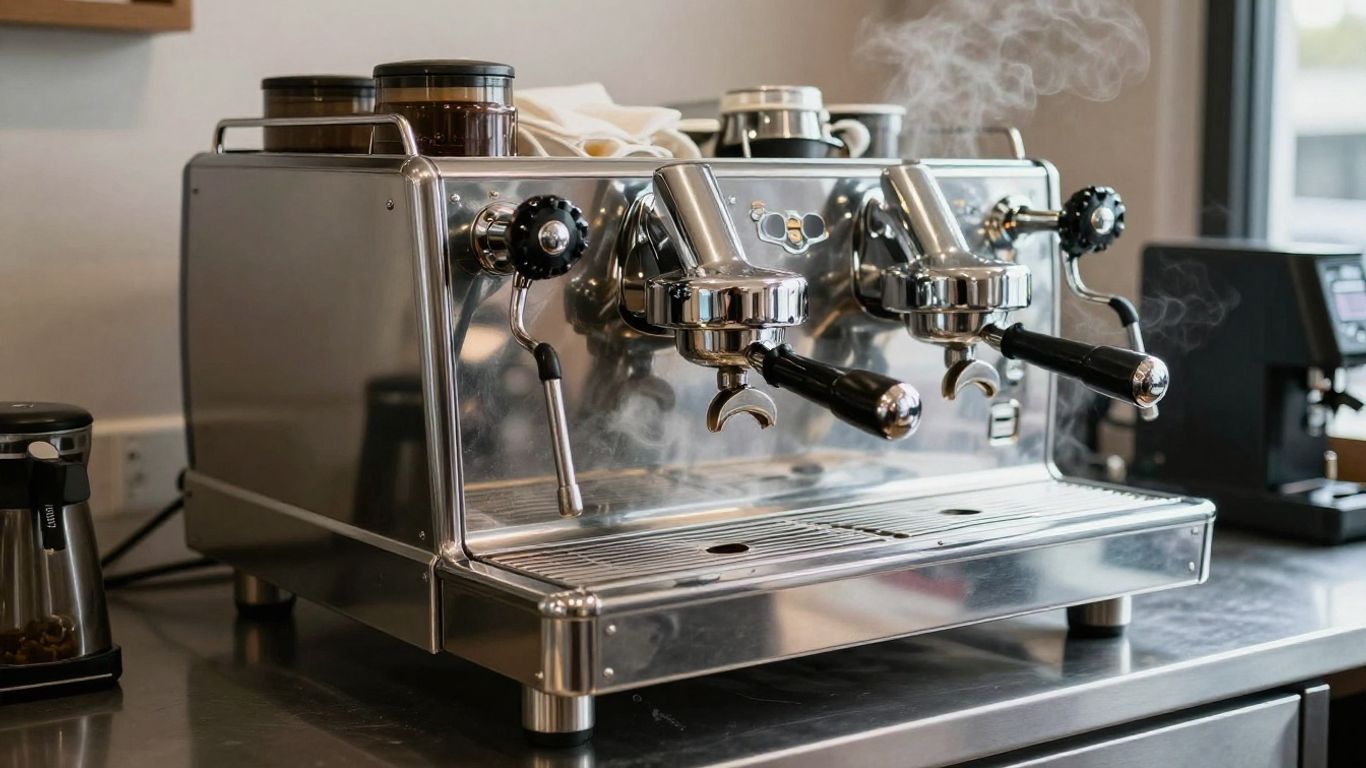
Getting your gas espresso machine set up and running smoothly in a mobile catering environment involves a few key considerations. It’s not just about plugging it in; there are specific requirements for gas, water, and electricity that need attention to ensure safety and performance. Proper installation is paramount for both the longevity of your machine and the safety of your operation.
Essential Gas Installation Components
For any gas-powered equipment, safety and compliance are non-negotiable. You’ll need a few specific bits to get your gas supply sorted. Remember, all gas work must be carried out by a qualified engineer, usually someone registered with COMCAT.
-
Gas Bottle: This is your primary fuel source. The size will depend on your expected usage and how often you can refill.
-
Pressure Regulator: This device controls the flow of gas from the bottle to the machine, ensuring it’s at the correct pressure.
-
High-Pressure Hose: A suitable hose is needed to connect the regulator to the machine. Make sure it’s rated for the pressure and type of gas you’re using.
Water Supply and Pump Systems
Espresso machines need a consistent water supply. For mobile setups, this often means a self-contained system.
-
Fresh Water Tank: You’ll need a tank to hold your clean water supply. The size of this tank will dictate how long you can operate before needing a refill.
-
Water Pump: Most machines come with a rotary pump as standard, but you might need an additional pump, like a Flojet, to draw water from your tank to the machine. If you’re using a fixed tank within the vehicle, an external 1.5 bar pump is often required.
-
Filtration: While not always included, consider adding a water filter to protect your machine from sediment and improve coffee taste.
Electrical Power for Control Systems
Even gas machines need electricity to run their control panels, pumps, and sometimes lights. This power usually comes from your vehicle’s electrical system.
-
12v Battery: This can be your vehicle’s main battery or a separate leisure battery. A 120Ah AGM gel battery is often recommended for stability and capacity.
-
Inverter (if needed): If any components require a higher voltage than your 12v system provides, you might need an inverter to convert the power.
-
Wiring: Ensure all wiring is correctly installed, fused, and protected to prevent damage and electrical hazards. It’s wise to have a professional check your setup.
Here’s a look at some typical specifications for gas-powered machines, showing the variation in power and size:
|
Model |
Groups |
Boiler Capacity |
Gas Rating |
Electric Rating |
Element Rating |
|---|---|---|---|---|---|
|
CON1ELPG |
1 |
7L |
1800 watts |
350 watts |
2.8kw |
|
CON2ELPG |
2 |
14L |
5500 watts |
350 watts |
2.85kw |
|
1 |
7L |
2600 watts |
50 watts |
2.7kw |
|
|
2 |
14L |
5500 watts |
50 watts |
2.85kw |
Setting up a gas espresso machine requires careful planning. You’re dealing with flammable gas and electrical systems, so safety checks and professional installation are not just recommended, they’re vital. Think about where your gas bottle will be stored securely and how you’ll manage water refills and waste water disposal.
Exploring Gas Espresso Machine Models
When you’re looking at gas-powered espresso machines for your mobile catering setup, you’ll find a few key players. Fracino, for instance, offers some really solid options that are built for this kind of work. They’ve got their Contempo and Retro series, and the good news is, these come in different sizes – single, double, and even triple group versions. This means you can pick one that fits your space and how busy you expect to be.
Fracino Contempo and Retro Series
These Fracino machines are pretty popular for mobile use because they’re designed to be tough and reliable. The Contempo range tends to have a more modern look, while the Retro series brings a bit of classic style to your setup. Both are available with dual fuel capabilities, meaning they can run on gas (like LPG or Butane) and also electricity. This flexibility is a big deal when you’re out and about, as you’re not always guaranteed a consistent power source. The high-powered gas burners are a standout feature, providing power equivalent to their electric counterparts, so you won’t lose steam pressure even during peak times. This makes them ideal for busy events and festivals.
Single, Double, and Triple Group Options
Choosing the right group size is all about matching the machine to your expected customer flow. A single group machine is compact and fine for lower volume needs, but if you’re anticipating long queues, a double or triple group will be much more efficient. It allows you to brew multiple coffees simultaneously, significantly speeding up service. Think about your busiest days and plan accordingly. It’s better to have a bit more capacity than you need than to be caught short when the orders are flying in.
Electronic vs. Semi-Automatic Controls
When it comes to operating the machine, you’ll generally find two main types of controls: electronic and semi-automatic. Electronic (or automatic) machines usually have pre-programmed buttons for different coffee volumes. You just press a button, and the machine dispenses a set amount of espresso. This is great for consistency and speed. Semi-automatic machines, on the other hand, give you more hands-on control. You start and stop the espresso extraction yourself using a switch. This requires a bit more skill but allows for finer adjustments to get the perfect shot. For a busy mobile setup, the ease of electronic controls can be a real time-saver, similar to how a well-regarded machine like the Breville Barista Express simplifies home brewing.
Running these machines off-grid is more achievable than you might think. The control systems and pumps often only need a low-power 240v supply, which can be easily managed with a 12v battery and an inverter. This means you can keep serving great coffee even when you’re miles from the nearest power socket.
Maximising Your Mobile Catering Setup
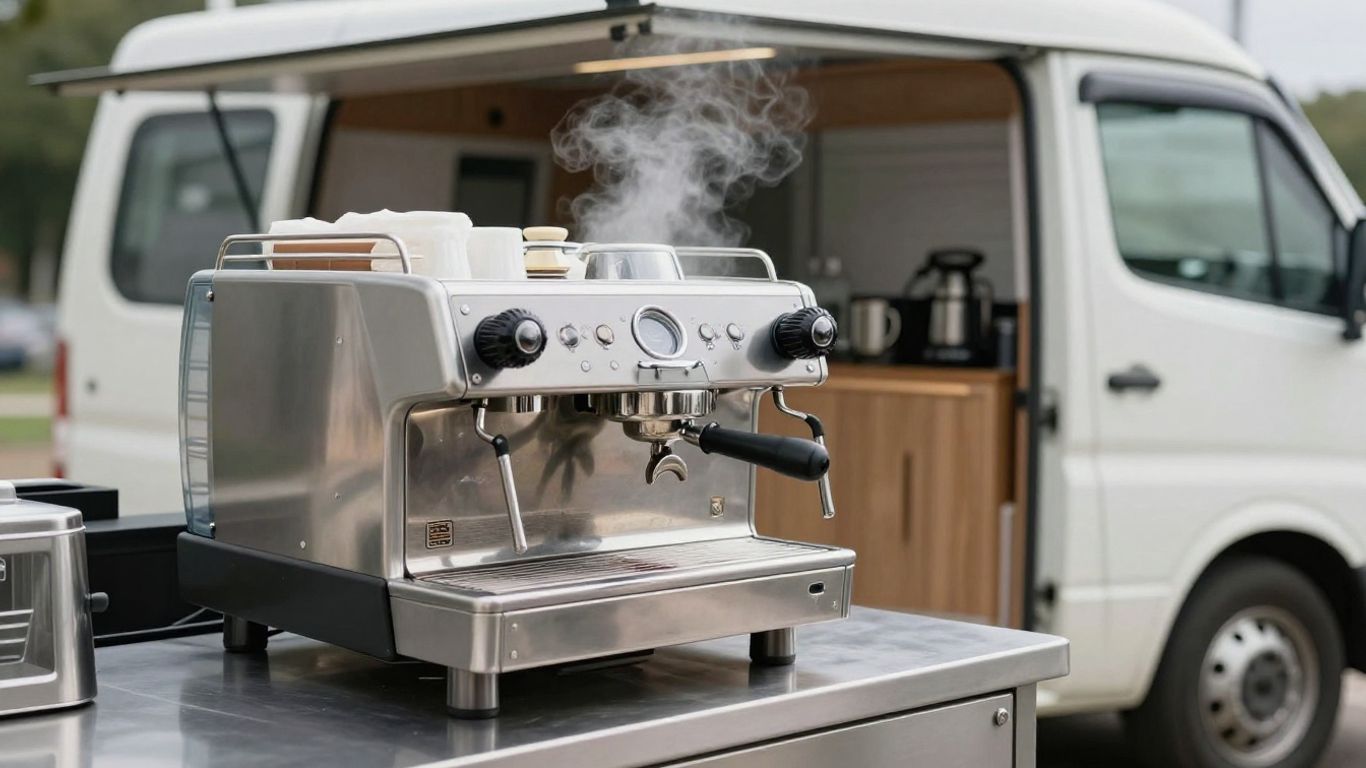
So, you’ve got your gas espresso machine, and it’s a beauty. Now, how do you make sure it’s actually going to help you make a decent living on the road? It’s not just about having the kit; it’s about using it smartly.
Ensuring High Volume Output
When you’re at a busy event, the last thing you want is a queue of thirsty customers turning away because you can’t keep up. Gas-powered machines really shine here. They provide a consistent, powerful heat source that means you won’t lose steam pressure, even when you’re pulling shot after shot. This consistent power is key to serving a high volume of drinks without a drop in quality. Think about the Fracino Contempo or Retro series; they’re built for this kind of demand. They offer different group options, so you can pick one that matches your expected busiest periods. For example, a double or triple group machine will obviously handle more orders than a single group.
Here’s a quick look at how some models stack up:
|
Model |
Groups |
Cups Per Hour |
Boiler Capacity |
Gas Rating |
|---|---|---|---|---|
|
CON1ELPG |
1 |
120/200 |
7L |
1800 watts |
|
CON2ELPG |
2 |
200/400 |
14L |
5500 watts |
Adapting to Off-Grid Operation
One of the biggest draws of a gas espresso machine for mobile catering is its independence from a constant mains electricity supply. This is where the dual-fuel capability really comes into its own. You can run the machine primarily on gas, which is often more economical and provides that high heat output, but still have the option to switch to electricity if needed, perhaps for the control systems or if you’re parked somewhere with a generator.
Having a machine that can run on LPG means you’re not entirely reliant on finding a power hook-up. This flexibility is a game-changer for events in more remote locations or when your generator decides to play up.
When planning your setup, remember these points:
-
Gas Supply: You’ll need a reliable source of LPG, butane, or propane, along with the correct regulator and high-pressure hose. Make sure you have a secure way to store your gas bottles on your vehicle.
-
Water System: A fresh water tank and a pump are vital. Some machines come with these, or you might need to source them locally. Consider the capacity needed for a full day’s trading.
-
Power Backup: While gas is primary, you’ll still need a small electrical supply for the machine’s controls and potentially a pump. A leisure battery or your vehicle’s battery can often handle this.
Integrating with Mobile Coffee Businesses
Getting the most out of your gas espresso machine means thinking about how it fits into your whole mobile operation. It’s not just about the machine itself, but the supporting infrastructure and how you manage your workflow. Think about the initial costs involved in setting up a coffee truck; it’s a significant investment, so making sure your equipment works efficiently is paramount. You’ll want to consider how your machine integrates with your counter space, your water tanks, and your waste disposal. A well-planned layout can make a huge difference to how quickly and smoothly you can serve customers. Don’t forget about maintenance, too – keeping your machine clean and serviced will prevent costly breakdowns, especially when you’re out on the road. Regular checks of your gas connections and water filters are a good idea.
Wrapping Up
So, if you’re thinking about getting into mobile coffee, especially with a gas-powered espresso machine, it really does seem like a solid choice. They give you that freedom to set up shop pretty much anywhere, which is a big deal when you’re on the move. Brands like Fracino are making these dual-fuel machines that can run on gas or electricity, and they’re built tough for the job. Just remember to sort out your power, water, and gas supply before you hit the road. It might seem like a lot to think about, but getting the right kit means you can focus on making great coffee and keeping those customers happy. Good luck out there!
Frequently Asked Questions
What is a gas espresso machine and why use one for mobile catering?
A gas espresso machine is like a regular coffee maker but uses gas (like LPG or butane) as its main power source instead of just electricity. This is super handy for mobile catering because you can make great coffee even when you’re not plugged into a power outlet, perfect for coffee trucks or stalls at events.
Can these machines run on both gas and electricity?
Yes, many of them are ‘dual fuel’ machines. This means they can run on gas, but they also have the option to use electricity. This gives you loads of flexibility – you can use gas when you’re off-grid and electricity when it’s available.
How much power does a gas espresso machine need?
Even when running on gas, these machines usually need a small amount of electricity for their control systems and pumps. This is often around 240 volts, which can be easily supplied by a car battery and an inverter, meaning you can be fully self-sufficient.
Are gas espresso machines big and heavy?
They come in different sizes, but many are designed with mobile use in mind. You can find single, double, or even triple group machines. It’s important to pick one that fits your space and can handle the number of coffees you expect to make.
What are the main benefits of using a gas-powered espresso machine for my coffee business?
The biggest plus is the freedom to operate anywhere. You get consistent power and steam, even during busy times, thanks to the strong gas burners. Plus, the dual fuel option means you’re never stuck if one power source isn’t available.
What do I need to set up a gas espresso machine in my mobile coffee van?
You’ll need the machine itself, a gas bottle with the right regulator, a water supply (often from a tank with a pump like FloJet), and a small electrical supply (like a battery and inverter) for the controls. It’s wise to check with the manufacturer for specific requirements.