Gas Coffee Machines for Mobile Catering Vans in the UK


Thinking about setting up a coffee van in the UK? That’s a great idea. People love their coffee, and being able to serve it from a mobile spot is super convenient. But you need the right gear. A good gas coffee machine is pretty much a must-have for this kind of business. It means you can make quality drinks anywhere, without being tied to a power outlet. Let’s talk about what you need to know.
Key Takeaways
-
When picking a gas coffee machine for your mobile catering van, look into dual fuel options. This gives you flexibility if gas isn’t always an option.
-
UK-made machines, like those from Fracino, can be a good choice for mobile catering, offering reliability and local support.
-
Consider the machine’s output per hour and how consistent the coffee quality will be, especially during busy times.
-
Technical specs like boiler size and dimensions are important for fitting the machine into your van and meeting demand.
-
Investing in a durable, professional gas coffee machine means better value and less hassle with repairs down the line.
Choosing Your Gas Coffee Machine
When you’re outfitting a mobile catering van in the UK, picking the right coffee machine is a big deal. It’s not just about making coffee; it’s about making a lot of it, quickly, and consistently, no matter where you are. Gas-powered machines offer a great solution for this, especially for those long days on the road.
Understanding Dual Fuel Capabilities
Many of the best machines for mobile catering come with dual fuel options. This means they can run on both gas (like LPG) and electricity. Why is this so good? Well, it gives you flexibility. You can use gas when you’re parked up at a festival or market where electricity might be tricky to access or expensive. Then, if you’re at a more established location, you can switch to electric. It’s like having a backup plan built right in. This adaptability is key for keeping your business running smoothly.
Here’s a quick look at why dual fuel is a smart move:
-
Flexibility: Use gas or electric, or both, depending on your power source.
-
Reliability: If one power source fails, you can switch to the other.
-
Cost-Effectiveness: You can choose the most economical power option available.
Key Features for Mobile Catering
Beyond dual fuel, there are other things to look for. Think about how much coffee you’ll need to make. A machine with a decent boiler capacity is important. You don’t want to be waiting ages for the machine to heat up again after a rush.
-
Boiler Size: Look for machines with at least a 10-litre boiler, but bigger is often better for busy services. For example, a 14-litre boiler can keep up with high demand.
-
Group Heads: More group heads mean you can brew more shots of espresso at once, speeding things up.
-
Steam Power: Strong steam wands are vital for making milk-based drinks like lattes and cappuccinos quickly.
-
Build Quality: These machines get a lot of use, so a sturdy build is a must. Stainless steel is usually a good sign.
Power Output and Performance
When we talk about power, we’re looking at how quickly the machine can heat water and steam milk. For mobile catering, you need something that can handle a constant flow of orders. Some machines are designed to be the most powerful LPG systems available, capable of producing hundreds of coffees per hour. This kind of output is what separates a good coffee van from a great one.
The ability to produce a high volume of drinks without compromising on quality is what makes a gas coffee machine a worthwhile investment for mobile businesses. You need a machine that works as hard as you do.
Consider the numbers:
|
Feature |
Typical Mobile Catering Machine |
High-Output Machine |
|---|---|---|
|
Cups per Hour |
100-200 |
200-400+ |
|
Boiler Capacity |
10-12 Litres |
14+ Litres |
|
Steam Pressure |
Good |
Very Strong |
Choosing a machine with robust commercial kitchen equipment features means you’re setting yourself up for success on the road.
UK Manufactured Gas Coffee Machines
When you’re running a mobile catering business in the UK, having reliable equipment is a big deal. That’s where looking at coffee machines made right here in the UK really pays off. It’s not just about supporting local industry, though that’s a nice bonus. It often means better access to parts, quicker service if something goes wrong, and machines designed with UK regulations and conditions in mind.
Benefits of Local Production
Choosing a UK-made machine can simplify a lot of things. For starters, you’re likely to find manufacturers who understand the specific needs of businesses operating in the UK, like those in mobile catering. This can translate into machines that are built tough for life on the road and are easier to get serviced. Plus, there’s a certain peace of mind that comes with knowing your equipment wasn’t shipped halfway across the world.
-
Easier access to spare parts and servicing.
-
Machines designed for UK operating conditions.
-
Potentially faster support when you need it.
-
Contribution to the local economy.
Fracino’s Mobile Catering Solutions
Fracino is a name that pops up a lot when you’re talking about coffee machines made in the UK, especially for mobile setups. They’ve got a range of machines that are pretty well-suited for vans and trailers. Take their Contempo dual-fuel models, for example. These are built to handle the demands of making coffee on the move. They can run on gas (LPG) and electricity, giving you flexibility depending on where you’re set up. These machines are often designed to be the most powerful LPG systems available, meaning you can churn out a lot of coffee, even during busy periods.
Here’s a quick look at what a Fracino CON2-LPG model might offer:
|
Feature |
Specification |
|---|---|
|
Boiler Capacity |
14 Litres |
|
Group Type |
2 |
|
Power Type |
LPG (Gas) & Electric |
|
Cups Per Hour |
Up to 400 (Espresso) / 200 (Cappuccino) |
|
Dimensions (WxDxH) |
580 x 500 x 575mm |
|
Warranty |
12 Months Parts & Labour (Back to Base) |
Installation and Warranty Considerations
When you buy a UK-made machine like a Fracino, it’s worth checking the specifics on installation and warranty. For mobile units, Fracino often requires that any installation on a catering van happens at their Birmingham headquarters. This makes sure it’s done right. Also, be aware that the warranty might be ‘back to base’, meaning if you need a repair, you’ll have to get the machine to them. It’s a good idea to clarify these points before you buy so there are no surprises down the line.
Thinking about the warranty and installation process upfront can save a lot of hassle later. It’s better to know the terms of service and where you stand if something needs fixing, especially when your livelihood depends on your coffee machine working perfectly every day.
Optimizing Your Mobile Coffee Business
Running a coffee van in the UK means you’re always on the move, and making sure your business runs smoothly is key. It’s not just about having a good machine; it’s about how you use it to serve as many happy customers as possible.
Maximizing Output Per Hour
To really make your mobile coffee business sing, you need to think about how many drinks you can get out the door. A high-output machine is a good start, but it’s only part of the picture. Think about your workflow. Are your beans ground and ready? Is your milk pre-chilled? Having a well-organized setup means less fumbling and more serving. For example, a machine like the Fracino CON2-LPG can churn out up to 240 cappuccinos or 400 espressos per hour. That’s a lot of coffee, but only if you can keep up!
-
Streamline your prep: Have everything measured and ready before the rush hits.
-
Efficient workflow: Arrange your workspace so you’re not constantly reaching or moving.
-
Teamwork makes the dream work: If you have staff, make sure everyone knows their role.
-
Regular maintenance: A clean and well-serviced machine works faster and better.
Ensuring Consistent Coffee Quality
People come back for good coffee, plain and simple. In a van, keeping that quality steady can be tricky with changing temperatures and power. Consistency is king, especially when you’re serving from a vehicle. Using a machine with good temperature control, like those with separate controls for water and steam, helps a lot. Grinding beans fresh for each shot and using good quality water also makes a big difference. Don’t forget the milk – steaming it just right every time is an art.
The challenge in mobile catering is maintaining the same high standards you’d find in a brick-and-mortar cafe. Factors like ambient temperature, gas pressure fluctuations, and even the movement of the van can affect your equipment. Investing in a robust machine designed for these conditions is the first step to overcoming these hurdles and building a reputation for quality.
Versatility in Beverage Creation
While espresso is the star, offering a wider range of drinks can attract more customers. Think beyond the standard latte and cappuccino. Can your machine handle hot chocolate? Can you offer iced coffees in the summer? Some machines come with extra steam wands or hot water dispensers, which adds to what you can do. Being able to adapt to customer requests, even on the fly, is a big plus. Consider how you can use your machine, perhaps with some simple syrups or alternative milks, to create a diverse menu. You might even look into smaller, portable power solutions like small solar generators to supplement your power needs on longer days [fdb2].
|
Beverage Type |
Preparation Notes |
|---|---|
|
Espresso |
Freshly ground beans, precise tamping |
|
Cappuccino |
Perfectly steamed milk, balanced espresso and foam |
|
Hot Chocolate |
Dedicated hot water dispenser, quality cocoa mix |
|
Iced Coffee |
Quick chilling method, quality ice source |
Technical Specifications of Gas Coffee Machines
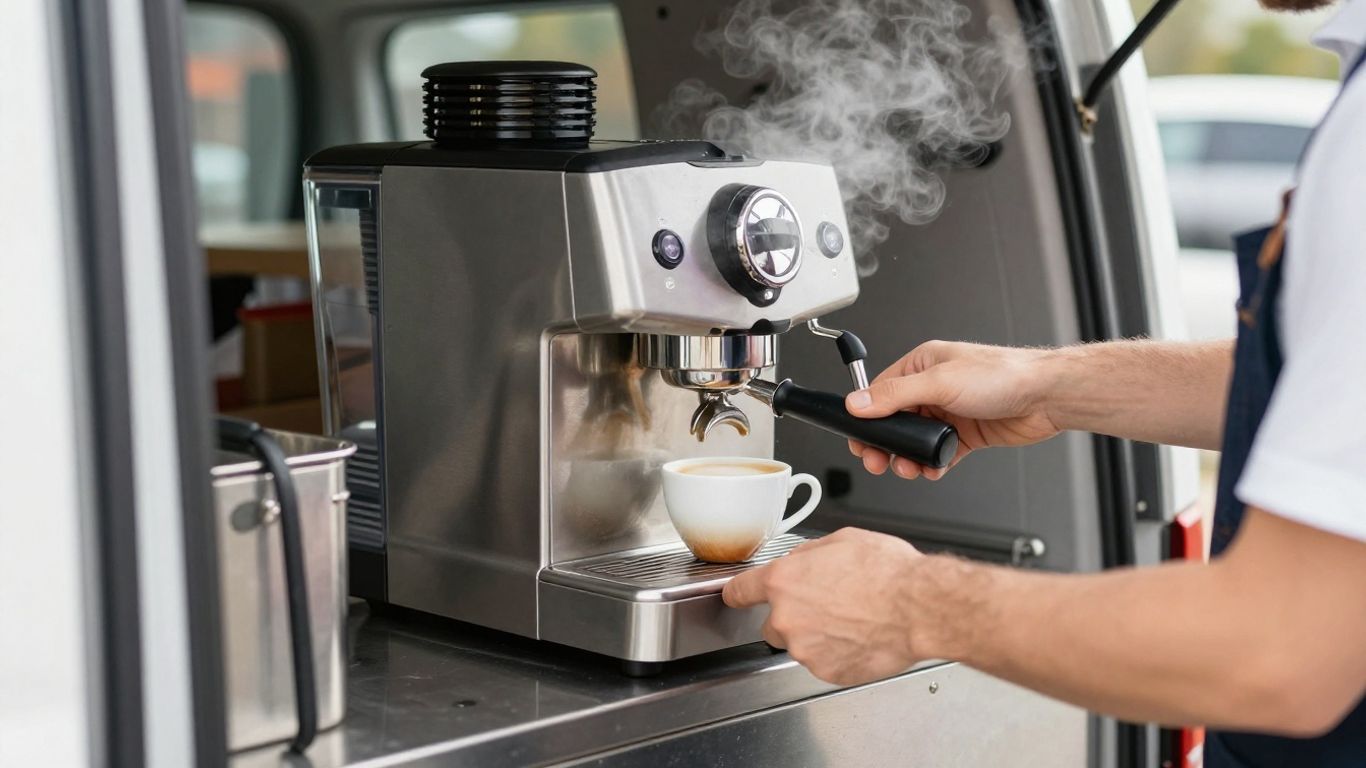
When you’re outfitting a mobile catering van, the nitty-gritty details of your coffee machine matter. It’s not just about making coffee; it’s about making a lot of it, consistently, and fitting it all into a tight space. Let’s break down what you need to look at.
Boiler Capacity and Group Types
The boiler is the heart of your coffee machine, holding the hot water needed for brewing espresso and steaming milk. For mobile catering, you want something that can keep up with demand without running dry. A common size you’ll see is around 14 litres, which is pretty decent for a busy service. This size usually pairs with a ‘2 group’ setup. That means there are two places where you can brew espresso at the same time. More groups mean more simultaneous drinks, which is a big plus when you’ve got a queue.
-
Boiler Size: Look for at least 10-14 litres for good output.
-
Group Type: 2-group machines are standard for mobile setups.
-
Material: Copper boilers are top-notch for heat distribution and durability.
Power Source Options: Gas vs. Electric
This is where gas coffee machines really shine for mobile catering. While many machines can run on electricity, having a gas option, usually LPG, means you’re not as reliant on finding a power hook-up. This flexibility is a game-changer for operating in various locations. Some machines are dual-fuel, meaning they can use gas, electricity, or both. This gives you backup and adaptability. The electrical power rating is also important; even gas machines need some electricity for their controls and pumps. A rating around 350 watts and 2.85 kW is typical.
Dimensions and Design for Vans
Space is always at a premium in a catering van. You need to know the exact footprint of the machine. Typical dimensions might be around 580mm wide, 500mm deep, and 575mm high. These numbers help you plan your kitchen layout. Think about:
-
Counter Space: Will it fit comfortably?
-
Ventilation: Gas appliances need good airflow.
-
Access: Can you easily reach the controls and water tank?
Fitting a professional coffee machine into a van requires careful planning. It’s not just about the machine’s size, but also about how it integrates with your other equipment and workflow. Consider how you’ll access water, waste, and gas supplies. A well-planned setup makes a huge difference in efficiency and safety. You can find a range of self-service coffee machines that might suit different needs.
Here’s a quick look at typical specs:
|
Feature |
Specification Range |
|---|---|
|
Boiler Capacity |
10 – 14 Litres |
|
Group Type |
2 Group |
|
Width |
~550 – 600 mm |
|
Depth |
~480 – 520 mm |
|
Height |
~550 – 600 mm |
|
Gas Power |
LPG (Propane/Butane) |
|
Electrical Power |
~300 – 400 Watts |
|
Cups Per Hour |
200 – 400+ (depending on model) |
|
Warranty |
Typically 12 Months |
Investing in a Professional Gas Coffee Machine
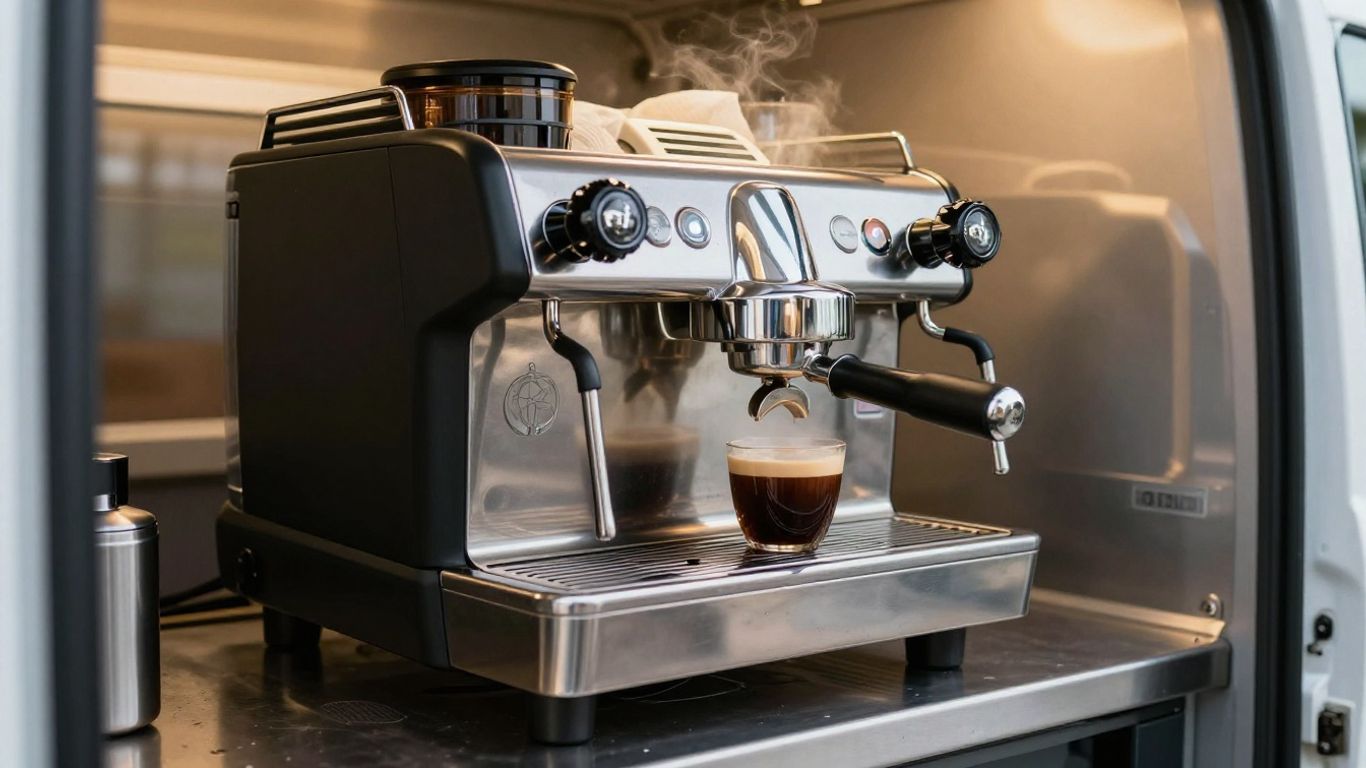
When you’re running a mobile catering van, every piece of equipment counts. You need gear that’s tough, reliable, and can keep up with demand. A professional gas coffee machine isn’t just another appliance; it’s a workhorse that can make or break your coffee sales. Choosing the right one means looking beyond the price tag and considering its long-term value and performance.
Evaluating Machine Durability
Think about where this machine will live: bouncing around in a van, dealing with vibrations, and potentially getting bumped. You need something built to last. Look for solid construction, quality materials like brass for valves and group heads, and a robust frame. Machines designed specifically for mobile use, like those from Fracino, often have these features built-in. They understand the unique challenges of the road.
-
Materials: Stainless steel and brass are your friends here. They hold up well to heat and wear.
-
Build Quality: Check for sturdy welds, secure fittings, and a general feeling of solidity.
-
Vibration Resistance: Some machines are better designed to handle the constant movement of a vehicle.
Understanding Pricing and Value
It’s easy to get sticker shock when looking at professional coffee machines. But remember, you’re not just buying a machine; you’re investing in your business’s ability to serve customers quickly and consistently. A cheaper machine that breaks down often will cost you more in repairs and lost sales over time. Consider the output per hour and the build quality when comparing prices. A machine that can produce up to 400 espressos per hour, for example, can handle busy periods much better than a less capable one. You might find a used commercial coffee machine, like this Electrolux Air O Steam Touchline 5 Grid Combi Oven, for a lower initial cost, but ensure it meets your specific coffee-making needs.
|
Feature |
Mid-Range Machine |
Professional Gas Machine |
|---|---|---|
|
Initial Cost |
£1,000 – £2,000 |
£2,500 – £4,000+ |
|
Durability |
Moderate |
High |
|
Output (Espresso/hr) |
100-200 |
200-400+ |
|
Repair Frequency |
Moderate |
Low |
Long-Term Support and Maintenance
What happens after you buy the machine? Good manufacturers and suppliers offer solid warranties and accessible support. For mobile catering, especially if you’re in the UK, finding a company with a good service network is key. Fracino, for instance, offers a 12-month parts and labour warranty on many of their machines. However, be aware that for mobile installations, warranty service might require the machine to be sent back to their headquarters in Birmingham, and the warranty could be back-to-base only. Understanding these terms upfront can save a lot of headaches later. Regular maintenance, like descaling and cleaning, is also vital to keep your machine running smoothly and producing great coffee.
Wrapping Up Your Mobile Coffee Setup
So, if you’re looking to bring top-notch coffee to the streets of the UK in your catering van, a gas-powered espresso machine is definitely worth a look. Brands like Fracino offer solid options built right here in the UK, designed specifically for life on the road. They pack a punch, letting you serve up everything from quick espressos to fancy lattes, even when you’re miles from a plug socket. Just remember to check the installation details and warranty terms, as they often require specific setups. It’s a big step, but getting the right machine means happy customers and a great brew, wherever your van takes you.
Frequently Asked Questions
What makes a coffee machine good for a mobile van?
For a mobile catering van, you need a coffee machine that’s tough, doesn’t take up too much space, and can run on gas. These machines are built to handle being moved around and can often use propane (LPG) which is easy to get for vans. They also need to make coffee quickly to serve lots of customers.
Can I use a regular coffee machine in my van?
Regular coffee machines might not be suitable because they often need a lot of electricity, which can be hard to get reliably in a van. Gas-powered or dual-fuel machines are better because they can run on gas tanks, giving you more freedom to set up anywhere.
What does ‘dual fuel’ mean for a coffee machine?
Dual fuel means the coffee machine can run on more than one power source. Usually, this means it can use both gas (like LPG) and electricity. This is super handy because if you can plug into an electric source, you can use that, but if not, you can switch to gas. It gives you flexibility.
How many coffees can a mobile catering machine make?
Good mobile catering coffee machines are designed for speed. Some can make anywhere from 200 to over 400 coffees per hour! This depends on the model, its size, and how powerful it is. The Fracino CON2-LPG, for example, is known for its high output.
Are gas coffee machines safe for vans?
Yes, gas coffee machines designed for mobile use are built with safety in mind. They have special valves and controls to manage the gas flow safely. It’s crucial to ensure the machine is installed correctly in your van by a professional and that you follow all safety guidelines for using gas appliances.
What’s the advantage of buying a UK-made coffee machine?
Buying a coffee machine made in the UK, like those from Fracino, often means you get good quality and support. It can be easier to get parts and service. Plus, you’re supporting local businesses. Fracino machines are specifically designed with mobile catering needs in mind.